All,
Of course this article was inevitable and mind numbingly predictable given the persistent and ever annoying habit so many whitefolks today (and some clueless pollyanna blackfolks as well) have of not so surreptitiously patting themselves on the back for finally 'evolving' from a racist Apartheid "past" into a glorious and 'mainstream' "post civil rights"/"post-race" present (and presumed future). But it is precisely this kind of lazily self aggrandizing and dangerously delusional political thinking that African Americans of EVERY generation must guard itself against if it is to continue to deal in a truly serious and sustained manner with the ever manipulative, opportunist, and falsely egalitarian claims and heavily skewed structural dimensions of the endless uses of racism (as ideology and social control mechanism) in the United States political, economic, and cultural system. There are a large number of absurd, outrageous, and obviously false assumptions and positions being taken in this article, but none is more egregious and disingenuous than the ridiculous notion that somehow all these black Buppie Ivy League graduates participating in "mainstream" politics today roughly between 30-45 years of age are somehow "changing" or fundamentally transforming the terrain of "black politics" or "American politics" in general (which in the context of the rather dubious ideological presuppositions and stances of the journalist's POV amount essentially to the same thing).
What pompous nonsense! Let's get a serious grip here. Though I personally enthusiastically support Barack Obama for the American Presidency this year I (and I assure you the overwhelming majority of the African American voters who also support him) are not under any illusions whatsoever that one man or even a gaggle of black Harvard/Yale/Cornell/Dartmouth/Brown/Princeton graduates yadda, yadda, yadda could possibly make a serious dent in the massive interlocking machine of political economy, social/cultural values, and severe psychological contradictions and utterly pathological fears, anxieties, and hatreds that structurally and clinically determine/over determine the form and content of so-called "racial relations" in the United States. The mere fact that there were for example more African American senators in 1870 (2) than there were for the next 120 years, and there has only been one more (Obama himself) in the last 18 years speaks volumes about where "black politics" are--both now and in the "the past" . After all while I deeply respect and even admire Obama's considerable political acumen, intelligence, and organizational/oratorical abilities I know for dead certain (and you do too!) that a black man named BARACK HUSSEIN OBAMA with two black American parents and a darker skin complexion than the current one has would never have been elected Senator from Illinois, or if he had he would most certainly not ever become an actual major party nominee for President--even if he had twice the number of Ivy League bona fides and credentials as Obama, 10 times the political and life experience, and the profound oratorical powers of Dr. King, Malcolm X, and Frederick Douglass COMBINED. And of course the "reason" for this fact is depressingly but unavoidably simple--we still live in a very racist society (just as we still live in a very sexist, classist, and homophobic society as well). There's no getting around or "beyond" any of this--I know it, Obama knows it, and "Your mama" knows it (no matter what "color" she may be). Which is to say of course that most extremely complex, deeply rooted, and thoroughly vexing historical realities can't be simply eliminated or "changed" by rhetorical or declamatory fiat. Thus any talk of a static ahistorical "black politics" (or its assimilated 'golden mean' absorption into the always/already fetid and corrupted waters of the "mainstream") is inherently out of touch with any credble empirical or philosophical 'reality'--especially in the social, economic, and political spheres of American history.
It's as if some of these younger black politicians and aspirants for "higher"(?) office have still not fully grasped some fundamental and very important lessons of American/African American history--that there is no "post" anything. I hate to have to invoke old Willie Faulkner's hoary but oh so necessary admonition that "the past" is not only not "dead" but it's not even "past." For all of their "advanced" liberal humanities education some of these brothers and sisters seriously need to look far more carefully around and to ask themselves some very painful questions about HOW AND WHY so many millions of Americans in general not to mention hundreds of millions of people throughout the world--African Americans included included--are currently being devastated by the ravages of a global system of capitalism that is as always absolutely merciless in whom it attacks, plunders, and sacrifices for the paramount goal of profit. That anyone could seriously suggest at the very late date in human history with even the 'best of intentions' that the twin evil brother of racism is not still fully functioning and alive and well in the wealthiest and most powerful Empire the world has ever known--and that anti-African American attitudes, values, and behavior is not still thriving both institutionally and in stark personal terms--is not merely being naive and engaged in willful self denial but pure sophistry as well. After all, Barack Obama means many things to many people but he could not possibly be the poster boy for anything identified as or called the "end of black politics" or "post civil rights" in the hopelessly sophomoric, reductive, and adolescent terms that the writer of this article means it or the people of whatever hue or class position who rather stupidly agree with him. Like all the other heavily advertised 'Ends' (of History, of Ideology, of Race, Of Time) that so many "conservatives" keep pushing (like super ambitious dealers who are even more addicted than the junkies they serve) this inane notion will very soon go the way of all these other ahistorical pseudo magic tricks of pseudo-intellectual fantasies, wishes, and dreams. Or as we used to say way back in the '60s--"Nothing comes to a sleeper but a Dream..." But no matter what "color" you are it's clearly way past time to Wake Up, isn't it?
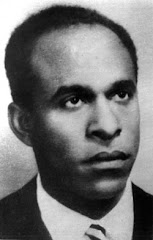
Kofi
August 10, 2008
NEW YORK TIMES MAGAZINE PREVIEW
Is Obama the End of Black Politics?
By MATT BAI
This article will appear in this Sunday's Times Magazine.
Forty-seven years after he last looked out from behind the bars of a South Carolina jail cell, locked away for leading a march against segregation in Columbia, James Clyburn occupies a coveted suite of offices on the second and third floors of the United States Capitol, alongside the speaker and the House majority leader. Above his couch hangs a black-and-white photograph of the Rev. Martin Luther King Jr. speaking in Charleston, with the boyish Clyburn and a group of other men standing behind him onstage. When I visited Clyburn recently, he told me that the photo was taken in 1967, nine months before King’s assassination, when rumors of violence were swirling, and somewhere on the side of the room a photographer’s floodlight had just come crashing down unexpectedly. At the moment the photo was taken, everyone pictured has reflexively jerked their heads in the direction of the sound, with the notable exception of King himself, who remains in profile, staring straight ahead at his audience. Clyburn prizes that photo. It tells the story, he says, of a man who knew his fate but who, quite literally, refused to flinch.
On the day in early July when Clyburn and I talked, Barack Obama, who is the same age as one of Clyburn’s three daughters, had recently clinched his party’s nomination for president. Clyburn, who as majority whip is the highest-ranking black elected official in Washington, told me that on the night of the final primaries he left the National Democratic Club down the street about 15 minutes before Obama was scheduled to speak and returned home to watch by himself. He feared he might lose hold of his emotions.
“Here we are, all of a sudden, in the 60th year after Strom Thurmond bolting the Democratic Party over a simple thing, something almost unheard of — because he did not want the armed forces to be integrated,” Clyburn said slowly. “Here we are 45 years after the ‘I have a dream’ speech. Forty years after the assassinations of Kennedy and King. And this party that I have been a part of for so long, this party that has been accused of taking black people for granted, is about to deliver the nomination for the nation’s highest office to an African-American. How do you describe that? All those days in jail cells, wondering if anything you were doing was even going to have an impact.” He shook his head silently.
This time, however, a lot of the old activists stood in the path of an African-American’s advancement rather than blazing it. While Democratic black voters embraced Obama by ratios of 8 or 9 to 1 in a lot of districts, the 42 House members in the Congressional Black Caucus, for a time, split more or less down the middle between Obama and Hillary Rodham Clinton, and the country’s leading black ministers and mayors trended toward the Clinton camp. Clyburn himself declined until the very end to endorse a candidate in this year’s primaries, saying that his leadership role required him to remain neutral, but he made no effort to disguise his relief at having been able to invoke that excuse. “Being African-American, sure, my heart was with him,” Clyburn told me. “But I’ve got a head too. And in the beginning my head was with Clinton. The conventional wisdom was that this thing was going to be over in February.”
He then recalled a moment, just after the Georgia primary in early February, when he ran into John Lewis, the legendary civil rights leader and Georgia congressman, on the House floor. Lewis was in anguish over the primaries. He had endorsed his friend Hillary Clinton, but his constituents had gone heavily for Obama, and he was beginning to waver. As Clyburn remembered it, Lewis told his old friend sadly that after all these years, they were finally going to see history yield to the forces they had unleashed. “And I’m on the wrong side,” Lewis said. (Later, after weeks of public vacillating, he would switch his allegiance.)
It is hard for any outsider to fully understand the thinking that led many older black leaders to spurn the candidacy of a man who is now routinely pictured, along with ’60s-era revolutionaries like Angela Davis and Malcolm X, on the T-shirts sold at the street-corner kiosks of black America. (“You’d be real embarrassed if he won and you wasn’t down with it,” the comedian Chris Rock joked to a Harlem audience while introducing Obama last November. “You’d say: ‘Aww, I can’t call him now! I had that white lady! What was I thinking?’ ”) Conversations like those I had with Clyburn and Lewis, however, begin to illuminate just how emotionally complicated such internal deliberations were.
On a surface level, those who backed Clinton did so largely out of a combination of familiarity and fatalism. If you were a longtime black leader or activist at the end of 2007, you probably believed, based on your own life experience, that no black man was going to win the nomination, let alone the presidency. (“If anybody tells you they expected this result, they’re not being honest with you,” Clyburn cautioned.) You knew the Clintons personally, or at least you knew their allies in the community. Who was this Obama, really, aside from the resonant voice and the neon smile? As Charles Rangel, Harlem’s powerful representative and a strong Clinton ally, told me recently, “Of course I would support someone I knew and had liked and had worked with, versus someone I’d never heard of.”
But maybe it wasn’t only what you didn’t know about Obama. What did he know about you? Obama was barely 2 years old when King gave his famous speech, 3 when Lewis was beaten about the head in Selma. He didn’t grow up in the segregated South as Bill Clinton had. Sharing those experiences wasn’t a prerequisite for gaining the acceptance of black leaders, necessarily, but that didn’t mean Obama, with his nice talk of transcending race and baby-boomer partisanship, could fully appreciate the sacrifices they made, either. “Every kid is always talking about what his parents have been through,” Rangel says, “and no kid has any clue what he’s talking about.”
For black Americans born in the 20th century, the chasms of experience that separate one generation from the next— those who came of age before the movement, those who lived it, those who came along after — have always been hard to traverse. Elijah Cummings, the former chairman of the Congressional Black Caucus and an early Obama supporter, told me a story about watching his father, a South Carolina sharecropper with a fourth-grade education, weep uncontrollably when Cummings was sworn in as a representative in 1996. Afterward, Cummings asked his dad if he had been crying tears of joy. “Oh, you know, I’m happy,” his father replied. “But now I realize, had I been given the opportunity, what I could have been. And I’m about to die.” In any community shadowed by oppression, pride and bitterness can be hard to untangle.
The generational transition that is reordering black politics didn’t start this year. It has been happening, gradually and quietly, for at least a decade, as younger African-Americans, Barack Obama among them, have challenged their elders in traditionally black districts. What this year’s Democratic nomination fight did was to accelerate that transition and thrust it into the open as never before, exposing and intensifying friction that was already there. For a lot of younger African-Americans, the resistance of the civil rights generation to Obama’s candidacy signified the failure of their parents to come to terms, at the dusk of their lives, with the success of their own struggle — to embrace the idea that black politics might now be disappearing into American politics in the same way that the Irish and Italian machines long ago joined the political mainstream.
“I’m the new black politics,” says Cornell Belcher, a 38-year-old pollster who is working for Obama. “The people I work with are the new black politics. We don’t carry around that history. We see the world through post-civil-rights eyes. I don’t mean that disrespectfully, but that’s just the way it is.
“I don’t want in any way to seem critical of the generation of leadership who fought so I could be sitting here,” Belcher told me when we met for breakfast at the Four Seasons in Georgetown one morning. He wears his hair in irreverent spikes and often favors tennis shoes with suit jackets. “Barack Obama is the sum of their struggle. He’s the sum of their tears, their fights, their marching, their pain. This opportunity is the sum of that.
“But it’s like watching something that you’ve been working on all your life sort of come together right before your eyes, and you can’t see it,” Belcher said. “It’s like you’ve been building the Great Wall of China, and you finally put that last stone in. And you can’t see it. You just can’t see the enormity of it.”
The latest evidence of tension between Obama and some older black leaders burst onto cable television last month, after an open microphone on Fox News picked up the Rev. Jesse Jackson crudely making the point that he wouldn’t mind personally castrating his party’s nominee. The reverend was angry because Obama, in a Father’s Day speech on Chicago’s South Side, chastised black fathers for shirking their responsibilities. To Jackson, this must have sounded a lot like a presidential candidate polishing his bona fides with white Americans at the expense of black ones — something he himself steadfastly refused to do even during his second presidential run in 1988, when he captured more votes than anyone thought possible.
Most of the coverage of this minor flap dwelled on the possible animus between Jackson and Obama, despite the fact that Obama himself, who is not easily distracted, seemed genuinely unperturbed by it. But more interesting, perhaps, was the public reaction of Jesse Jackson Jr., the reverend’s 43-year-old son, who is a congressman from Illinois and the national co-chairman of Obama’s campaign. The younger Jackson released a blistering statement in which he said he was “deeply outraged and disappointed” by the man he referred to, a little icily, as “Reverend Jackson.” Invoking his father’s most famous words, Jesse Jr. concluded, “He should keep hope alive and any personal attacks and insults to himself.”
This exchange between the two Jacksons hinted at a basic generational divide on the question of what black leadership actually means. Black leaders who rose to political power in the years after the civil rights marches came almost entirely from the pulpit and the movement, and they have always defined leadership, in broad terms, as speaking for black Americans. They saw their job, principally, as confronting an inherently racist white establishment, which in terms of sheer career advancement was their only real option anyway. For almost every one of the talented black politicians who came of age in the postwar years, like James Clyburn and Charles Rangel, the pinnacle of power, if you did everything right, lay in one of two offices: City Hall or the House of Representatives. That was as far as you could travel in politics with a mostly black constituency. Until the 1990s, even black politicians with wide support among white voters failed in their attempts to win statewide, with only one exception (Edward Brooke, who was elected to the U.S. Senate from Massachusetts in 1966). On a national level, only Jesse Jackson was able to garner a respectable number of white votes, muscling open the door through which Obama, 20 years later, would breezily pass.
This newly emerging class of black politicians, however, men (and a few women) closer in age to Obama and Jesse Jr., seek a broader political brief. Comfortable inside the establishment, bred at universities rather than seminaries, they are just as likely to see themselves as ambassadors to the black community as they are to see themselves as spokesmen for it, which often means extolling middle-class values in urban neighborhoods, as Obama did on Father’s Day. Their ambitions range well beyond safely black seats.
Artur Davis, an Alabama representative and one of the most talked-about young talents on Capitol Hill, recently told me a story about his first campaign for Congress, in 2000, when he challenged the longtime black incumbent Earl Hilliard. Davis was only 32 at the time, a federal prosecutor who graduated from Harvard Law School, and he saw Hilliard as the classic example of a passing political model — a guy who saw himself principally as a spokesman for the community rather than as an actual legislator.
After a debate in which Davis pounded the incumbent for being out of touch with the district, Hilliard took him aside. “Young man, you have a good political future,” Davis recalled Hilliard telling him. “But you’ve got to learn one basic lesson. You’re trying to start at the top, and you can’t start at the top in politics.”
“With all due respect, Congressman,” Davis replied, “I don’t think a group with 435 members can be the top of anything.”
Davis lost that race, but he won in a rematch two years later. Now he’s weighing a run for governor.
One telling difference between black representatives of Davis’s generation and the more senior set in Washington is how they initially viewed the role of race in this year’s primaries. Older members of the Congressional Black Caucus assumed, well into the primary season, that a black candidate wouldn’t be able to win in predominantly white states. This, after all, had been their lifelong experience in politics. Not only did Davis, who grew up in post-segregation Montgomery and supported Obama, reject this view, but he also wouldn’t concede when we talked that Obama’s race was, on balance, a detriment.
“Race was a factor in the contest between Obama and Clinton,” he told me. “There’s no question race will be a factor with Obama and McCain. But I’m not sure it plays out as neatly as people think. There’s no question that some young cohort of white voters were drawn to Obama because they like the idea of a break with the past. A young, white politician from Illinois might not have gotten that support. So race probably cost Obama some votes. And it probably won him some votes. That’s the complex reality we’re living in.”
When I met last month with Cory Booker, the mayor of Newark who at 39 is already something of a national sensation, he told me that he had just finished reading, belatedly, Obama’s memoir “Dreams From My Father.” He said passages about Obama’s youth in Hawaii had reminded him of his own experience with subtle racism in the affluent, mostly white suburb of Harrington Park, N.J. “You know, what it’s like growing up every single day and having people ask to touch your hair because they’ve never seen hair like that,” Booker said. “To have the entire class laugh and giggle when somebody pronounces ‘Niger’ as ‘nigger.’ The constant bombardment of that kind of thing really affects your spirit, and it’s every single day. Like when people want to come back from a vacation and compare their tan to yours and joke about being black.”
No doubt these were searing experiences for Booker, and I had to wince as he ticked them off, recognizing too much of myself and my white classmates from the 1980s in the imagery. But as Booker himself noted, they are a world away from the reality that was pounded into civil rights activists like his parents, to whom racism meant dogs and hoses and segregated schools and luncheonettes. You can imagine what James Clyburn — still haunted by the vivid memory of the moment he found out that his erudite father had never been allowed to graduate from high school — would make of the lifelong trauma caused by suburban kids asking to feel your hair.
A Rhodes scholar who graduated from Stanford and Yale Law, Booker won his office in 2006 after first running unsuccessfully in 2002 against the incumbent, Sharpe James, who governed Newark for an astounding 20 years (and was sentenced last month to prison time on federal corruption charges). James was the very model of the Black Power mayor, a defiant spokesman for his community and a deft conjurer of America’s racial demons. James derided Booker as a suburban outsider and questioned his blackness. (“You have to learn how to be African-American,” James said in a speech directed at Booker, “and we don’t have time to train you.”) Booker famously took up residence in a city housing project, but his relationship to Newark’s black community was, and still is, more tenuous and complicated than his predecessor’s.
When I asked Booker if he considered himself a leader of the black community, he seemed to freeze for a moment. “I’m Popeye,” he replied finally. “I am what I am.” He paused again, then tried to explain.
“I don’t want to be pigeonholed,” he said. “I don’t want people to expect me to speak about those issues.” By this, presumably, he meant issues that revolve around race: profiling by police, incarceration rates, flagging urban economies. “I want people to ask me about nonproliferation. I want them to run to me to speak about the situation in the Middle East.” Since the mayor of Newark is rarely called upon to discuss such topics, I got the feeling that Booker does not see himself staying in his current job for anything close to 20 years. “I don’t want to be the person that’s turned to when CNN talks about black leaders,” he said.
Even so, Booker told me that his goal wasn’t really to “transcend race.” Rather, he says that for his generation of black politicians it’s all right to show the part of themselves that is culturally black — to play basketball with friends and belong to a black church, the way Obama has. There is a universality now to the middle-class black experience, he told me, that should be instantly recognizable to Jews or Italians or any other white ethnic bloc that has struggled to assimilate. And that means, at least theoretically, that a black politician shouldn’t have to obscure his racial identity.
“So Obama’s the first one out there on the ice,” Booker told me. “This campaign is giving other African-Americans like myself the courage to be themselves.”
Given this generational perspective, it is easy to understand why Obama’s candidacy was greeted coolly by much of Washington’s black elite. Obama joined the Congressional Black Caucus when he arrived in 2005, but he attended meetings only sporadically, and it must have been obvious that he never felt he belonged. In part, this was probably because he was the group’s only senator and thus had little daily interaction with his colleagues in the House. But to hear those close to Obama tell it, it was also because, like Booker and other younger black politicians, he simply wasn’t comfortable categorizing his politics by race. One main function of the black caucus is to raise money through events, because many of the members represent poorer districts. Obama, already a best-selling author by the time he was sworn in, should have been a huge fund-raising draw, but he never showed much interest in headlining caucus events, and he was rarely asked.
Jesse Jackson Jr. warned his colleagues in the black caucus of the risks of shunning Obama’s candidacy, reminding them of the political aftermath of Jesse Jackson Sr.’s campaigns in the 1980s. Back then, too, most black Congressional Democrats sided with the white presidential candidates, and Jackson carried many of their districts in 1984 and virtually all of them in 1988, driving up voter registration in the process. A result, over the next few election cycles, was a flurry of primary challenges, the retirement or defeat of several incumbents and the arrival in Washington of a new class of black congressmen, including James Clyburn. Jackson’s message was clear: even if Obama lost, there could be a cost for opposing him.
Still, most in the caucus didn’t take Obama all that seriously as a potential nominee, and neither did the Clinton campaign. They calculated that he would need a huge share of black votes to wrest the nomination from Hillary, and her advisers, white and black, considered that a near impossibility. “There was an arrogance and a complete dismissiveness in our campaign against Obama, that he was a lightweight, that he couldn’t get black support,” one senior Clinton aide told me recently. “A lot of the black leaders didn’t know him, didn’t think he was black enough, didn’t think he was of the civil rights movement.” This point about whether Obama was “black enough,” a senseless distinction to most white voters, came up often in my discussions. It referred to the perception among some black leaders that not only had Obama not shared their generational experience, but also that he hadn’t shared the African-American experience, period. Obama’s father was a Kenyan academic; his family came to America on scholarship, not in chains.
Internally, Clinton’s strategists set a goal of receiving half the black vote in the Southern primaries, though they calculated that they needed as little as 30 percent in order to beat back Obama. It seemed like a sure bet. Last fall, as the primaries neared, their own polls had them winning more than 60 percent of black voters.
Within hours of Obama’s victory in Iowa, however, Clinton’s black support began to crumble. Black voters, young and old, simply hadn’t believed that a black man could win in white states; when he did, a wave of pride swept through African-American neighborhoods in the South. Nor did those voters apparently have the deep affection for Hillary Clinton that many of their ministers and local pols did. Carol Willis, a Clinton aide from the Arkansas days who was leading the campaign’s outreach to black voters, told me, “I always heard people saying: ‘I know Bill Clinton. I don’t know Hillary Clinton. So I’ll give Barack Obama a closer hearing.’ ” Internal polling in both campaigns after Iowa showed Obama suddenly garnering closer to 75 or 80 percent of the black vote in primary states.
From then on, the Democratic nomination fight sometimes took on the feel of one of those contentious diversity workshops, with every word parsed for its racial undertone and every emotion rising to the surface. What did Bill Clinton mean by “naïve” and “fairy tale”? Was it an accident that Hillary Clinton used the word “spadework” to deride her opponent’s record? Clyburn and Bill Clinton had long and tense phone conversations because of several comments the former president had made. The one that bothered Clyburn the most, he told me, came when he read in a South Carolina newspaper that Clinton had referred to Obama as a “kid.” “I grew up in the South, where men like Barack Obama, who right now is older than Bill Clinton was when he ran for president, were called ‘boy,’ ” Clyburn told me. “And that’s what a kid is — a boy.” The most damaging moment for Bill Clinton, though, came just after the South Carolina primary, when he waved away the victory by comparing it with Jesse Jackson’s wins there in 1984 and 1988. “There was something about the condescension on his face when he said it and the dismissiveness in his voice,” Artur Davis recalled. “It was a verbal pat on the head.”
In March, shaken by the persistent controversy over comments pulled from the sermons of the Rev. Jeremiah Wright, an icon in Chicago’s black community and Obama’s former pastor, Obama gave his now famous speech on race. It was aimed, for the most part, at reassuring white voters over the Wright controversy, but it also marked the first time that he publicly addressed the generational divide his own campaign had exposed among black Americans. “For the men and women of Reverend Wright’s generation,” Obama said, “the memories of humiliation and doubt and fear have not gone away, nor has the anger and bitterness of those years. . . . At times, that anger is exploited by politicians, to gin up votes along racial lines or to make up for a politician’s own failings.” Some older black politicians may have recognized themselves in Obama’s subtle criticism, but those I spoke to said they took pride in seeing a black candidate articulate their experience to white America.
A lot of black incumbents who supported Clinton now find themselves trying to explain how they ended up so disconnected from their constituents, and many are preparing for their strongest primary challenges in years. (In a primary last month, John Lewis, who had run unopposed since 1992, had to beat not one but two primary opponents, including a 31-year-old minister named Markel Hutchins who designed his campaign to look just like Obama’s, right down to renting the same office space and using a red, white and blue logo in the shape of an “O.”) So far, incumbents facing insurrection over their endorsements of Clinton have easily dispatched their challengers, leading to a collective exhalation inside the black caucus in Washington. But then, as Jesse Jackson Jr. tried to remind his colleagues, the history of black politics is that such challengers are often heard from again.
On the first Tuesday in July, I traveled to Philadelphia, the site of Obama’s landmark speech on race, to see the city’s mayor, Michael Nutter. Known as a reformer during a 14-year stint on the City Council, Nutter played a central and intriguing role in this year’s presidential contest, emerging as the black face of Hillary Clinton’s campaign in Pennsylvania at a time when she desperately needed — and got — a solid victory in the state. Nutter certainly wasn’t the only visible black politician to campaign for Clinton deep into the primary season, but he was, in some ways, the least likely. Nutter is only four years older than Obama, Ivy League-educated, bookish and doggedly unemotional. He is, in short, the very prototype of the new generation of black political stars. But unlike Cory Booker or Artur Davis or Deval Patrick, the governor of Massachusetts, Nutter sided with Clinton, and he enthusiastically campaigned for her.
I was curious to know whether Nutter, who was elected to a four-year term just last fall, was bracing for the consequences of that decision. About 9 of every 10 black voters in Philadelphia pulled the lever for Obama, according to exit polls, and I heard at least one black Obama backer in Washington vow to make Nutter pay for his apostasy. On the day that I visited him at City Hall, his aides had been reviewing the video of a sermon from last fall in which a prominent black minister in the city suggested that Nutter might have a “white agenda.”
It was late in the day when Nutter and I sat down at a long conference table in his office, accompanied by the sounds of subway trains rumbling underneath and R & B music piped in from mounted speakers. He told me that he had made his decision methodically and had felt no pressure at all from his constituents.
Nutter said he sat down with both Clinton and Obama after his election as mayor and quizzed them about urban issues like housing, education and transportation. Race, he said, hadn’t entered into this thinking. He understood, he said, why the prospect of a black president after hundreds of years of discrimination was “powerful stuff” for a lot of his constituents, but he had a greater responsibility, and that was to run the nation’s sixth-largest city. “In the context of what I do for a living, I’ve not figured out a black or white way to fill a pothole,” he said, in a way that made me think he had said this many times before. Nutter was a delegate for Bill Clinton way back in 1992, and he said that the former first lady had shown a “depth of understanding” of what cities like Philadelphia were facing. It probably didn’t hurt that Obama endorsed one of Nutter’s opponents in last year’s mayoral primary, either.
Nutter said he wasn’t bothered by comments that the Clintons or their surrogates made during the campaign that had so incensed other black officials. “I think there was a lot of sensitivity, some warranted and some unwarranted,” he said. “It’s based on your life experience, and it’s generational. You know, if you have a sore on your arm, you don’t necessarily have to touch the sore to feel the pain. You can touch another part of your arm. You’ve still got a certain sensitivity to it. So if race is the sensitive thing, then anything that even gets close to it — sounds like it, looks like it, feels like it — is it.”
I asked Nutter if, during his private conversations with Obama early in the campaign, the subject of race and the historic nature of his candidacy came up. He stared at me for a moment. “Um, I knew he was black,” he said finally. “I’d really kind of picked up on that.”
Later, when I mentioned that it could be hard for a white journalist to understand all of the nuances of race, he looked over at his press secretary, who is black, and interrupted me. “He’s not black?” Nutter deadpanned, motioning back at me. “You guys told me it was a skin condition. I thought I was talking to a brother.” Nutter is known to have a dry sense of humor, but I also had the sense that he was tweaking me in these moments, watching with some amusement as I tried to navigate subjects that white and black Americans rarely discuss together. He seemed to think I was oddly preoccupied with race.
In fact, Nutter seemed puzzled by the very notion that he should be expected to support a candidate just because they both had dark skin. “Look, I never asked anybody to be for me because I was black,” he said. “I asked people to be for me because I thought I was the best candidate when I ran for City Council and when I ran for mayor. I’m proud of the votes I received. I’m proud I received the votes of the majority of the African-American community and the majority of the vote from the white community. But I never asked anybody to give me anything because I was black. I asked people to give me a chance because I thought I was the best.”
For most black Americans, Obama’s candidacy represented a kind of racial milestone, the natural next phase of a 50-year movement. But for Michael Nutter, the reverse was also true: not supporting Obama’s candidacy marked a kind of progress, too. The movement, after all, was about the freedom to choose your own candidate, white or black. In a sense, you could argue that it was Nutter — and not those black politicians who embraced Obama because they so closely identified with his racial experience — who represented the truest embodiment of Obama-ism. Here, perhaps, was a genuine postracial politician, even if that meant being, as John Lewis put it, on the wrong side of history.
I asked Nutter if he found it insulting to have me come barging into his office, demanding to know why he didn’t pick the black guy.
“It’s not insulting,” he answered. “It’s presumptuous. It demonstrates a continuation of this notion that the African-American community, unlike any other, is completely monolithic, that everyone in the African-American community does the same thing in lockstep, in contrast to any other group. I mean, I don’t remember seeing John Kerry on TV and anybody saying to him, ‘I can’t believe you’re not for Hillary Clinton.’ Why?”
It’s inspiring to hear Michael Nutter say that governing a city isn’t about race, that there’s no black or white way to fill a pothole. And yet, it’s also true that in any given American city there are likely to be more potholes in black neighborhoods than in white ones — along with more violence, more unemployment and more illiteracy. Having grown up in West Philadelphia, Nutter knows well that while the decisions he makes as a mayor have no racial antecedents, rarely do they affect the races equally. “The challenge there is never forgetting where you came from,” he told me. “So, yes, I am mayor of all Philadelphia, but I am quite well aware of, and raise on a regular basis, the fact that the majority of people who are killed in Philadelphia are African-American, that the overwhelming majority of people who have health-care challenges are African-American, that education has tremendous disparity gaps. Unemployment, incarceration, poverty, homelessness, housing — all affect the African-American community at a disproportionate level as opposed to everyone else.”
In this way, post-Black Power politicians like Nutter and Booker embody the principal duality of modern black America. On one hand, they are the most visible examples of the highly educated, entrepreneurial and growing black middle class that cultural markers like “The Cosby Show” first introduced to white Americans in the 1980s. According to an analysis by Pew’s Economic Mobility Project, almost 37 percent of black families fell into one of the three top income quintiles in 2005, compared with 23 percent in 1973. At the same time, though, these black leaders are constantly confronted in their own cities and districts by blighted neighborhoods that are predominately black, places where poverty collects like standing water, breeding a host of social contagions.
That both of these trend lines can exist at once poses some difficult questions for black leaders and institutions. Back in the heyday of the civil rights movement, the evils and objectives were relatively clear: there were discriminatory laws in place that denied black Americans their rights as citizens, and the goal was to get those laws repealed and to pass more progressive federal legislation at the same time. You marched and you rallied and — if you had the bravery of a James Clyburn or a John Lewis — you endured blows to the head and to the spirit, and eventually the barriers started to fall. Things become more complicated, and more confounding, however, when those legal barriers no longer exist and when millions of black Americans are catapulting themselves to success. Now the inequities in the society are subtler — inferior schools, an absence of employers, a dearth of affordable housing — and the remedies more elusive.
This confusion over the direction of the movement has all but immobilized the nation’s premier civil rights group, the N.A.A.C.P. Synonymous with the long journey toward racial equality since its founding by W. E. B. Du Bois and others in 1909, the organization has, in recent years, lost much of its cachet with younger black Americans. In 2005, the N.A.A.C.P.’s unwieldy 64-member board hired Bruce Gordon, a former Verizon executive, to retool the organization. Gordon’s premise was that civil rights was no longer simply about protesting discrimination — that African-Americans were now stymied not only by institutional barriers but also by conditions in their communities. He proposed that a new N.A.A.C.P step into this breach, organizing services that might include SAT prep classes or training for new parents. He also created a new class of online members who didn’t have to pay any dues, adding more than 100,000 members to a group whose paying membership had declined, in Gordon’s estimate, to under 300,000.
Gordon’s agenda was always controversial among the N.A.A.C.P.’s board members (“Most of them are older than me,” the 62-year-old Gordon told me), and after a little more than 19 months in the job, Gordon resigned. In May, after a highly contentious process that divided the board once again, the N.A.A.C.P. hired the youngest president in its history, 35-year-old Benjamin Todd Jealous, the chosen candidate of Julian Bond, the civil rights leader and the N.A.A.C.P.’s board chairman.
You might expect Jealous, a native of mostly white Monterey County, Calif., and a Rhodes scholar, to have shared the racial experience of other emerging black leaders. But generational lines are rarely that neatly drawn, and when we met for breakfast on Independence Day, I was surprised to find that Jealous spoke about race not like Booker or Nutter but much like his heroes of an earlier era. The N.A.A.C.P.’s main job, he told me, was to be the place where African-Americans could turn when institutional racism assaulted their communities. He mentioned the racially charged arrests of six black teenagers in Jena, La., in 2006, as well as the suspicious death, just a few days earlier, of an accused cop killer in his suburban Maryland jail cell.
“It’s still a human rights struggle,” Jealous told me. “This isn’t a struggle that began in the 1930s or 1960s. It’s a struggle that began in 1620. It’s a struggle against slavery and its children.”
Jealous’s main difficulty in rejuvenating the N.A.A.C.P., though, may have less to do with the racist power structure than with a new class of black competitors online. And in this way, what’s happening among the black grass roots mirrors what’s been happening in the Democratic Party over the last several years, as loyalty to institutions and leaders has given way to a noisy conversation about how to better hold them accountable. A new generation of black activists is now focused on reforming institutions, namely the Congressional Black Caucus and the N.A.A.C.P., that they say have become too mired in the past and too removed from their constituents. And as in the rest of the political world, this rebellion is happening on the Internet, driven by ordinary Americans with laptops and a surprising amount of free time.
“The African-American voting population is very much online,” Cheryl Contee, who in 2006 helped found the blog Jack and Jill Politics, told me. Contee, who is an owner of a digital consulting business, blogs under the pseudonym Jill Tubman, and hers is one of a number of sites that have emerged in just the last year as part of what’s often called the “Afrosphere.” “One of the things I talk to clients about is that the digital divide has changed,” Contee said. “It’s no longer along racial lines like it was in 1996 and 2000. Now it’s more economic and educational.” In other words, after lagging for a time, college-educated African-Americans are now organizing online in the same way as their mostly white counterparts at Daily Kos and MoveOn.org started doing several years ago.
One of most vibrant voices in this debate belongs to Color of Change, a Web site designed to replicate the MoveOn model among black Web surfers. Two Bay Area activists, Van Jones and James Rucker, founded Color of Change in 2005, a week after the images of devastated black neighborhoods began streaming back from New Orleans. The group now boasts about 425,000 members, about half of whom are white. The bulk of the membership is between the ages of 35 and 55 and probably falls into the categories of middle class or affluent — in other words, the very people who were once the N.A.A.C.P.’s base of support. Those members pay no dues but contributed about $250,000 during a three-month period in 2007 to pay the legal fees of the defendants in Jena.
As in the liberal online community at large, there is not a lot of ideological coherence among the emerging “black roots.” There is no clear action plan for how to bridge the divide between middle-class black families and the millions left behind, aside from the same basic antiwar, anticorporate ethos that permeates the rest of the digital left. But there is a strong sense that the leaders of the civil rights generation need some kind of retirement plan, and soon. “Victims don’t make things happen,” says Rucker, who previously worked for MoveOn. “Things are changing from where they were 30 years ago. The fights are changing. And you have an infrastructure that’s not producing results. Look at the incarceration rates, the difference between whites and blacks. What are the old organizations accomplishing?”
Most of all, the black roots make it clear to elected officials and civil rights advocates that being black doesn’t, by itself, make you a leader. Online activists have attacked the Congressional Black Caucus for, among other things, standing by William Jefferson, the black representative accused of stuffing a freezer with cash bribes. They have harshly criticized several caucus members, some for having endorsed Clinton and others, like Artur Davis, for not being sufficiently liberal. Some bloggers went after the Rev. Al Sharpton and the N.A.A.C.P. for reflexively coming to the defense of four black teenagers in West Palm Beach who were charged with taking part in an unusually horrific rape of a mother and her 12-year-old son. (Sharpton and the local N.A.A.C.P. claimed that the boys were being treated differently from accused white rapists in a separate case, who were freed on bail.) Color of Change claims to have raised more than $10,000 and some 50 volunteers for Donna Edwards’s successful Web-supported primary campaign against Representative Albert Wynn, a black incumbent who voted for the Iraq war.
“There are some members who need to go or to update and be accountable,” Rucker told me. “It’s not about getting rid of the N.A.A.C.P. or our members of Congress. It’s just wanting to be proud of our leaders.”
For some black operatives in the Clinton orbit — people who have functioned, going back to Jesse Jackson’s campaigns in the 1980s, as Democratic Washington’s liaisons to black America — the fallout from an Obama victory would likely be profound. “Some of them will have to walk the plank,” an Obama adviser told me bluntly. In their place, an Obama administration would empower a cadre of younger black advisers who would instantly become people to see in Washington’s transactional culture. Chief among them is Valerie Jarrett, a Chicago real estate developer who is one of Barack and Michelle Obama’s closest friends. “She’s poised to be one of the most influential people in politics, and particularly among African-Americans in politics,” Belcher told me. “She may be the next Vernon Jordan.” In fact, the last time I saw Clyburn, he told me he had just spent two and a half hours at breakfast with Jarrett.
Then there are operatives like Belcher himself; Michael Strautmanis, Obama’s former chief counsel and de facto younger brother, who first met Michelle Obama when he was working as a paralegal at her law firm; Matthew Nugen, a political aide who is Obama’s point man for the Democratic convention; and Paul Brathwaite, a 37-year-old lobbyist who used to be the executive director of the black caucus and who might act as a bridge between black congressmen and an Obama White House.
Should they win in November, Obama and these new advisers will confront an unfamiliar conundrum in American politics, which is how to be president of the United States and, by default, the most powerful voice in black America at the same time. Several black operatives and politicians with whom I spoke worried, eloquently, that an Obama presidency might actually leave black Americans less well represented in Washington rather than more so — that, in fact, the end of black politics, if that is what we are witnessing, might also mean the precipitous decline of black influence.
The argument here is that a President Obama, closely watched for signs of parochialism or racial resentment, would have less maneuvering room to champion spending on the urban poor, say, or to challenge racial injustice. What’s more, his very presence in the Rose Garden might undermine the already tenuous case for affirmative action in hiring and school admissions. Obama himself has offered only tepid support for a policy that surely helped enable him to reach this moment. In “The Audacity of Hope,” he wrote: “Even as we continue to defend affirmative action as a useful, if limited, tool to expand opportunity to underrepresented minorities, we should consider spending a lot more of our political capital convincing America to make investments needed to ensure that all children perform at grade level and graduate from high school — a goal that, if met, would do more than affirmative action to help those black and Latino children who need it the most.”
Then there are the issues that Ben Jealous and others might raise: black men incarcerated at more than six times the rate of white men, black joblessness more than twice as high as the rate for white Americans. Just talking about such disparities as systemic problems could be harder for an African-American president — for any African-American, really — than it was before. “If Obama is president, it will no longer be tenable to go to the white community and say you’ve been victimized,” Artur Davis told me. “And I understand the poverty and the condition of black America and the 39 percent unemployment rate in some communities. I understand that. But if you go out to the country and say you’ve been victimized by the white community, while Barack Obama and Michelle and their kids are living in the White House, you will be shut off from having any influence.”
As a candidate, Obama has outlined an agenda for “civil rights and criminal justice,” aimed primarily at urban African-Americans. His platform includes refocusing the Justice Department on hate crimes, banning racial profiling by federal law-enforcement agencies and reforming mandatory minimum sentences (which disproportionately affect black men, especially those convicted on crack-cocaine charges). Obama’s black advisers caution, however, that no one should expect him to behave like a civil rights leader, marching alongside Al Sharpton to protest the next Jena or putting black causes ahead of anyone else’s. “It’s a very interesting question, but as a black person, you should feel confident that he will focus on your injustices and know that all the other injustices in other communities affect you too,” Valerie Jarrett told me. “There have been wounds in all the communities, not just in the black community. There are plenty of wounds to go around.”
If there is any American who can offer a glimpse of what it would be like for Obama as president, it’s probably Gov. Deval Patrick of Massachusetts. While most of the younger black politicians know one another only from the occasional encounter or phone call, Patrick and Obama shared a cup of coffee, at the suggestion of a mutual friend, in the mid-1990s and developed a close friendship. (The senator even borrowed some of Patrick’s oratory during the primaries, which led the Clinton camp to charge plagiarism.) Patrick was Coca-Cola’s general counsel and the assistant attorney general for civil rights in the Clinton administration before he became, in 2006, only the second black man to be elected governor in American history, following L. Douglas Wilder in Virginia in 1989.
When we talked recently, Patrick explained for me some of the inherent pressures that come with being a black executive in a state with a history of friction among the races. “You’re constantly tested by a whole host of factors to see whether you’re speaking for the entire Commonwealth or just for one community,” Patrick told me. “I don’t fit in any box, and I think that’s what the electorate has had to learn about me.”
Black ministers were slow to embrace Patrick after he supported gay marriage as a candidate and refused to back down. After a black child was shot and killed in Boston last year, Patrick told me, he sent a note to the family and prepared to attend the funeral service, but relatives held a news conference at which they criticized him for not coming by to pay his respects. (Patrick later grew close to the family.) I remarked that it was usually the city’s mayor who was expected to comfort victims of urban crime.
“Yes, but it’s not good enough for me to have the reaction that you just did, to say I’m the governor, not the mayor,” Patrick told me. “They expect more.” In other words, he was expected not only to be a governor but also to fill the traditional role of the black politician — that of spokesman, minister and conduit to the white establishment.
Patrick and I spoke just a week after Jesse Jackson was caught wishing Obama bodily harm. “You wouldn’t believe how many times in the last few days people have stuck microphones in my face to ask my opinion about Jesse Jackson’s comments,” he said, sounding a little exasperated. He had declined to offer one. “I don’t have to be the black oracle,” Patrick told me. “All I have to be is as good a human being and as good a governor as I can be, and the rest will take care of itself.” If Obama’s day comes, he might want to think about borrowing those words too.
Matt Bai, who covers politics for the magazine, is the author of “The Argument: Inside the Battle to Remake Democratic Politics.”
Copyright 2008 The New York Times Company