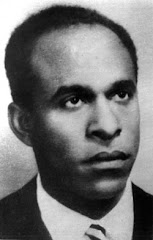
BILL DIXON: 1925-2010
BILL DIXON: TRUMPET
MILFORD GRAVES: DRUMS AT THE VILLAGE GATE:
NYC, MAY 27, 1984
Luminosity's glare
fierce timbre vowels that
pierce invisible shields our pores
breathing in slivers of light
This compelling lure its open space
hidden creases in the swollen zone of
Sound
Streaking hearts trembling the fading distance that raises thought (THOTH?)
from feelings Touch from yearnings This bursting time implosion how does it
explode the vertical void that rules the AIR?
O gigantic creeping light seeping thru the earth its howling language a moving
source of Color Acute dimensions lyricizing our minds' most transparent desires
Spiralling tears of motion
a burning spectrum peering across colors' Dominion(s)
seeking blueness in an Ocean of Red
seeking blueness in an Ocean of Red
seeking blueness in an Ocean of Red
the flowing liquids running over glass enclosures Tabla tables of Earth
a slittering rippling sliding invocation: Tonalities hieroglyphic Melodic
holograms Now you FEEL the sound (now you HERE it!)
Blastic splutters rappling contexts
And what about the Night notes crashed thru colossal windows & glowing stones
found a place to rest amidst the huge soothing clatter?
Another pace/race breaks expectations' web
A brilliant shining this rampaging joy that cuts down all the Pain into
ectastic children of Memory: the Souls efflorescence How awful it all is
How AWE FULL! Flames flickering inside the Glare, luminosity's not-so-sullen-
secret as we dance in the wake of bestial surprises
Stutter past sidewalks dissolving in the blazing rain a staggering encounter this
Monstrous Joy that slips a stance
Crooked guffaws split lazy rhythmic questions
its nonreferential power that wants nothing especially its Self
This glance this chance this dance this prance this lance this stance
that charges charges that charges charges admission to everyone at once
Inconsequential stirrings in the Heart
a rumbling MOJO expanding the leafy village between our Ears
fears melting down like rainfall searing the darkness
This is the energy we call Revelation
This is the Life we call
Free........................................................................................
Poem by Kofi Natambu
From: The Melody Never Stops
Past Tents Press, 1991
All,
One of the leading individual figures in the explosive rise and innovative expansion of modern/'avant-garde' African American music and art of the 1960s and '70s was trumpet player, composer, music professor, and painter Bill Dixon who, along with such legendary and extraordinary musician-composers as John Coltrane, Ornette Coleman, Albert Ayler, Cecil Taylor, Sun Ra, Don Cherry, Archie Shepp, Sunny Murray, Alan Silva, Milford Graves, Roscoe Mitchell, Marion Brown, Anthony Braxton, and the Art Ensemble of Chicago, among many others, led an American and global revolution in the creative arts and cultural politics that forever changed how music itself and the very idea of 'art' was viewed and embraced in this part of the world. Dixon's pivotal role in this aesthetic and social development was profound and lasting. He and his courageous highly creative work will be sorely missed. I am very happy to add that I got a personal opportunity to meet and spend some time with Dixon following a duo concert by him and late, great Milford Graves in the summer of 1984. It was this amazing concert and the mind bending talk with him following that concert at New York's Village Gate that inspired the poem that appears above and that I published in my book The Melody Never Stops in 1991. Dixon was a true original in every sense of that much abused and misunderstood word and his music, painting, teaching, activism, and life embodies the best of that truly revolutionary and disciplined spirit that informed the very best and most advanced contributions in the arts and politics of the last half century in the United States.
Kofi
http://www.nytimes.com/2010/06/20/arts/music/20dixon.html
Bill Dixon, Leading Edge of Avant-Garde Jazz, Dies at 84
By BEN RATLIFF
June 19, 2010
New York Times
Bill Dixon, the maverick trumpeter, composer, educator and major force in the jazz avant-garde movement of the 1960s, died on Wednesday at his home in North Bennington, Vt. He was 84.
His death was announced by Scott Menhinick, a representative of his estate. No cause was given.
In the early 1960s, when rock was swallowing popular culture and jazz clubs were taking few chances on the “new thing” — as the developing avant-garde was then known — Mr. Dixon, who was known for the deep and almost liquid texture of his sound, fought to raise the profile of free improvisation and put more control into musicians’ hands. In 1964 he organized “The October Revolution in Jazz,” four days of music and discussions at the Cellar Café on West 91st Street in Manhattan, with a cast including the pianist-composers Sun Ra and Cecil Taylor, among others. It was the first free-jazz festival and the model for present-day musician-run events including the Vision Festival.
Soon after that, he established the Jazz Composers Guild, a cooperative organization intended to create bargaining power with club owners and build greater media visibility. Mr. Dixon played hardball: he argued for a collective strike on playing in jazz clubs and hoped for the support of John Coltrane, the wave floating most boats of the “new thing.” The strike never happened, and the Guild fractured within a year.
William Robert Dixon was born in Nantucket, Mass., on Oct. 5, 1925. His family moved to Harlem when he was about 7; he first aspired to be a visual artist and studied commercial art in high school. (He continued to paint throughout his life.) In 1944 he enlisted in the Army, eventually serving in Germany during the last few months of war in Europe.
After his return he attended the Hartnett Conservatory in Manhattan and then started performing around town — alongside, among others, Mr. Taylor, whom he met in 1951; the bassist Wilbur Ware; and eventually the saxophonist Archie Shepp, with whom he formed a quartet.
On records including “Intents and Purposes” (1967) and the two-volume “Vade Mecum,” recorded in 1993, Mr. Dixon displayed a fascination with whispered notes and the lowest, darkest ends of a band’s sound. He used delay and reverb on his trumpet, in long, floating tones and scrabbling figures; his music got closer to the ideal of pure abstraction than that of many of his colleagues.
In the late 1950s, he was raising a family and working during the day as a secretary at the United Nations. By 1959 he was booking the new music into West Village cafes, including the Phase 2 and Le Figaro. Thus began a long-running role as bootstrap activist and outspoken critic of nearly all the systems of jazz: how it is presented, taught, promoted, recorded and written about.
Mr. Dixon is survived by his daughter, Claudia Dixon of Phoenix; his son, William R. Dixon II of New York; and two grandchildren, as well as his longtime partner, Sharon Vogel.
In 1968 he began a career in academia at Bennington College in Vermont. Hired simultaneously with the dancer Judith Dunn, with whom he collaborated in all his work for a six-year stretch, he worked first in the dance department and eventually in music. In 1973 he established the Black Music Division, a performance-and-theory curriculum of his own devising.
During the 1980s his recording career picked up: small-group music, orchestra pieces and a sideline of solo trumpet works, eventually released as a self-produced six-disc set, “Odyssey.”
In experimental jazz, where the most successful tend to be the most prolific, Mr. Dixon’s output looks comparatively scant. But most of his albums, even up to last year’s “Tapestries for Small Orchestra,” have a profound and eerie center, and his influence among contemporary trumpeters is clear.
“When I play,” he told the journalist Graham Lock in 2001, “whether you like it or not, I mean it.”
http://www.youtube.com/watch?v=345kCkQ_d34
http://www.allaboutjazz.com/php/musician.php?id=6301
Bill Dixon
Instrument | Trumpet

View 22 photos
Biography
Born: October 5, 1925 | Died: June 16, 2010
Bill Dixon has been a driving force in the advancement of contemporary American Black Music for more than 45 years. His pioneering work as a musician and organizer in the early 1960’s helped lay the foundation for today’s creative improvised music scene in New York and beyond. In 1964, he founded the all-star artists collective, the Jazz Composers’ Guild, and produced and organized The October Revolution in Jazz, an unprecedented New York festival that helped put the so-called “new thing” on the cultural map.
A mentor to countless musicians, through both his teaching and his role as a producer for Savoy Records, Dixon turned his focus to education in the late 1960’s, serving for nearly 30 years on the faculty at the prestigious Bennington College, where he founded the historic Black Music Division in 1973.
With the notable exception of Cecil Taylor’s Conquistador (Blue Note), Dixon has recorded almost exclusively as a leader since 1962, most frequently for the Soul Note label in the 1980’s and 90’s. Still a prolific composer at age 82, his work as a composer and improvisor can also be heard on the critically acclaimed February 2008 CD, Bill Dixon with the Exploding Star Orchestra (Thrill Jockey), and in July 2008 he recorded a new collection of original music with an all-star nonet for the Firehouse 12 label.
Press Quotes
17 Musicians in Search of a Sound is pure Dixon, massive in scale and rigorous in execution...this is not a mere concert souvenir, but a significant statement. Dixon’s music is about the process of its becoming; while its expansions into dense, eventful fanfares and contractions into hushed, detailed dialogues may be scripted, the sound of the music is not...as group improvisations go, this one is remarkable for its poise and balance....it’s about great players subsuming their identities into an ensemble.
--Bill Meyer, DownBeat
...Dixon has fashioned a work around which new formal paradigms will need to be constructed. Dixon’s music explodes category: it is neither free nor through-composed, though elements of both approaches are often discernible. I hope this fine addition to his discography, coupled with a renewed interest in his work, will allow more of Dixon’s orchestral compositions to be performed by equally sympathetic interpreters.
--Marc Medwin, Signal to Noise
...Dixon opens up space and the musicians play it.
--Philip Clark, The Wire
...the process of searching for a sound, both as an individual musician, or as a composer, is an ongoing process that leads to the creation of a certain type of music palpably, viscerally distinguishable from music that does not. Bill Dixon is nothing short of a master when it comes to this concept of sound, and at his age and stature is unique in his ability to offer us an incredibly refined vision of this different approach to sound and music.
--Dan Melnick, Soundslope
The 13-part suite creates an ebb-and-flow effect, with the reeds and horns surging by turns amid throbbing drum rolls and calmly snaking solo lines. The work's centerpiece, the 23-minute “Sinopia,” is where Dixon best makes his presence felt as something other than conductor. It leaves room for some intimate dialogues between instrumentalists, but there's no missing the leader's entrance. With puckered blurts, upper-register trills, and rubbery bleats -- most of them enhanced with ghostly delay -- he stalks across the landscape, his utterances punctuating the arrangement like shadow puppets dancing across an illuminated screen. And even when the piece is more geared toward an ensemble sound -- which, to be fair, is most of the time -- Dixon shines brightly with his mastery of texture.
--Peter Margasak, Chicago Reader
Articles [ VIEW ALL ]
PLEASE CLICK ON THE FOLLOWING LINKS:
Artist Profiles
Bill Dixon: In Rehearsal, In Performance
Bill Dixon: The Morality of Improvisation
CD/LP Review
Tapestries for Small Orchestra
17 Musicians in Search Of A Sound: Darfur
17 Musicians in Search of a Sound: Darfur
17 Musicians In Search Of A Sound: Darfur
Bill Dixon With Exploding Star Orchestra
Bill Dixon With Exploding Star Orchestra
Berlin Abbozzi
Berlin Abbozzi
Berlin Abbozzi
Papyrus Volume I
Extended Analysis
Bill Dixon: Tapestries for Small Orchestra
In the Artist's Own Words
Bill Dixon: Excerpts from Vade Mecum
Interviews
Bill Dixon: In Medias Res
Megaphone
Bill Dixon: The Benefits of the Struggle
Total Articles: 16
News [ MORE - POST ]
Remembering Bill Dixon: 1925-2010
Bill and Fred
Bill Dixon Paintings, Lithographs and Drawings Now Featured at...
Trumpeter Bill Dixon Interviewed at AAJ
Bill Dixon:17 Musicians in Search of Sound: Darfur
Bill Dixon with Exploding Star Orchestra
Bill Dixon's New Orchestral CD Released Today on AUM Fidelity
http://www.allaboutjazz.com/php/news.php?id=58430
Remembering Bill Dixon: 1925-2010
By Ben Young
Trumpeter and composer Bill Dixon died June 16th at his home in North Bennington, Vermont after a two-year illness. He was 84 years old.
Dixon was a revered and idiosyncratic figure in the avant-garde of Jazz music, and a creative force who strived at all times to place the music in ever more respectful circumstances. Dixon developed an often controversial profile as an outspoken and articulate defender of musicians' rights as artists, and specifically the challenges to Black music as a contender in the culture and society of the United States. His music is known for a dark, poignant, pan-tonal abstraction that remains lyrical without relying on songs or the conventions of Jazz music-making. Through five decades as a recording artist, Dixon's music has developed a loyal worldwide following.
As a musical stylist and educator, Dixon was the progenitor of an often reserved composition and playing approach that stood in contradistinction to the trends prevailing in the avant-garde in Jazz since the Sixties. He steered an influential through short-lived collective-bargaining movement in New York in 1964-65, the Jazz composers' Guild. Under Dixon's leadership, the Guild crafted a stance to preserve the artistic self-determination of Guild membership. Though he lived in Vermont for most of the last four decades, playing only occasionally in New York and in the US altogether, Dixon remained a leader and doyen for musicians of successive generations in a diaspora of alumni of his teaching and ensembles.
The legacy of Dixon's progressive organizing activities in the music often overshadow the impact of his own music-making. Dixon emerged as a composer and bandleader in what can fairly be called a second wave of the New York avant-garde. Dixon's legacy of ensemble records (1966, 2007, 2009) frames an unparalleled body of solo music for trumpet (1970-76, mainly) and a subsequent series of small ensemble recordings (1980-1995) that stand apart in texture, instrumentation, personnel, and orientation from most of the numerous records of the period by Dixon's contemporaries.
Born William Robert Dixon on October 5, 1925, he was the son of William L. Dixon and Louise Wade. His family transplanted to Harlem at the height of the depression from Nantucket, Massachusetts where Dixon was born. An early aptitude in realistic drawing led him to advanced studies in commercial art during and after high school, well before music became a serious interest. (He was also acclaimed in a group and solo shows of paintings prior to serious recognition of his music, and he was painting, drawing and creating lithographs to the end of his life). Dixon enlisted in the U.S. Army during WWII and served in Germany at the close of European theater.
Bill Dixon's deliberate study of music began at the Hartnett Conservatory of music in the mid-1940s. His journeyman years as a Jazz trumpet player in the 50s involved activity as a sideman in an array of entertainment and rehearsal projects. Daytime employment as an international civil servant at the UN Secretariat, Dixon also turned to musical advantage. He founded the United Nations Jazz Society in 1959. He worked in the same period to establish the coffee houses of Greenwich Village as a formal and legitimate venue for presenting progressive music, an early manifestation of the spirit that fed the formation of the Jazz Composers' Guild.
Bill Dixon will perhaps always be remembered for his organization of a concert series to present the new music, the October Revolution in Jazz of October 1-4, 1964, at the Cellar Cafe on west 91st Street. Though literally digested by only a handful of eyewitnesses, the concert series focused significant critical attention on the undergrowth of otherwise unrecognized creative musicians, many of whom, including Dixon, shortly would show forth as the newest voices of the new music of the Sixties.
Starting in 1966, Dixon entered a fruitful collaborative partnership with the dancer/choreographer Judith Dunn, whose background lay in the Cunningham and Judson schools. The collaboration with Dunn led Dixon to join the faculty at Bennington College where she taught in the Dance department, and Dixon pushed for the creation of the Black Music Division, a phalanx of the school's music teaching that had its own faculty, student body, and orientation. Active officially from 1975 until 1985, the program was a prototype of a kind of college-level music study that has flowered only haphazardly since, basing itself in the aesthetics and praxis of avant-garde music-making.
Dixon is remembered by many of his students as a powerful and charismatic teacher who adroitly factored student musicians at various levels of skill and development into classes and his own ensemble pieces. Within the first few years at Bennington, it became the norm for Dixon to design individual and group exercises artistically meaningful enough to become part of the compositions he developed through a term's work.
Dixon retired from teaching in 1995 and continued to perform and record, chiefly in Europe. His last years saw a dramatic increase in the frequency of his U.S. appearances, and, since 2008, in U.S.-released recordings of his works for ensembles.
Dixon is survived by his longtime partner Sharon Vogel of North Bennington, a daughter Claudia Dixon of Phoenix, Arizona and a son William R. Dixon II of New York City. He also leaves two grandchildren.
A memorial celebration of Bill Dixon's life and work will be held in New York City at a later date.
Ben Young is the author of Dixonia: A Bio-Discography of Bill Dixon (Greenwood Press, 1998).
RIP Experimental Jazz Trumpeter Bill Dixon
From his publicist comes the news that Bill Dixon, the experimental jazz trumpeter and composer, died in his sleep last night at his home in North Bennington, Vt. He was 84 years old.
Dixon was a professional musician for over 60 years and one of the most reliable exploratory voices in jazz—a word he hated. His music, in (very) large and small ensembles as well as solo work and collaborations, pushed continually outward, both artistically and politically; Dixon was the organizer of 1964’s infamous festival “The October Revolution in Jazz,” and the founder of the influential early collective the Jazz Composers Guild. He continued to defy convention over nearly three decades as an educator, making his legacy immense.
William Robert Dixon was born on Nantucket Island, Mass., in 1925, and grew up in Harlem. His family was nonmusical, but Dixon fell in love with the trumpet after seeing a Louis Armstrong concert as a child. He bought his first trumpet in high school, then attended the Hartnette Conservatory of Music in Manhattan after serving in the Army during the closing months of World War II. He began his career after graduating from Hartnette in 1951, but also began composing on his own; at the same time, however, he worked a day job at the United Nations, where in 1958 he founded a listening and discussion group for the diplomats, the UN Jazz Society.
Throughout the 1960s Dixon established himself in collaborations with forward thinkers Archie Shepp, Cecil Taylor, and avant-garde dancer/choreographer Judith Dunn. He also gained a reputation as a composer and bandleader in his own right, including a band co-led with Shepp and a large-ensemble recording, 1967’s Intents and Purposes, commonly regarded as his masterpiece.
In 1968 Dixon took a teaching position at Bennington College in Vermont. He remained affiliated with Bennington for 28 years, gaining tenure and founding and chairing the school’s Black Music Division for 19 years. Meanwhile, however, his recording and performing (as well as painting, examples of which often adorned his album covers) continued unabated, including a remarkably consistent string of albums recorded for the Italian Soul Note label in the 1980s and ’90s. His most recent recordings included two large-ensemble pieces, 2007’s 17 Musicians in Search of a Sound: Darfur and 2008’s Bill Dixon with Exploding Star Orchestra, a collaboration with Chicago post-rocker Rob Mazurek. Shortly after the release of the latter, however, Dixon withdrew from performance due to illness, which persisted until his death last night.
He is survived by his longtime partner Sharon Vogel and two children.
http://www.improvisedcommunications.com/blog/2010/06/17/dixon-obit/
Bill Dixon: The Official Obituary (June 17, 2010)
Bill Dixon’s estate has released this official obituary written by Ben Young, author of Dixonia: A Bio-Discography of Bill Dixon (Greenwood Press, 1998).
Trumpeter and composer Bill Dixon died June 16th at his home in North Bennington, Vermont after a two-year illness. He was 84 years old.
Dixon was a revered and idiosyncratic figure in the avant-garde of Jazz music, and a creative force who strived at all times to place the music in ever more respectful circumstances. Dixon developed an often controversial profile as an outspoken and articulate defender of musicians’ rights as artists, and specifically the challenges to Black music as a contender in the culture and society of the United States. His music is known for a dark, poignant, pan-tonal abstraction that remains lyrical without relying on songs or the conventions of Jazz music-making. Through five decades as a recording artist, Dixon’s music has developed a loyal worldwide following.
As a musical stylist and educator, Dixon was the progenitor of an often reserved composition and playing approach that stood in contradistinction to the trends prevailing in the avant-garde in Jazz since the Sixties. He steered an influential through short-lived collective-bargaining movement in New York in 1964–65, the Jazz Composers’ Guild. Under Dixon’s leadership, the Guild crafted a stance to preserve the artistic self-determination of Guild membership. Though he lived in Vermont for most of the last four decades, playing only occasionally in New York and in the U.S. altogether, Dixon remained a leader and doyen for musicians of successive generations in a diaspora of alumni of his teaching and ensembles.
The legacy of Dixon’s progressive organizing activities in the music often overshadow the impact of his own music-making. Dixon emerged as a composer and bandleader in what can fairly be called a second wave of the New York avant-garde. Dixon’s legacy of ensemble records (1966, 2007, 2009) frames an unparalleled body of solo music for trumpet (1970 –76, mainly) and a subsequent series of small ensemble recordings (1980–1995) that stand apart in texture, instrumentation, personnel, and orientation from most of the numerous records of the period by Dixon’s contemporaries.
Born William Robert Dixon on October 5, 1925, he was the son of William L. Dixon and Louise Wade. His family transplanted to Harlem at the height of the depression from Nantucket, Massachusetts where Dixon was born. An early aptitude in realistic drawing led him to advanced studies in commercial art during and after high school, well before music became a serious interest. (He was also acclaimed in a group and solo shows of paintings prior to serious recognition of his music, and he was painting, drawing and creating lithographs to the end of his life). Dixon enlisted in the U.S. Army during WWII and served in Germany at the close of European theater.
Bill Dixon’s deliberate study of music began at the Hartnett Conservatory of music in the mid-1940s. His journeyman years as a Jazz trumpet player in the 50s involved activity as a sideman in an array of entertainment and rehearsal projects. Daytime employment as an international civil servant at the UN Secretariat, Dixon also turned to musical advantage. He founded the United Nations Jazz Society in 1959. He worked in the same period to establish the coffee houses of Greenwich Village as a formal and legitimate venue for presenting progressive music, an early manifestation of the spirit that fed the formation of the Jazz Composers’ Guild.
Bill Dixon will perhaps always be remembered for his organization of a concert series to present the new music, the October Revolution in Jazz of October 1–4, 1964, at the Cellar Cafe on West 91st Street. Though literally digested by only a handful of eyewitnesses, the concert series focused significant critical attention on the undergrowth of otherwise unrecognized creative musicians, many of whom, including Dixon, shortly would show forth as the newest voices of the new music of the Sixties.
Starting in 1966, Dixon entered a fruitful collaborative partnership with the dancer/choreographer Judith Dunn, whose background lay in the Cunningham and Judson schools. The collaboration with Dunn led Dixon to join the faculty at Bennington College where she taught in the Dance department, and Dixon pushed for the creation of the Black Music Division, a phalanx of the school’s music teaching that had its own faculty, student body, and orientation. Active officially from 1975 until 1985, the program was a prototype of a kind of college-level music study that has flowered only haphazardly since, basing itself in the aesthetics and praxis of avant-garde music-making.
Dixon is remembered by many of his students as a powerful and charismatic teacher who adroitly factored student musicians at various levels of skill and development into classes and his own ensemble pieces. Within the first few years at Bennington, it became the norm for Dixon to design individual and group exercises artistically meaningful enough to become part of the compositions he developed through a term’s work.
Dixon retired from teaching in 1995 and continued to perform and record, chiefly in Europe. His last years saw a dramatic increase in the frequency of his U.S. appearances, and, since 2008, in U.S.-released recordings of his works for ensembles.
Dixon is survived by his longtime partner Sharon Vogel of North Bennington, a daughter Claudia Dixon of Phoenix, Arizona and a son William R. Dixon II of New York City. He also leaves two grandchildren.
A memorial celebration of Bill Dixon’s life and work will be held in New York City at a later date.
http://www.allaboutjazz.com/php/article_print.php?id=18695
Bill Dixon: The Morality of Improvisation
By Clifford Allen
All About Jazz
Followers of improvised music are very good at expanding on the personalities of artists, and that oral tradition has certainly been aided by the musicians through a sort of 'educational mythology.' To be sure, the personalities of Miles, Trane, Cecil, Mingus and Ornette are fascinating and notable, but this interest in the men and their whims often comes at the expense of their work - in other words, the empirical aspect of what these men are doing and have done is lost among reading between those lines. To complicate matters further, what these people have done outside the realms of composition and improvisation is valuable - Coltrane's importance as a spiritual figure inasmuch as he was (and is) a major innovator on his instrument, for example. Bill Dixon, born October 5, 1925 in Nantucket, Massachusetts, certainly has done much outside of being a composer and trumpeter: professor (in Madison and Bennington), painter, guild organizer (the Jazz Composers' Guild, 1964-1965), record producer (Savoy) and arranger (New York Contemporary Five), concert promoter (the October Revolution in Jazz at the Cellar Club, New York, 1964), writer (L'Opera: a Collection of Letters, Writings, Musical Scores, Drawings, and Photographs (1967-1986) [Volume One], Archive Edition 1986), educator of young musicians (Free Conservatory of the University of the Streets, Black Music Division of Bennington College), the list goes on. But there are several problems one encounters when approaching Dixon's work, not the least of which is the fact that, despite all of the components of such an opus, including a significant amount of recordings (though some admittedly rather difficult to obtain), very little discussion has been opened about his work as both an improviser and a major contributor to this music.
One thing that has made Dixon's work a formidable approach is its singularity and conviction, which Dixon himself readily acknowledges: "all of my work is good work, because unlike a lot of musicians, I recognize and acknowledge that whenever I did [a work] that's all I could do at the time, and was capable of. You'll get no apologies coming from me. With a few early-career exceptions and an appearance as a sideman on Cecil Taylor's Conquistador (Blue Note, 1966), all of Dixon's recorded music (compositions and groups) has been his own - something rare even among the jazz vanguard. Yet, in the case of the latter, his work with Cecil Taylor (one record) has been lauded at the expense of recognition for his own contemporaneous work as a leader, the monumental Intents and Purposes (RCA-Victor, 1967), recorded one week after Conquistador to almost no distribution. Another phrase that Dixon applies to his work is that "it is what it is. For as much historical reference, social urgency and personality that critics and followers alike ascribe to music, what one is left with in both performance and recording is the work at hand - no more, no less. Naturally, to be faced with unclothed art is a somewhat frightening proposition, even for the most astute critics and constituents, but all any artist asks is what drummer Ted Robinson said to Amiri Baraka in 1965: "Since God has bestowed me with the want to execute the sound that I feel, I shall proceed." Drive and necessity are theoretically what should be attractive about creative music, though the baggage tends to weigh those perceptions down.
Dixon was mentor during the '60s to reedmen like Archie Shepp, John Tchicai, Byard Lancaster, Giuseppi Logan, Marzette Watts, Ed Curran and Arthur Doyle, multi-instrumentalist Marc Levin, drummer Bob Pozar and bassist Alan Silva, a coterie of musicians for whom the term 'underground' frequently has been applied - using them in his various groups as well as producing records for a number of them under the guise of Savoy. Dixon has orchestrated a number of situations in an attempt to circumvent the negative treatment of 'new' musicians at the hands of both club owners and record companies, through both organization and education - both of which ideally lead to mobilization. In this climate, Dixon formed what would be the Jazz Composers' Guild in 1964 - an organization which included Sun Ra, Paul and Carla Bley, Cecil Taylor, Burton Greene, Roswell Rudd, Archie Shepp and Jon Winter among others. Though the lack of conviction of some of its members eventually resulted in the Guild's dissolution, it is fair to say that the perception of the music is necessary political for Dixon, and it has to be in order to bypass confusion: "[In concert music] they know more, because they know theirs is a music, both the people who write about it and the people who do it. In this music, people are not too sure whether it's entertainment, whether it is art, and they won't admit it. As for education, Dixon has not only mentored, but he has also taught the music formally from an academic perspective - and did so for twenty-five years. "I actually engaged in the enterprise of teaching [academically], when I decided to do it, and the way [most teaching] actually worked was that you had a lot of musicians who wanted to do work of a certain kind, and they gravitated towards people so they could get some information. For Dixon, "teaching has to do with the idea of passing information, facts, history, the aesthetics, philosophy, the morality of the situation, who the people were, the periods, and cannot leave out any of that. Now, as I said the other day, if you're going to ascribe to this music [the quality of] art, then those things apply to it. If it is solely entertainment, then those things do not apply to it, and I think people are very confused sometimes because they want it both ways. Conviction in so many words is morality, and a moral music must be taught.
Knowing for a fact that one's work is of necessity should carry even more weight now - both for Dixon and for the improvised music community as a whole - than forty years ago. "Once the initial shock of the thing being what it is, once it has been assimilated, if there isn't some kind of thing to keep it moving forward, it disappears - which is one of the reasons why some of us contest this idea of what boundaries for development this music should have, because if it's an art form, there are no boundaries. What you do is not have to worry too much, because if something that isn't significant [allows itself into art] it's going to disappear anyway. However, once you put shackles on a person's creativity, you're playing Russian roulette. The history of this music is that I remember even when Charlie Parker and Dizzy Gillespie were getting some begrudging recognition in the mid-40s, Thelonious Monk was still hanging on and they didn't know how to categorize him. I make the observation that, as far as the development of this music is concerned, and especially with reference to myself, if certain things are not happening for me and if areas of my work are being made invisible, I'm not the only one. They must be doing it to others too, so we have to question the entire documented 'history' of this music. Dixon is not entirely popular for his views, but even among the improvised music community, there is a palpable fear of circumventing a canon to allow the significant work to function on its own aesthetic level: "Anything that you do, for it to be interesting to someone else, it's almost magical because we're so varied, and if something you really do is attractive to someone else, that's almost a miracle. This is a conviction in not only Dixon's own work, but the work of any artist who, worth their salt, creates something out of the need to express it. One must necessarily extrapolate what it is that drives Dixon as what drives anybody else doing something creative, and that the same need for allowing that art to exist on its own terms applies to anyone who is doing the work.
Apart from the artist, those who engage the work must not only accept the conviction of that artist, but themselves exhibit that very same conviction. Can one limit one's interest in an artist to a certain period, or a couple of recordings? "When anyone is doing anything, to say 'well this or that is not interesting,' it may very well not be interesting to you, but unless that person is doing things deliberately uninteresting to himself, it is patently unfair and uniformed to use that as a blanket statement. ...I think that when you become caught up with a person's work, you want every single thing they've done. You want the rejects if you can get them. Just as when Pollock's and Clyfford Still's work make the most sense when exhibited among a large number of their other works, so the art of an improviser must be appreciated and understood not only among that of his or her peers, but the breadth of one's working output - whether constituting 6 recordings or 600. As a leader or co-leader, Dixon has 21 albums, though the book Dixonia: A Bio-Discography of Bill Dixon authored by Ben Young (Westport, CT: Greenwood, 1998) documents every musical situation Dixon has involved himself with from the moment he began playing trumpet in 1946 until the book's completion in 1997 - this includes unissued tapes (which Dixon has a copious amount of), practices, rehearsals, concerts and in-class performances. For sure, few artists are given context at such a level. To accompany this book in the form of a collection of audio and visual examples, Dixon produced and self-released Odyssey in 1998, a six-disc set of solo trumpet pieces and spoken word spanning almost thirty years, filled out with color reproductions of paintings and drawings as well as essays by his colleagues.
Dixon's stature as an instrumentalist, composer and contributor to the improvised music community rests not only on the empirical value of his own work, but his tremendous influence as well. It is only fitting that Dixon is opening this year's Festival Of the New Trumpet (curated by Dave Douglas and Roy Campbell Jr.) on August 2, as his approach to the instrument - utilizing growls, slurs, bent notes and, through uncommon breathing practices - has expanded the tonal palette of brass much as his student Alan Silva has done with high-harmonic string glissandi. Joe McPhee, in the liner notes to Everything Happens for a Reason (Roaratorio, 2005), discusses Dixon in the album-opener "Mythos, what the trumpeter/reedman calls "an attempt to evoke a sonic portrait of the master, a brittle and alternately weighty and playful mélange of microtonal brass daubs. Bassist John Voigt, who worked in tandem with Mario Pavone for several years in the early 1980s as a member of Dixon's quartet, remarked in conversation about "the unbending force of Dixon's music and its "purity, and that despite the fact that the compositions themselves often appeared sketchy at first, there was a remarkable amount of control along with all the freedom that one was allowed. Voigt found Dixon to be "the most articulate in dealing with his own music of all the people [Voigt has] worked with, something that anyone who speaks with the man at length will find to be very true. Yet in expanding the structural language of an instrument and the educational foundations on which an art form is built, Dixon's influence can nevertheless be felt as much as it can be pinpointed. It is a body of work affirming a central tenet of improvisation - an art that is both taught and lived.
Recommended Listening:·Bill Dixon - Intents and Purposes: The Jazz Artistry of Bill Dixon (RCA-Victor,1966-'67)
·Bill Dixon - Solo Works: Odyssey (Archive Edition, 1970-'90)
·Bill Dixon - In Italy, Vol.1&2 (Soul Note, 1980)
·Bill Dixon - Vade Mecum I & II (Soul Note, 1993)
·Bill Dixon - Papyrus Vol.1&2 (Soul Note, 1998)
·Bill Dixon - Berlin Abbozzi (with Matthias Bauer, Klaus Koch and Tony Oxley) (FMP, 1999)
Photo Credit
Performing by Frank Rubolino
Portrait by Mephisto
All material copyright © 2010 All About Jazz and contributing writers. All rights reserved.
http://www.allaboutjazz.com/php/article.php?id=33956
Bill Dixon: In Medias Res
Trumpeter and composer Bill Dixon is one of those rare figures in creative music who was both there as it took its initial steps and currently remains at the forefront of contemporary improvisation. In the last two years, he has directed or co-led orchestral configurations and recorded and performed with hand-picked small groups of international renown. The modern brass language and its expansion of vocal sounds into areas hitherto rarely occupied by any instrument certainly are reflected in Dixon's years of solo work and sculpting of sound.
Chapter Index
Prologue
Early History
Teaching, Mentoring and the Highest Art
The Sound's Eye
Dixon and Criticism
Epilogue
Prologue
"Someone is always trying to get you away from the thing that you do." It is a statement that trumpeter/composer Bill Dixon utters frequently in conversation, and being 83 years old gives him a huge amount of perspective. In talking about the current state of Dixon's life, fellow trumpeter and former student Steven Haynes characterized it as comparable to the last decade or so of Dizzy Gillespie's life, where not only was he getting newfound recognition beyond what was attached to his status, but he was also continuing to turn out important work. In some ways, the end of this decade might be "his"—alongside his collaboration with trumpeter Rob Mazurek, Bill Dixon with Exploding Star Orchestra (Thrill Jockey, 2008), 2008 also saw the release of 17 Musicians In Search of a Sound: Darfur (AUM Fidelity), a recording of an orchestra that convened at the 2007 Vision Festival. Slated for release in November, 2009 is a small brass orchestra on the Firehouse 12 label, Tapestries for Small Orchestra. Here, Dixon leads and directs aggregations with fellow trumpeters Mazurek, Haynes, Taylor Ho Bynum and Graham Haynes, cellist Glynis Lomon, bassist Ken Filiano, bass clarinetist Michel Cote and drummer Warren Smith.
Viewing this time as "his" is somewhat ironic—Dixon hasn't produced any more or less work than previously, as his prolific catalog (most of which is still in print) attests. While orchestras might seem like a broadening of scope, Dixon has always worked orchestrally as an instrumentalist and composer, including a rarely-heard cornerstone of the "New Thing," Intents and Purposes: The Bill Dixon Orchestra (RCA-Victor, 1967). The largesse of these projects is at least matched (if not exceeded) by collections like Odyssey, a boxed set of solo trumpet works issued on his own Archive Edition imprint (2001). Never in the last decade has there been a paucity of available material.
Oddly, most literature on Dixon's contributions to this music reads like a history lesson—one that, when generous, stops in the late '60s, but usually ends in 1964-5 with the dissolution of the Jazz Composers' Guild. As a figure in this music, a look at Dixon's oeuvre paints an extremely broad picture, only portions of which can be sufficiently discussed here. Dixon is, or has been, all of these things: teacher and tenured faculty member at Bennington College (1968-1996), painter, photographer, writer, organizer of the Jazz Composers' Guild, record producer, arranger, transcriptionist, United Nations Jazz Society head (1956-1962), concert organizer, mentor, guide and instigator.
One has only to step into Dixon's home to see the range of his work—an upstairs study packed to the hilt with reel-tapes, scores, CDs and records, with his trumpet and flugelhorn in their cases at the ready. His first-floor art studio is a similar treasure trove of paintings, lithographs and workbooks, and every wall in the house seems to have at least one of Dixon's visual works tastefully hung. His writing area is enveloped in a library of history, volumes of letters, art monographs and musicology texts—a generous slice of written culture. Yet, to cram not only what he knows but also what he has experienced and given rise to in a few short pages is an impossible task, akin to a Cliffs Notes on Boswell's Life of Johnson. And, like Samuel Johnson, Dixon is a complex character—he is a serious artist in nearly every discipline, brimming with the utmost conviction, and unafraid to show disdain for a critical body that has been less than receptive to nearly 50 years of work.
Early History
Dixon was born on Nantucket Island in Massachusetts on October 5, 1925. "It was idyllic—you could always, wherever you were, hear the roar of the ocean. That sound was always there. For many years, I didn't realize it was missing when I moved to New York." At age nine he moved to Brooklyn and then Harlem. From the time he was small, he was interested in drawing and draftsmanship. "My first thing was illustration—Wyeth, Hogarth's Prince Valiant and things like that. I always drew—it started when I went to school, and that was a poor kid's thing. You don't need supplies; we used to have grocery bags and I'd cut them up to draw on. It was the same texture of paper Michelangelo and Leonardo used."
Though one might assume that Depression-era New York wasn't a place for a child—especially a black kid growing up in Harlem—to get "culture," it wasn't a problem for the young Dixon. He lived only a block from the New York Public Library's Schomburg Collection on 135th St. between 7th and Lenox Avenues, which had murals by Aaron Douglas, the first black visual artist he saw. He would take a daily allotment of books from the library, and his mother taught him from early on that there was no distinction between adults' books and children's—"If you wanted to read it, you read it." Though not growing up with material wealth, Dixon's family never instilled in him any sense of poverty. "The way I was brought up was very poor and very proud, and the one thing they said which was hard to take at the time was, 'William, you don't have to do anything you don't want to do.'" Early on, he was taught a value system that offered a huge amount of resolve and strength of character, something that has served him inordinately well in the climate of this music.
Dixon came to the trumpet rather late, at age 20, at a time when bebop and small-group cutting contests had taken hold of New York. It was, in fact, right after returning from a year of Army service (1944-5)—he was stationed in Morganfield, Kentucky; Cheyenne, Wyoming and in Germany—that he began to study the instrument seriously. In 1946, Dixon enrolled at Hartnette Conservatory in Manhattan, where he studied until 1951. Of course, the trumpet was not something completely out of left field. As a young artist, he gravitated to musicians well before he could play—the vibraphonist Earl Griffiths (who later worked with Cecil Taylor) was his childhood friend, and he was surrounded by music on the radio and in the streets. "The teacher I had who was the most sensitive to me at the time [that I was beginning to play] was Steven Gitto. He was a very good teacher and I did something once—I brought him the Gillespie folios and he sight-read it, though what he played wasn't what Diz did. That informed me that notation isn't everything—it can be read but not spoken the same way. Teaching the articulation was very important, and because I was older, I knew more intellectually than what I was able to do. When I got ready to play, I didn't want to play like Louis Armstrong; I wanted to play like Miles, Diz, Kenny Dorham, Fats Navarro, Idrees Sulieman and all the trumpet players I heard live. It wasn't until years after I'd learned to play the instrument that I went back and discovered that without Louis there wouldn't be anything else."
Dixon worked as an arranger and played with small groups in Queens and the Bronx; meeting alto saxophonist Floyd Benny resulted in a 1954 regular engagement in Anchorage, Alaska, of all places, which provided him with regular pay and even health insurance. He returned to New York at the end of the term, and within another year had found his way into employment at the United Nations and instituted the UN Jazz Society, all while organizing small concerts and showcases in Village coffeehouses and becoming intimate with a lesser-known segment of the city's jazz players—those who might aesthetically be associated with bebop, chamber jazz and the nascent "New Thing." As a concert organizer in the Village, Dixon met many musicians who were unable to consistently perform professionally, and this became the base on which the Jazz Composers' Guild was built.
The formation of the Jazz Composers' Guild, and showcases like the October Revolution in Jazz (at the Cellar Cafe, 1964) and Four Days in December (Judson Hall, 1964) are among the activities that defined the decade for this music. The Guild itself was formed in response to new musicians, both black and white, not being allowed the opportunity to present their music in clubs or concert settings, let alone get record dates, in New York. One goal of the Guild was to put the music back into the hands of the musicians and force the club and record industry to treat artists fairly as a group. There was a partial boycott in place, in that if one Guild member was asked to perform or record, then all of the members should be given the same opportunity. In addition, presenting concerts themselves at places of their own choosing or ownership was part of their scheme. Guild members included saxophonists Archie Shepp and John Tchicai, trombonist Roswell Rudd, pianist/composers Cecil Taylor, Burton Greene, Paul and Carla Bley, Sun Ra, bassist Alan Silva and trumpeter Michael Mantler.
Though somewhat supported in words by John Coltrane and (mercurially as ever) Ornette Coleman, infighting exacerbated by Archie Shepp's acceptance of an Impulse contract and other artists accepting contracts from ESP and Fontana eventually dissolved the organization (1). "What I was trying to tell people in the Guild, when that music was new and just beginning, was that we had the ability to gain control of the music by withholding it and only doing it in places we owned. But early on, people began to pick other people out, and there were some who had never played the Village Vanguard. Right away musicians flew the coop. The day musicians understand that because they do the music, they have the power—if no musicians do music, there is no music industry. You can do music without the industry supporting you, but it can't support itself without people doing music. So we have the power."
Most of the concerts he put together during this period featured one of his several small groups that were active throughout the first half of the decade, including such sidemen as saxophonists Shepp, Tchicai, Robin Kenyatta, Giuseppi Logan, bassist David Izenzon and drummers Rashied Ali and Charles Moffett. Shepp and Tchicai constituted most of the group's front line from 1962-1964, a partnership which crossed over into Dixon's arranging for the New York Contemporary Five. Kenyatta and Logan, along with tenorist Bob Ralston and trombonist Gary Porter, made up the front line of an unrecorded but top-notch band Dixon led in late 1964, which played both the October Revolution and Four Days in December. It's unfortunate that so little of this fertile period has been documented on record—one and a half Savoy releases, to be exact—though for the intrepid researcher, a close reading of Ben Young's Dixonia (2) provides ample detail.
View All12345Next
By Clifford Allen
All About Jazz
Followers of improvised music are very good at expanding on the personalities of artists, and that oral tradition has certainly been aided by the musicians through a sort of 'educational mythology.' To be sure, the personalities of Miles, Trane, Cecil, Mingus and Ornette are fascinating and notable, but this interest in the men and their whims often comes at the expense of their work - in other words, the empirical aspect of what these men are doing and have done is lost among reading between those lines. To complicate matters further, what these people have done outside the realms of composition and improvisation is valuable - Coltrane's importance as a spiritual figure inasmuch as he was (and is) a major innovator on his instrument, for example. Bill Dixon, born October 5, 1925 in Nantucket, Massachusetts, certainly has done much outside of being a composer and trumpeter: professor (in Madison and Bennington), painter, guild organizer (the Jazz Composers' Guild, 1964-1965), record producer (Savoy) and arranger (New York Contemporary Five), concert promoter (the October Revolution in Jazz at the Cellar Club, New York, 1964), writer (L'Opera: a Collection of Letters, Writings, Musical Scores, Drawings, and Photographs (1967-1986) [Volume One], Archive Edition 1986), educator of young musicians (Free Conservatory of the University of the Streets, Black Music Division of Bennington College), the list goes on. But there are several problems one encounters when approaching Dixon's work, not the least of which is the fact that, despite all of the components of such an opus, including a significant amount of recordings (though some admittedly rather difficult to obtain), very little discussion has been opened about his work as both an improviser and a major contributor to this music.
One thing that has made Dixon's work a formidable approach is its singularity and conviction, which Dixon himself readily acknowledges: "all of my work is good work, because unlike a lot of musicians, I recognize and acknowledge that whenever I did [a work] that's all I could do at the time, and was capable of. You'll get no apologies coming from me. With a few early-career exceptions and an appearance as a sideman on Cecil Taylor's Conquistador (Blue Note, 1966), all of Dixon's recorded music (compositions and groups) has been his own - something rare even among the jazz vanguard. Yet, in the case of the latter, his work with Cecil Taylor (one record) has been lauded at the expense of recognition for his own contemporaneous work as a leader, the monumental Intents and Purposes (RCA-Victor, 1967), recorded one week after Conquistador to almost no distribution. Another phrase that Dixon applies to his work is that "it is what it is. For as much historical reference, social urgency and personality that critics and followers alike ascribe to music, what one is left with in both performance and recording is the work at hand - no more, no less. Naturally, to be faced with unclothed art is a somewhat frightening proposition, even for the most astute critics and constituents, but all any artist asks is what drummer Ted Robinson said to Amiri Baraka in 1965: "Since God has bestowed me with the want to execute the sound that I feel, I shall proceed." Drive and necessity are theoretically what should be attractive about creative music, though the baggage tends to weigh those perceptions down.
Dixon was mentor during the '60s to reedmen like Archie Shepp, John Tchicai, Byard Lancaster, Giuseppi Logan, Marzette Watts, Ed Curran and Arthur Doyle, multi-instrumentalist Marc Levin, drummer Bob Pozar and bassist Alan Silva, a coterie of musicians for whom the term 'underground' frequently has been applied - using them in his various groups as well as producing records for a number of them under the guise of Savoy. Dixon has orchestrated a number of situations in an attempt to circumvent the negative treatment of 'new' musicians at the hands of both club owners and record companies, through both organization and education - both of which ideally lead to mobilization. In this climate, Dixon formed what would be the Jazz Composers' Guild in 1964 - an organization which included Sun Ra, Paul and Carla Bley, Cecil Taylor, Burton Greene, Roswell Rudd, Archie Shepp and Jon Winter among others. Though the lack of conviction of some of its members eventually resulted in the Guild's dissolution, it is fair to say that the perception of the music is necessary political for Dixon, and it has to be in order to bypass confusion: "[In concert music] they know more, because they know theirs is a music, both the people who write about it and the people who do it. In this music, people are not too sure whether it's entertainment, whether it is art, and they won't admit it. As for education, Dixon has not only mentored, but he has also taught the music formally from an academic perspective - and did so for twenty-five years. "I actually engaged in the enterprise of teaching [academically], when I decided to do it, and the way [most teaching] actually worked was that you had a lot of musicians who wanted to do work of a certain kind, and they gravitated towards people so they could get some information. For Dixon, "teaching has to do with the idea of passing information, facts, history, the aesthetics, philosophy, the morality of the situation, who the people were, the periods, and cannot leave out any of that. Now, as I said the other day, if you're going to ascribe to this music [the quality of] art, then those things apply to it. If it is solely entertainment, then those things do not apply to it, and I think people are very confused sometimes because they want it both ways. Conviction in so many words is morality, and a moral music must be taught.
Knowing for a fact that one's work is of necessity should carry even more weight now - both for Dixon and for the improvised music community as a whole - than forty years ago. "Once the initial shock of the thing being what it is, once it has been assimilated, if there isn't some kind of thing to keep it moving forward, it disappears - which is one of the reasons why some of us contest this idea of what boundaries for development this music should have, because if it's an art form, there are no boundaries. What you do is not have to worry too much, because if something that isn't significant [allows itself into art] it's going to disappear anyway. However, once you put shackles on a person's creativity, you're playing Russian roulette. The history of this music is that I remember even when Charlie Parker and Dizzy Gillespie were getting some begrudging recognition in the mid-40s, Thelonious Monk was still hanging on and they didn't know how to categorize him. I make the observation that, as far as the development of this music is concerned, and especially with reference to myself, if certain things are not happening for me and if areas of my work are being made invisible, I'm not the only one. They must be doing it to others too, so we have to question the entire documented 'history' of this music. Dixon is not entirely popular for his views, but even among the improvised music community, there is a palpable fear of circumventing a canon to allow the significant work to function on its own aesthetic level: "Anything that you do, for it to be interesting to someone else, it's almost magical because we're so varied, and if something you really do is attractive to someone else, that's almost a miracle. This is a conviction in not only Dixon's own work, but the work of any artist who, worth their salt, creates something out of the need to express it. One must necessarily extrapolate what it is that drives Dixon as what drives anybody else doing something creative, and that the same need for allowing that art to exist on its own terms applies to anyone who is doing the work.
Apart from the artist, those who engage the work must not only accept the conviction of that artist, but themselves exhibit that very same conviction. Can one limit one's interest in an artist to a certain period, or a couple of recordings? "When anyone is doing anything, to say 'well this or that is not interesting,' it may very well not be interesting to you, but unless that person is doing things deliberately uninteresting to himself, it is patently unfair and uniformed to use that as a blanket statement. ...I think that when you become caught up with a person's work, you want every single thing they've done. You want the rejects if you can get them. Just as when Pollock's and Clyfford Still's work make the most sense when exhibited among a large number of their other works, so the art of an improviser must be appreciated and understood not only among that of his or her peers, but the breadth of one's working output - whether constituting 6 recordings or 600. As a leader or co-leader, Dixon has 21 albums, though the book Dixonia: A Bio-Discography of Bill Dixon authored by Ben Young (Westport, CT: Greenwood, 1998) documents every musical situation Dixon has involved himself with from the moment he began playing trumpet in 1946 until the book's completion in 1997 - this includes unissued tapes (which Dixon has a copious amount of), practices, rehearsals, concerts and in-class performances. For sure, few artists are given context at such a level. To accompany this book in the form of a collection of audio and visual examples, Dixon produced and self-released Odyssey in 1998, a six-disc set of solo trumpet pieces and spoken word spanning almost thirty years, filled out with color reproductions of paintings and drawings as well as essays by his colleagues.
Dixon's stature as an instrumentalist, composer and contributor to the improvised music community rests not only on the empirical value of his own work, but his tremendous influence as well. It is only fitting that Dixon is opening this year's Festival Of the New Trumpet (curated by Dave Douglas and Roy Campbell Jr.) on August 2, as his approach to the instrument - utilizing growls, slurs, bent notes and, through uncommon breathing practices - has expanded the tonal palette of brass much as his student Alan Silva has done with high-harmonic string glissandi. Joe McPhee, in the liner notes to Everything Happens for a Reason (Roaratorio, 2005), discusses Dixon in the album-opener "Mythos, what the trumpeter/reedman calls "an attempt to evoke a sonic portrait of the master, a brittle and alternately weighty and playful mélange of microtonal brass daubs. Bassist John Voigt, who worked in tandem with Mario Pavone for several years in the early 1980s as a member of Dixon's quartet, remarked in conversation about "the unbending force of Dixon's music and its "purity, and that despite the fact that the compositions themselves often appeared sketchy at first, there was a remarkable amount of control along with all the freedom that one was allowed. Voigt found Dixon to be "the most articulate in dealing with his own music of all the people [Voigt has] worked with, something that anyone who speaks with the man at length will find to be very true. Yet in expanding the structural language of an instrument and the educational foundations on which an art form is built, Dixon's influence can nevertheless be felt as much as it can be pinpointed. It is a body of work affirming a central tenet of improvisation - an art that is both taught and lived.
Recommended Listening:·Bill Dixon - Intents and Purposes: The Jazz Artistry of Bill Dixon (RCA-Victor,1966-'67)
·Bill Dixon - Solo Works: Odyssey (Archive Edition, 1970-'90)
·Bill Dixon - In Italy, Vol.1&2 (Soul Note, 1980)
·Bill Dixon - Vade Mecum I & II (Soul Note, 1993)
·Bill Dixon - Papyrus Vol.1&2 (Soul Note, 1998)
·Bill Dixon - Berlin Abbozzi (with Matthias Bauer, Klaus Koch and Tony Oxley) (FMP, 1999)
Photo Credit
Performing by Frank Rubolino
Portrait by Mephisto
All material copyright © 2010 All About Jazz and contributing writers. All rights reserved.
http://www.allaboutjazz.com/php/article.php?id=33956
Bill Dixon: In Medias Res
By CLIFFORD ALLEN,
September 15, 2009
All About Jazz Trumpeter and composer Bill Dixon is one of those rare figures in creative music who was both there as it took its initial steps and currently remains at the forefront of contemporary improvisation. In the last two years, he has directed or co-led orchestral configurations and recorded and performed with hand-picked small groups of international renown. The modern brass language and its expansion of vocal sounds into areas hitherto rarely occupied by any instrument certainly are reflected in Dixon's years of solo work and sculpting of sound.
Chapter Index
Prologue
Early History
Teaching, Mentoring and the Highest Art
The Sound's Eye
Dixon and Criticism
Epilogue
Prologue
"Someone is always trying to get you away from the thing that you do." It is a statement that trumpeter/composer Bill Dixon utters frequently in conversation, and being 83 years old gives him a huge amount of perspective. In talking about the current state of Dixon's life, fellow trumpeter and former student Steven Haynes characterized it as comparable to the last decade or so of Dizzy Gillespie's life, where not only was he getting newfound recognition beyond what was attached to his status, but he was also continuing to turn out important work. In some ways, the end of this decade might be "his"—alongside his collaboration with trumpeter Rob Mazurek, Bill Dixon with Exploding Star Orchestra (Thrill Jockey, 2008), 2008 also saw the release of 17 Musicians In Search of a Sound: Darfur (AUM Fidelity), a recording of an orchestra that convened at the 2007 Vision Festival. Slated for release in November, 2009 is a small brass orchestra on the Firehouse 12 label, Tapestries for Small Orchestra. Here, Dixon leads and directs aggregations with fellow trumpeters Mazurek, Haynes, Taylor Ho Bynum and Graham Haynes, cellist Glynis Lomon, bassist Ken Filiano, bass clarinetist Michel Cote and drummer Warren Smith.
Viewing this time as "his" is somewhat ironic—Dixon hasn't produced any more or less work than previously, as his prolific catalog (most of which is still in print) attests. While orchestras might seem like a broadening of scope, Dixon has always worked orchestrally as an instrumentalist and composer, including a rarely-heard cornerstone of the "New Thing," Intents and Purposes: The Bill Dixon Orchestra (RCA-Victor, 1967). The largesse of these projects is at least matched (if not exceeded) by collections like Odyssey, a boxed set of solo trumpet works issued on his own Archive Edition imprint (2001). Never in the last decade has there been a paucity of available material.
Oddly, most literature on Dixon's contributions to this music reads like a history lesson—one that, when generous, stops in the late '60s, but usually ends in 1964-5 with the dissolution of the Jazz Composers' Guild. As a figure in this music, a look at Dixon's oeuvre paints an extremely broad picture, only portions of which can be sufficiently discussed here. Dixon is, or has been, all of these things: teacher and tenured faculty member at Bennington College (1968-1996), painter, photographer, writer, organizer of the Jazz Composers' Guild, record producer, arranger, transcriptionist, United Nations Jazz Society head (1956-1962), concert organizer, mentor, guide and instigator.
One has only to step into Dixon's home to see the range of his work—an upstairs study packed to the hilt with reel-tapes, scores, CDs and records, with his trumpet and flugelhorn in their cases at the ready. His first-floor art studio is a similar treasure trove of paintings, lithographs and workbooks, and every wall in the house seems to have at least one of Dixon's visual works tastefully hung. His writing area is enveloped in a library of history, volumes of letters, art monographs and musicology texts—a generous slice of written culture. Yet, to cram not only what he knows but also what he has experienced and given rise to in a few short pages is an impossible task, akin to a Cliffs Notes on Boswell's Life of Johnson. And, like Samuel Johnson, Dixon is a complex character—he is a serious artist in nearly every discipline, brimming with the utmost conviction, and unafraid to show disdain for a critical body that has been less than receptive to nearly 50 years of work.
Early History
Dixon was born on Nantucket Island in Massachusetts on October 5, 1925. "It was idyllic—you could always, wherever you were, hear the roar of the ocean. That sound was always there. For many years, I didn't realize it was missing when I moved to New York." At age nine he moved to Brooklyn and then Harlem. From the time he was small, he was interested in drawing and draftsmanship. "My first thing was illustration—Wyeth, Hogarth's Prince Valiant and things like that. I always drew—it started when I went to school, and that was a poor kid's thing. You don't need supplies; we used to have grocery bags and I'd cut them up to draw on. It was the same texture of paper Michelangelo and Leonardo used."
Though one might assume that Depression-era New York wasn't a place for a child—especially a black kid growing up in Harlem—to get "culture," it wasn't a problem for the young Dixon. He lived only a block from the New York Public Library's Schomburg Collection on 135th St. between 7th and Lenox Avenues, which had murals by Aaron Douglas, the first black visual artist he saw. He would take a daily allotment of books from the library, and his mother taught him from early on that there was no distinction between adults' books and children's—"If you wanted to read it, you read it." Though not growing up with material wealth, Dixon's family never instilled in him any sense of poverty. "The way I was brought up was very poor and very proud, and the one thing they said which was hard to take at the time was, 'William, you don't have to do anything you don't want to do.'" Early on, he was taught a value system that offered a huge amount of resolve and strength of character, something that has served him inordinately well in the climate of this music.
Dixon came to the trumpet rather late, at age 20, at a time when bebop and small-group cutting contests had taken hold of New York. It was, in fact, right after returning from a year of Army service (1944-5)—he was stationed in Morganfield, Kentucky; Cheyenne, Wyoming and in Germany—that he began to study the instrument seriously. In 1946, Dixon enrolled at Hartnette Conservatory in Manhattan, where he studied until 1951. Of course, the trumpet was not something completely out of left field. As a young artist, he gravitated to musicians well before he could play—the vibraphonist Earl Griffiths (who later worked with Cecil Taylor) was his childhood friend, and he was surrounded by music on the radio and in the streets. "The teacher I had who was the most sensitive to me at the time [that I was beginning to play] was Steven Gitto. He was a very good teacher and I did something once—I brought him the Gillespie folios and he sight-read it, though what he played wasn't what Diz did. That informed me that notation isn't everything—it can be read but not spoken the same way. Teaching the articulation was very important, and because I was older, I knew more intellectually than what I was able to do. When I got ready to play, I didn't want to play like Louis Armstrong; I wanted to play like Miles, Diz, Kenny Dorham, Fats Navarro, Idrees Sulieman and all the trumpet players I heard live. It wasn't until years after I'd learned to play the instrument that I went back and discovered that without Louis there wouldn't be anything else."
Dixon worked as an arranger and played with small groups in Queens and the Bronx; meeting alto saxophonist Floyd Benny resulted in a 1954 regular engagement in Anchorage, Alaska, of all places, which provided him with regular pay and even health insurance. He returned to New York at the end of the term, and within another year had found his way into employment at the United Nations and instituted the UN Jazz Society, all while organizing small concerts and showcases in Village coffeehouses and becoming intimate with a lesser-known segment of the city's jazz players—those who might aesthetically be associated with bebop, chamber jazz and the nascent "New Thing." As a concert organizer in the Village, Dixon met many musicians who were unable to consistently perform professionally, and this became the base on which the Jazz Composers' Guild was built.
The formation of the Jazz Composers' Guild, and showcases like the October Revolution in Jazz (at the Cellar Cafe, 1964) and Four Days in December (Judson Hall, 1964) are among the activities that defined the decade for this music. The Guild itself was formed in response to new musicians, both black and white, not being allowed the opportunity to present their music in clubs or concert settings, let alone get record dates, in New York. One goal of the Guild was to put the music back into the hands of the musicians and force the club and record industry to treat artists fairly as a group. There was a partial boycott in place, in that if one Guild member was asked to perform or record, then all of the members should be given the same opportunity. In addition, presenting concerts themselves at places of their own choosing or ownership was part of their scheme. Guild members included saxophonists Archie Shepp and John Tchicai, trombonist Roswell Rudd, pianist/composers Cecil Taylor, Burton Greene, Paul and Carla Bley, Sun Ra, bassist Alan Silva and trumpeter Michael Mantler.
Though somewhat supported in words by John Coltrane and (mercurially as ever) Ornette Coleman, infighting exacerbated by Archie Shepp's acceptance of an Impulse contract and other artists accepting contracts from ESP and Fontana eventually dissolved the organization (1). "What I was trying to tell people in the Guild, when that music was new and just beginning, was that we had the ability to gain control of the music by withholding it and only doing it in places we owned. But early on, people began to pick other people out, and there were some who had never played the Village Vanguard. Right away musicians flew the coop. The day musicians understand that because they do the music, they have the power—if no musicians do music, there is no music industry. You can do music without the industry supporting you, but it can't support itself without people doing music. So we have the power."
Most of the concerts he put together during this period featured one of his several small groups that were active throughout the first half of the decade, including such sidemen as saxophonists Shepp, Tchicai, Robin Kenyatta, Giuseppi Logan, bassist David Izenzon and drummers Rashied Ali and Charles Moffett. Shepp and Tchicai constituted most of the group's front line from 1962-1964, a partnership which crossed over into Dixon's arranging for the New York Contemporary Five. Kenyatta and Logan, along with tenorist Bob Ralston and trombonist Gary Porter, made up the front line of an unrecorded but top-notch band Dixon led in late 1964, which played both the October Revolution and Four Days in December. It's unfortunate that so little of this fertile period has been documented on record—one and a half Savoy releases, to be exact—though for the intrepid researcher, a close reading of Ben Young's Dixonia (2) provides ample detail.
View All12345Next