Thursday, October 29, 2009

William Kunstler: Disturbing the Universe

by Chuleenan Svetvilas

"My sister and I weren't around for our father's glory days," Emily Kunstler says in William Kunstler: Disturbing the Universe, a new documentary on the controversial career of the rabble-rousing, radical lawyer of the 1960s and '70s. Emily and her sister Sarah, both born in the 1970s, have explored their father's legacy by directing a film with riveting archival footage and numerous interviews.

The film shows how Kunstler's upstate New York suburban life changed in the 1960s after he traveled to the South to participate in the civil rights movement and began defending the Freedom Riders. He had found his calling—fighting injustice. Later he represented Vietnam War protesters; met his second wife, Margaret Ratner (Emily and Sarah's mother); and defended the "Chicago Eight" against charges of conspiring to incite a riot at the 1968 Democratic National Convention. The film includes startling sketches from that 1969 trial, showing Black Panther leader Bobby Seale, of Oakland, bound and gagged in the courtroom. (Seale was later severed from the case.) The documentary also tells how Kunstler negotiated on behalf of inmates at New York's Attica State prison in 1971 after they rioted in protest of brutally inhumane conditions and treatment at the facility, and two years later helped end the 71-day standoff between the government and Native Americans at Wounded Knee, South Dakota.

The filmmakers also reveal how their father's work of the 1980s and '90s gave them nightmares. "We realized he was defending bad people," says Emily. "People accused of rape, terrorism, organized crime, and cop shooting." Their mother recounts how she didn't want her husband representing El Sayyid Nosair (accused of killing Rabbi Meir Kahane, a militant rightwing Jewish leader) because she thought it put the girls in danger.

The directors interview Kunstler's detractors and supporters alike, from Alan Dershowitz to Dennis Banks, founder of the American Indian Movement. The film, opening in theaters in November, presents the many sides of a complex man who was loved and despised for his work by the time of his death in 1995.


[The above article was first published as "Kunstler Documentary Paints Complex Portrait" in the October 2009 issue of California Lawyer]


Chuleenan Svetvilas is a writer, editor, and critic based in Oakland, California. Her writings on film has appeared in Dox, Documentary, and Release Print magazines. She is the Managing Editor of California Lawyer.

Emily and Sarah Kunstler on Their Documentary "William Kunstler: Disturbing the Universe"

by Chuleenan Svetvilas


Emily and Sarah Kunstler


William Kunstler, at mic


Chuleenan Svetvilas interviewed Emily and Sarah Kunstler on July 26, 2009 at the San Francisco Jewish Film Festival, which screened their film William Kunstler: Disturbing the Universe. The film opens in theaters in November. Go here for a list of screenings.


What is the significance of screening in the San Francisco Jewish Film Festival?

Emily Kunstler: We’ve been doing a lot of thinking about this. I think that coming here to this festival and thinking about what that meant for us and our film is an important experience for Sarah and me. The film itself doesn’t really deal specifically with Judaism but it’s a film about legacy. It’s about standing up in your lifetime, and courage, making those choices to be socially active. Getting to this festival and in terms of thinking about it being a Jewish film and our father’s being a Jewish lawyer has made us think about the choices he made in the context of the Jewish tradition, which is a completely new experience for us. But it seems quite obvious when we look at it, to see the choices that he made, sort of the history of the prophetic Jewish tradition and the Jewish tradition of social justice and working for the underdog. So that now seems quite obvious to us.

Sarah Kunstler: Our last interview was actually with a reporter who writes for Jewish magazines, a Jewish columnist, and in a very nice way he started asking us, “How Jewish are you?” And it’s an interesting question because we are largely secular Jews. We celebrated some Jewish holidays like Passover and Hannakah, the Jewish holidays that everyone kind of celebrates. But what is it that makes us Jewish and how much of that did we inherit from our father? We didn’t really get religion from our parents. Neither of them really believed in organized religion and it wasn’t a tradition that they passed down to us. And our father didn’t literally link his choices for us or explain his choices to us by tying them to a Jewish identity.

So as a result of that, we didn’t think about that tradition when we were making this film and we didn’t really work through the ideas about what it means to be a Jewish lawyer or how our film connects to Judaism. We were trying to think about why didn’t we do that. I think that because we didn’t get that from our father because he didn’t explain his activism to us in that way, because he didn’t share religion with us, that it wasn’t part of our experience. That said, I think being Jewish is a cultural and a historical and political legacy regardless of whether you embrace the religious traditions or not. We’re at a really weird place in thinking about this because it’s our first Jewish film festival. And it’s our first time really sitting down and thinking about it. The Jewish reporter was saying, “To many of us political leftist Jews, we were proud of him because he was a Jewish lawyer. He was one of us, we claimed him.” And that’s something for Emily and I to be proud of. We have to recognize that not only was he an icon that exists as a radical lawyer, as a troublemaker, as a civil rights lawyer but to the Jewish community he was a Jewish lawyer.

What prompted you to select your father as the topic for your first feature film?

Emily: it just seemed like a natural progression for our work. We had been making advocacy films for people in prison at that time for about seven years. It was around the tenth anniversary of our father’s death. What we do with our work is to combat racism in the criminal justice system. We were thinking about our father’s work, the legacy and for the first time allowing us to think about his influence on us. He died when we were teenagers so it wasn’t something we had ever really had an adult perspective. So we starting thinking about it and it seemed like the natural next step.

It was in part a personal archiving project, the voices we wanted to preserve for our children. People who he’d worked with were passing away one by one. We saw that these stories were being lost and were being co-opted. The civil rights movement was either being relegated to something in the past or was being like, George Bush was speaking at Coretta Scott King’s funeral. History is sort of funny that way and no one was really thinking about it in terms of this ongoing struggle And it was very important to our father. The most important work to do in civil rights was to maintain the rights that we have because as soon as you stop doing that work, they would slip away. So we thought it was an important time to make a movie about racism and about being an antiracist and about courage and social commitment.

We were also both approaching 30 and that’s significant. In addition to being a time when legacy was more important to us, it was also, how do we as relatively younger people connect these struggles for justice to the present day. How do we rescue this history from the past and from being this inaccessible chapter in the history book to being something that’s resonant and relevant and telling this story from our perspective -- having it be our inquiry as people who did not live through those times and are trying to live and breathe activism and social justice and responsibility was important to us.

This is a personal film, and it’s your first film in which you’ve inserted yourselves. Was that a challenge to have yourselves so directly in the film?

Sarah: I think “inserted ourselves” is an interesting choice of words because that’s definitely how it felt when we started this film. We felt in the beginning that we were inserting ourselves in a story that didn’t belong to us. And it was actually a question when we were first writing a proposal for the film we were going to make. One of the questions we got from potential funders, in a kinder way than this was: what right do you have to insert yourselves in this story?

It was really hard for us to do that because when you grow up with a parent who is kind of larger than life and in a public eye like our father was, you’re used to being on the sidelines and you’re used to not claiming that space. It felt like we were inserting ourselves. It felt like it wasn’t our story. And I think that making this film was a way of claiming that space and owning this story and figuring out how to tell it from our perspective. It’s interesting that a film can do that, that it can be a part of an evolution of your thinking and part of a rite of passage.

Emily: Initially we weren’t sure that we would be a part of this film. We figured out pretty early on that we couldn’t hide that we were his daughters and that we weren’t the right people to make a biopic about him that was completely impersonal and people would be talking to us, like you see in the film as if we were his daughters. And that opened a lot of doors for us and it closed a lot of doors for us. People would never talk to us as if we were impartial. It would always have that degree of intimacy. So we took that on. We made it a strength of the film. We thought that by telling it from our perspective it might be accessible. We didn’t want it to be a film just for baby boomers. We wanted it to be a film that people of our generation would respond to. We thought that telling a story that was in large part a universal story about a father-daughter relationship could be something that would invite a larger audience into the film.

So at what part during the process did you decide that you really did need to be a part of this film?

Emily: It was after the first couple interviews. People kept saying to us, “your dad.” We thought we could go in and we could coach people and say, “Please make sure to call him Bill or Kunstler or whatever else you could call him.” You never know how people are going to deal with you. It was really a struggle throughout the making of this film. We had some terrific producers who helped us shape this film and helped us feel comfortable putting our own voice in it. Sarah and I spent years being behind the camera and really liked being anonymous. In that sense we’re a lot more like our mother in that respect than our father. We’ve never been comfortable being the face of something. We’d much rather work from behind the scenes. So to make that choice is very hard and it’s still hard for us to see it and to feel so vulnerable and to be so exposed in that way.

Sarah: We pretty much knew that we were going to have to do it but we didn’t know how we were going to do it. It was really hard for us to do it. It was a struggle. It was a struggle when we went into the editing room. It was a struggle when we went on shoots because we didn’t know. I mean there’s a relatively new tradition of these memoirs of children making these films about their parents and kind of confronting that history, and often, that story is told with a lot more melodrama than our story is told. There’s a lot more kind of on-screen confrontation where the filmmaker is a protagonist who’s leading you through the story on screen. So we definitely confronted that tradition in making this film, like is that the movie that we want to make? We realized pretty early on that that wasn’t our story. Our differences with our father were more intellectual, like we weren’t abandoned as children. We weren’t confronting a father who left us. We weren’t going to invent this kind of psychological drama in order to make this film.

Emily: We weren’t finding this second family that we never knew about. [laughs] It’s also about dealing with people’s expectations because you want to satisfy that you’ve shared enough with an audience so that they feel like it justifies your presence. So hopefully we found a balance between the personal and the intellectual.

As you were interviewing people was it a way for you to learn more about your father or ask questions that you hadn’t been able to ask before?

Emily: Definitely, I feel like making this film gave us permission to ask the questions in the first place. When a parent dies there’s always things you wish you could have asked. There are always moments when you ask, I wonder what he would say if he were here today. But I think particularly when you lose your parent when you were a teenager. But it was hard to go to people, people that my father knew and ask for their time to sit and just talk with us so it gave us protection in that respect. We had lights and a camera. It made us feel like we were allowed to ask the questions that we always wanted to ask.

Any questions in particular?

Sarah: I think it was more about getting to jump into the storybook. It was getting to make real a history that was recounted to us and a past that didn’t belong to us. It wasn’t truth finding -- there wasn’t a Jerry Springer-esque moment in confronting one’s past.

Emily: Most of what we learned was through a series of collective interviews. But it wasn’t like there was one person who told us oh this and it really made sense to us. We interviewed over 50 people for the film. There are about 30 in the film. So we went out looking for answers but they weren’t targeted. They weren’t directed. We just wanted to talk to everybody about everything they knew and go back and put it altogether and look at it and make sense of it.

Sarah: Our father was really the principle embellisher of his own myth. He was the star of every story. And to get to go back and talk to people who realized that there were other heroes and other stories and other challenges and other risks. That it wasn’t always about him was pretty amazing for us. Earlier today Emily was talking about how this film is a story of transformation, our father’s multiple transformations in going from having a conventional law practice to civil rights to being radicalized but it’s also the transformation of Jean Fritz the [Chicago Seven] juror who is thinking about what America is, the way the world works, and is completely upended by that trial. Or Michael Smith, the prison guard at Attica realizing that he wasn’t protected from the violence and power of the state because he was a guard and there is value in the political struggle of the people he held in captivity. The judge in the Wounded Knee trial who dismissed the charges when he became aware of the misdeeds of the FBI and the government, that this is a story of those multiple transformations and we wouldn’t have known that story if we hadn’t gone looking for it. We wouldn’t have known those particular pieces of that story.

Did you feel that you were wearing two hats, director, daughter and had to try to be objective?

Emily: It’s very hard to keep perspective when you’re so close with the material you’re working with and it was a completely new experience for us so I think you know that’s where outside help came in to really help us keep our heads screwed on and keep our focus.

Sarah: Emily is also the editor and I was also the writer and we are both also producers of the film so it was many hats. Early on we thought we should hire someone to edit the film and that we were too close to it and we shouldn’t be involved at that level. But we wanted to shape the story. We didn’t trust that someone else would be able to tell the story and we’ve always edited our own stuff so we threw caution to the wind. And I’m glad we worked through it. People make films in different ways and a lot of people have clear-cut ideas, even in documentary of where they’re going to start, what is their arc, who their characters are going to be, and what’s going to happen at the end. Because our story was really a journey of discovery, we didn’t know necessarily. We had some vague ideas, we knew his life, his arc but we didn’t know what we would want. So the film was really built in large part through the writing and through the editing without being involved 100 percent in the process.

Emily: The whole process from beginning to end was really difficult. It was hard physical work and hard emotional work. It was also so rewarding. We got to give our father life again. We got to breathe life back into him. And we’re so grateful that we had that experience. There’s such a great archive of footage on him so we could go back and look at and find answers to some hard questions.

Any last thoughts?

Emily: What’s most important message about this film is a message about courage and responsibility and the power of the individual. We hope that what people take from the film is not that it’s a hero’s journey or a story about an infallible person but that it’s a story about a man who made choices in his life and who took risks, risks that we all could take in our own lives.


Saturday, October 24, 2009

Thelonious Monk: An American Original


Dr. Robin D.G. Kelley.


http://monkbook.com/about/


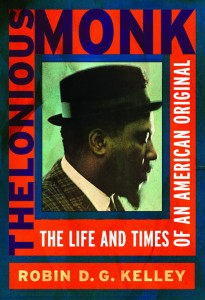
Thelonious Monk: The Life and Times of An American Original by Robin Kelley--Free Press, October 2009


All,

The book is finally out and it is simply INCREDIBLE. This is an absolutely stupendous achievement by one of the finest social historians and cultural critics in this country, the great Robin D.G. Kelley. Dr. Kelley has written the definitive biography of the legendary Thelonious Monk and it is a 600 page masterpiece. Over ten years of exhaustive historical research and writing went into this opus and it was more than worth the wait! So don't hesitate for another second.
GET THIS BOOK TODAY AND TELL EVERYONE YOU KNOW AND THEIR FRIENDS TO GO COP IT NOW...


(
Note: I will be doing an extensive review and analysis of Dr. Kelley's new biography on this site as soon as I finish reading the text)

Kofi


http://monkbook.com/about/


Who Is Thelonious Sphere Monk?


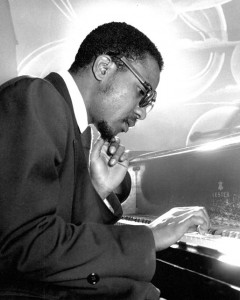
With the arrival Thelonious Sphere Monk, modern music—let alone modern culture—simply hasn’t been the same. Recognized as one of the most inventive pianists of any musical genre, Monk achieved a startlingly original sound that even his most devoted followers have been unable to successfully imitate. His musical vision was both ahead of its time and deeply rooted in tradition, spanning the entire history of the music from the “stride” masters of James P. Johnson and Willie “the Lion” Smith to the tonal freedom and kinetics of the “avant garde.” And he shares with Edward “Duke” Ellington the distinction of being one of the century’s greatest American composers. At the same time, his commitment to originality in all aspects of life—in fashion, in his creative use of language and economy of words, in his biting humor, even in the way he danced away from the piano—has led fans and detractors alike to call him “eccentric,” “mad” or even “taciturn.” Consequently, Monk has become perhaps the most talked about and least understood artist in the history of jazz.

Born on October 10, 1917, in Rocky Mount, North Carolina, Thelonious was only four when his mother Barbara, big sister Marion, and baby brother Thomas, moved to New York City. Unlike other Southern migrants who headed straight to Harlem, the Monks settled on West 63rd Street in the “San Juan Hill” neighborhood of Manhattan, near the Hudson River. His father, Thelonious, Sr., joined the family three years later, but health considerations forced him to return to North Carolina. During his stay, however, he often played the harmonica, “Jew’s harp,” and an old player piano the family acquired soon after he arrived. Thelonious’s mother also played piano, mostly hymns and other sacred music, and she encouraged her children’s musical interests by taking them to hear Franko Goldman’s band perform in nearby Central Park and paying for music lessons. She arranged piano lessons for Marion and hoped Thelonious would take up violin. He chose trumpet instead, and studied the instrument briefly but was challenged by bronchial issues. He was about eleven when Marion’s piano teacher took Thelonious on as a student. By his early teens, he was playing rent parties, sitting in on piano at a local Baptist church, and was reputed to have won several “amateur hour” competitions at the Apollo Theater.

Admitted to Peter Stuyvesant, one of the city’s best high schools, Monk dropped out at the end of his sophomore year to pursue music and during the summer of 1935 took a job as a pianist for a traveling evangelist and faith healer. Returning after two years, he formed his own quartet and played local bars and small clubs until the spring of 1941, when he became the house pianist at Minton’s Playhouse in Harlem.

Minton’s, legend has it, was where the “bebop revolution” began. The after-hours jam sessions at Minton’s, along with similar musical gatherings at Monroe’s Uptown House, Dan Wall’s Chili Shack, among others, attracted a new generation of musicians brimming with fresh ideas about harmony and rhythm—notably Charlie Parker, Dizzy Gillespie, Mary Lou Williams, Kenny Clarke, Oscar Pettiford, Max Roach, Tadd Dameron, and Monk’s close friend and fellow pianist, Bud Powell. Monk’s harmonic innovations proved fundamental to the development of modern jazz in this period. Anointed by some critics as the “High Priest of Bebop,” several of his compositions (“52nd Street Theme,” “‘Round Midnight,” “Epistrophy,” “I Mean You”) were favorites among his contemporaries.

Yet, as much as Monk helped usher in the bebop revolution, he also charted a new course for modern music few were willing to follow. Whereas most pianists of the bebop era played sparse chords in the left hand and emphasized fast, even eighth and sixteenth notes in the right hand, Monk combined an active right hand with an equally active left hand, fusing stride and angular rhythms that utilized the entire keyboard. And in an era when fast, dense, virtuosic solos were the order of the day, Monk was famous for his use of space and silence. In addition to his unique phrasing and economy of notes, Monk would “lay out” pretty regularly, enabling his sidemen to experiment free of the piano’s fixed pitches. As a composer, Monk was less interested in writing new melodic lines over popular chord progressions than in creating a whole new architecture for his music, one in which harmony and rhythm melded seamlessly with the melody. “Everything I play is different,” Monk once explained, “different melody, different harmony, different structure. Each piece is different from the other. … [W]hen the song tells a story, when it gets a certain sound, then it’s through…completed.”

Despite his contribution to the early development of modern jazz, Monk remained fairly marginal during the 1940s and early 1950s. Besides occasional gigs with bands led by Kenny Clarke, Lucky Millinder, Kermit Scott, and Skippy Williams, in 1944 tenor saxophonist Coleman Hawkins was the first to hire Monk for a lengthy engagement and the first to record with him. Most critics and many musicians were initially hostile to Monk’s sound. Blue Note, then a small record label, was the first to sign him to a contract. Thus, by the time he went into the studio to lead his first recording session in 1947, he was already thirty years old and a veteran of the jazz scene. Although all of Monk’s Blue Note sides are hailed today as some of his greatest recordings, at the time of their release in the late 1940s and early 1950s, they proved to be a commercial failure.

Harsh, ill-informed criticism limited Monk’s opportunities to work—opportunities he desperately needed especially after his marriage to Nellie Smith in 1948, and the birth of his son, Thelonious, Jr., in December of 1949. Monk found work where he could, but he never compromised his musical vision. His already precarious financial situation took a turn for the worse in August of 1951, when he was falsely arrested for narcotics possession, essentially taking the rap for his friend Bud Powell. It was his second arrest; the first, in 1948, was for possession of marijuana. Deprived of his cabaret card—a police-issued “license” without which jazz musicians could not perform in New York clubs—Monk was denied gigs in his home town for the next six years. Nevertheless, he played neighborhood clubs in Brooklyn, the Bronx, and Harlem, sporadic concerts, took out-of-town gigs, composed new music, and made several trio and ensemble records under the Prestige label (1952–1954), which included memorable performances with Sonny Rollins, Miles Davis, and Milt Jackson. In the fall of1953, he celebrated the birth of his daughter Barbara, and the following summer he crossed the Atlantic for the first time to play the Paris Jazz Festival. During his stay, he recorded his first solo album for Vogue. These recordings would begin to establish Monk as one of the century’s most imaginative solo pianists.

In 1955, Monk signed with a new label, Riverside, and recorded several outstanding LP’s which garnered critical attention, notably Thelonious Monk Plays Duke Ellington, The Unique Thelonious Monk, Brilliant Corners, Monk’s Music and his second solo album, Thelonious Himself. In 1957, with the help of his friend and sometime patron, the Baroness Pannonica de Koenigswarter, he had finally gotten his cabaret card restored and enjoyed a very long and successful engagement at the Five Spot Café with John Coltrane on tenor saxophone, Wilbur Ware and later Ahmed Abdul-Malik on bass, and Shadow Wilson on drums. From that point on, his career began to soar; his collaborations with Johnny Griffin, Sonny Rollins, Art Blakey, Clark Terry, Gerry Mulligan, and arranger Hall Overton, among others, were lauded by critics and studied by conservatory students. Monk even led a successful big band at Town Hall in 1959. It was as if jazz audiences had finally caught up to Monk’s music.

By 1961, Monk had established a more or less permanent quartet consisting of Charlie Rouse on tenor saxophone, John Ore (later Butch Warren and then Larry Gales) on bass, and Frankie Dunlop (later Ben Riley) on drums. He performed with his own big band at Lincoln Center (1963), and the quartet made a few European and world tours throughout the decade. In 1962, Monk had also signed with the gargantuan Columbia records, and in February of 1964 he became the third jazz musician in history to grace the cover of Time Magazine.

However, with fame came the media’s growing fascination with Monk’s alleged eccentricities. Stories of his behavior on and off the bandstand often overshadowed serious commentary about his music. The media helped invent the mythical Monk—the reclusive, naïve, idiot savant whose musical ideas were supposed to be entirely intuitive rather than the product of intensive study, knowledge and practice. Indeed, his reputation as a recluse (Time called him the “loneliest Monk”) reveals just how much Monk had been misunderstood. As his former sideman, tenor saxophonist Johnny Griffin, explained, Monk was somewhat of a homebody: “If Monk isn’t working he isn’t on the scene. Monk stays home. He goes away and rests.” Unlike the popular stereotypes of the jazz musician, Monk was devoted to his family. He appeared at family events, played birthday parties, and wrote playfully complex songs for his children: “Little Rootie Tootie” for his son, “Boo Boo’s Birthday” and “Green Chimneys” for his daughter, and a Christmas song titled “A Merrier Christmas.” The fact is, the Monk family held together despite long stretches without work, severe money shortages, sustained attacks by critics, grueling road trips, bouts with illness, and the loss of close friends.

During the 1960s, Monk scored notable successes with albums such as Criss Cross, Monk’s Dream, It’s Monk Time, Straight No Chaser, and Underground. But as Columbia/CBS records pursued a younger, rock-oriented audience, Monk and other jazz musicians ceased to be a priority for the label. Monk’s final recording with Columbia was a big band session with Oliver Nelson’s Orchestra in November of 1968, which turned out to be both an artistic and commercial failure. Columbia’s disinterest and Monk’s deteriorating health kept the pianist out of the studio. In January of 1970, Charlie Rouse left the band, and two years later Columbia quietly dropped Monk from its roster. For the next few years, Monk accepted fewer engagements and recorded even less. His quartet featured saxophonists Pat Patrick and Paul Jeffrey, and his son Thelonious, Jr., took over on drums in 1971. That same year and again in 1972, Monk toured widely with the “Giants of Jazz,” a kind of bop revival group consisting of Dizzy Gillespie, Kai Winding, Sonny Stitt, Al McKibbon and Art Blakey, and made his final public appearance in July of 1976. Physical illness, fatigue, and perhaps sheer creative exhaustion convinced Monk to give up playing altogether. On February 5, 1982, he suffered a stroke and never regained consciousness; twelve days later, on February 17th, he died.

Today Thelonious Monk is widely accepted as a genuine master of American music. His compositions constitute the core of jazz repertory and are performed by artists from many different genres. He is the subject of award winning documentaries, biographies and scholarly studies, prime time television tributes, and he even has an Institute created in his name. The Thelonious Monk Institute was created to promote jazz education and to train and encourage new generations of musicians. It is a fitting tribute to an artist who was always willing to share his musical knowledge with others but expected originality in return.


Book Events

Monday, October 5, 2009, 7:00 – 9:00 PM
Barnes and Noble
66th and Broadway
New York, NY
212-595-6859

Thursday, October 8, 2009, 7:30
Book party, Discussion, and Jam session
The Brecht Forum
451 West Street, New York, NY 10014 (between Bank & Bethune Streets)
Phone: (212) 242-4201 – Email: brechtforum at brechtforum.org

Saturday, October 10, 2009, 6:00 – 8:00 PM
Politics and Prose Bookstore and Coffee House
5015 Connecticut Ave., NW
Washington, DC
http://www.politics-prose.com

Tuesday, October 13, 2009, 7:30 PM
Conversation with Robin D. G. Kelley on Thelonious Monk
With Guest, pianist Randy Weston
Center for Jazz Studies, Columbia University
Dwyer Cultural Center, 258 St. Nicholas Ave. and 123rd St.
New York


Thursday, October 15, 2009, 3:00 PM
Reading and book signing, “‘North of the Sunset’: Thelonious Monk’s L.A. Stories”
Charles E. Young Research Library, UCLA
Presentation Room
Los Angeles, CA
Free and open to the public

Tuesday, October 20, 2009, 7:00 PM
Book Soup
8818 W Sunset Blvd
Los Angeles, CA 90069-2125
(310) 659-3110
http://www.booksoup.com/

October 23, 2009, 7:00 PM
Vroman’s Bookstore
695 E Colorado Blvd
Pasadena, CA 91101
(626) 449-5320
http://www.vromansbookstore.com/

October 27, 1009, 7:00 PM
Eso Won Bookstore
4311 Degnan Blvd.
Los Angeles, CA 90008
(323) 290-1048
info@esowonbookstore.com
http://www.esowonbookstore.com/

October 29, 2009, 7:00 PM
City Lights Bookstore
261 Columbus Avenue at Broadway (North Beach)
San Francisco, California 94133
Tel (415) 362-8193
http://www.citylights.com

Return to Main Menu.


Home
The Book
About The Author
Reviews
Sessionography
Who Is Thelonious Sphere Monk?
Photos
Videos
Book Events
Links
Contact


The Book

Thelonious Monk: The Life and Times of an American Original

“The piano ain’t got no wrong notes!” So ranted Thelonious Sphere Monk, who proved his point every time he sat down at the keyboard. His angular melodies and dissonant harmonies shook the jazz world to its foundations, ushering in the birth of “bebop” and establishing Monk as one of America’s greatest composers. Yet throughout much of his life, his musical contribution took a backseat to tales of his reputed behavior. Writers tended to obsess over Monk’s hats or his proclivity to dance on stage. To his fans, he was the ultimate hipster; to his detractors he was temperamental, eccentric, taciturn, or child-like. But, these labels tell us little about the man or his music.

In the first book on Thelonious Monk based on exclusive access to the Monk family papers and private recordings, as well as a decade of prodigious research, prize-winning historian Robin D. G. Kelley brings to light a startlingly different Thelonious Monk–witty, intelligent, generous, family-oriented, politically engaged, brutally honest, and a devoted father and husband. Indeed, Thelonious Monk is essentially a love story. It is a story of familial love, beginning with Monk’s enslaved descendants from whom Thelonious inherited an appreciation for community, freedom, and black traditions of sacred and secular song. It is about a doting mother who scrubbed floors to pay for piano lessons and encouraged her son to follow his dream. It is the story of romance, from Monk’s initial heartbreaks to his life-long commitment to his muse, the extraordinary Nellie Monk. And it is about his unique friendship with the Baroness Nica de Koenigswarter, a scion of the famous Rothschild family whose relationship with Monk and other jazz musicians has long been the subject of speculation and rumor. Nellie, Nica, and various friends and family sustained Monk during the long periods of joblessness, bipolar episodes, incarceration, health crises, and other tragic and difficult moments.

Above all, Thelonious Monk is the gripping saga of an artist’s struggle to “make it” without compromising his musical vision. It is a story that, like its subject, reflects the tidal ebbs and flows of American history in the twentieth century. Elegantly written and rich with humor and pathos, Thelonious Monk is the definitive work on modern jazz’s most original composer.

Advance Praise for Thelonious Monk: The Life and Times of an American Original

“Robin Kelley’s new biography Thelonious Monk: The Life And Times of an American Original is a breath of fresh air amongst the biographies of our legendary jazz musicians. This book is thorough, detailed and written with a true affinity for Monk’s humaneness and creative musical output. It fills in the missing pieces about the growth of the jazz scene in New York through the ’40s, ’50s and ’60s, detailing each step of TSM’s development – who passed through his bands, what gigs he played and what happened on those scenes. It’s an invaluable and close look at the center of the world’s most important creative musical developments in these decades: New York City.”

Chick Corea

“Thelonious Monk: The Life And Times of an American Original is one of the most anticipated books in jazz scholarship, and well worth the wait. Robin D. G. Kelley represents one of this generation’s most important voices equipped with the knowledge, passion and respect for both jazz and jazz musicians required to interpret the many details and nuances of Thelonious Monk’s life. This compelling book will both challenge old assumptions and inspire new assessments of the life and legacy one of the world’s greatest musicians.”

Geri Allen, pianist/composer, Associate Professor of Jazz & Contemporary Improvisation, University Of Michigan

“Powerful, enraging and enduring. . . . In Robin Kelley’s finely grained and surely definitive life-and-times study, Thelonious Monk: The Life And Times of an American Original, has found an original biographer.”

David Levering Lewis, biographer of W.E.B. Du Bois and Pulitzer Prize winner

“An honest and eloquent treatment of one of our most important artists, Thelonious Monk: The Life And Times of an American Original is a stunning tour de force! It is the most comprehensive treatment of Monk’s life to date. Furthermore, in Monk’s story, Kelley has found the perfect medium to shed light on a nation’s, and a people’s, history and persistent quest for freedom. In so doing he has given us a book that is as bold, brilliant and beautiful as Monk and his music.”

Farah Jasmine Griffin, author of If You Can’t Be Free, Be a Mystery: In Search of Billie Holiday


About The Author


Robin D. G. Kelley never met Thelonious Monk, but he grew up with his music. Born in 1962, he spent his formative years in Harlem in a household and a city saturated with modern jazz. As a child he took a few trumpet lessons with the legendary Jimmy Owens, played French horn in junior high school, and picked up piano during his teen years in California. In 1987, Kelley earned his PhD in History from UCLA and focused his work on social movements, politics and culture—although music remained his passion.

During his tenure on the faculties of Emory University, the University of Michigan, New York University, and Columbia University, Kelley’s scholarly interests shifted increasingly toward music. He has written widely on jazz, hip hop, electronic music, musicians’ unions and technological displacement, and social and political movements more broadly.

Before becoming Professor of American Studies and Ethnicity at the University of Southern California, Robin D. G. Kelley served on the faculty at Columbia University’s Center for Jazz Studies, where he held the first Louis Armstrong Chair in Jazz Studies. Besides Thelonious Monk: The Life and Times of an American Original, Kelley has authored several prize-winning books, including Hammer and Hoe: Alabama Communists During the Great Depression (University of North Carolina Press, 1990); Race Rebels: Culture Politics and the Black Working Class (The Free Press, 1994); Yo’ Mama’s DisFunktional!: Fighting the Culture Wars in Urban America (Beacon Press, 1997), which was selected one of the top ten books of 1998 by the Village Voice; Three Strikes: Miners, Musicians, Salesgirls, and the Fighting Spirit of Labor’s Last Century, written collaboratively with Dana Frank and Howard Zinn (Beacon 2001); and Freedom Dreams: The Black Radical Imagination (Beacon Press, 2002). He also edited (with Earl Lewis), To Make Our World Anew: A History of African Americans (Oxford University Press, 2000), a Choice Outstanding Academic Title and a History Book Club Selection. Kelley also co-edited (with Sidney J. Lemelle) Imagining Home: Class, Culture, and Nationalism in the African Diaspora (Verso, 1994). He is currently completing Speaking in Tongues: Jazz and Modern Africa (Harvard University Press, forthcoming), and a general survey of African American history co-authored with Tera Hunter and Earl Lewis to be published by Norton.

Kelley’s essays have appeared in several anthologies and journals, including The Nation, Monthly Review, The Voice Literary Supplement, New York Times (Arts and Leisure), New York Times Magazine, Rolling Stone, Color Lines, Code Magazine, Utne Reader, Lenox Avenue, African Studies Review, Black Music Research Journal, Callaloo, New Politics, Black Renaissance/Renaissance Noir, One World, Social Text, Metropolis, American Visions, Boston Review, Fashion Theory, American Historical Review, Journal of American History, New Labor Forum, Souls, Metropolis, and frieze: contemporary art and culture, to name a few.


Video of Robin Kelley author of new biography Thelonious Monk: The Life & Times of An American Original talking about Monk and his book:


http://www.simonandschuster.com/multimedia?video=44534277001


The Banks and Corporations Vs. The Rest of Us

http://www.nytimes.com/2009/10/22/business/22pay.html?ref=global-home

All,

While this band-aid measure by the government will in itself do very little to address the far bigger problem of seriously regulating and controlling the financial sector it is a small step in the right direction. However, for this directive to have any real impact in establishing genuine public control of the banking industry and Wall Street it must be followed up by new strong regulatory laws imposed by the federal government and broad social democratic demands by American citizens that insist on telling the robber baron financial sector of the U.S. economy what to do and how to do it for a change as opposed to the other way around...So both we and the Obama administration still have a very long way to go to establish true justice and democracy in the economy...

Kofi


October 22, 2009

U.S. to Order Steep Pay Cuts at Firms That Got Most Aid
By STEPHEN LABATON
New York Times

WASHINGTON — Responding to the growing furor over the paychecks of executives at companies that received billions of dollars in federal bailouts, the Obama administration will order the companies that received the most aid to deeply slash the compensation to their highest paid executives, an official involved in the decision said on Wednesday.

Under the plan, which will be announced in the next few days by the Treasury Department, the seven companies that received the most assistance will have to cut the cash payouts to their 25 best-paid executives by an average of about 90 percent from last year. For many of the executives, the cash they would have received will be replaced by stock that they will be restricted from selling immediately.

And for the 25 best-paid executives, the total compensation, which includes bonuses, will drop, on average, by about 50 percent.

The companies are Citigroup, Bank of America, the American International Group, General Motors, Chrysler and the financing arms of the two automakers.

At the financial products division of A.I.G., the locus of problems that plagued the large insurer and forced its rescue with more than $180 billion in taxpayer assistance, no top executive will receive more than $200,000 in total compensation, a stunning decline from previous years in which the unit produced many wealthy executives and traders.

In contrast to previous years, an official said, executives in the financial products division will receive no other compensation, like stocks or stock options.

And at all of the companies, any executive seeking more than $25,000 in special perks — like country club memberships, private planes, limousines or company issued cars — will have to apply to the government for permission. The administration will also warn A.I.G. that it must fulfill a commitment it made to significantly reduce the $198 million in bonuses promised to employees in the financial products division.

The pay restrictions illustrate the humbling downfall of the once-proud giants, now wards of the state whose leaders’ compensation is being set by a Washington paymaster. They also show how Washington in the last year has become increasingly powerful in setting corporate policies as more companies turned to the government for money to survive.

The compensation schedules set by Kenneth R. Feinberg, the special master at Treasury handling compensation issues, comes as many other banks that received smaller but significant taxpayer assistance in the last year have been reporting huge year-end bonuses, setting off a new round of recrimination in Washington about the bailout of Wall Street.

Since his appointment last June by Treasury Secretary Timothy F. Geithner, Mr. Feinberg has spent months in negotiations with the companies as he seeks to balance compensation concerns against fears at the companies that any huge restrictions in pay could prompt an exodus of executives. Under a law adopted earlier this year, the Treasury Department was instructed to examine the salaries and bonuses for the five most-senior executives and their 20 most highly paid employees at companies that have received extraordinary assistance.

Mr. Feinberg has already achieved significant results at several companies. As a result of his discussions, Kenneth D. Lewis, the head of Bank of America who recently resigned, agreed to forgo his salary and bonus for 2009. (He will still receive a pension of $53.2 million, although Mr. Feinberg can issue an advisory opinion challenging it that would carry political weight.) And fearful of a political backlash over the pay of Andrew J. Hall, a successful energy trader who received nearly $100 million last year, Citigroup agreed two weeks ago to sell its Phibro unit that Mr. Hall heads to Occidental Petroleum.


Copyright 2009 The New York Times Company


Corporate Capitalism, The Banking Industry, and Economic Collapse: What Is To Be Done?--Part II

http://www.nytimes.com/2009/10/20/opinion/20herbert.html?em=&adxnnl=1&adxnnlx=1256130717-L8tuy0dm4G166hjC8/EUUA


October 20, 2009

OP-ED COLUMNIST

Safety Nets for the Rich

By Bob Herbert
New York Times


The headlines that ran side by side on the front page of Saturday’s New York Times summed up, inadvertently, the terrible fix that we’ve allowed our country to fall into.

The lead headline, in the upper right-hand corner, said: “U.S. Deficit Rises to $1.4 Trillion; Biggest Since ’45.”

The headline next to it said: “Bailout Helps Revive Banks, And Bonuses.”

We’ve spent the last few decades shoveling money at the rich like there was no tomorrow. We abandoned the poor, put an economic stranglehold on the middle class and all but bankrupted the federal government — while giving the banks and megacorporations and the rest of the swells at the top of the economic pyramid just about everything they’ve wanted.

And we still don’t seem to have learned the proper lessons. We’ve allowed so many people to fall into the terrible abyss of unemployment that no one — not the Obama administration, not the labor unions and most certainly no one in the Republican Party — has a clue about how to put them back to work.

Meanwhile, Wall Street is living it up. I’m amazed at how passive the population has remained in the face of this sustained outrage.

Even as tens of millions of working Americans are struggling to hang onto their jobs and keep a roof over their families’ heads, the wise guys of Wall Street are licking their fat-cat chops over yet another round of obscene multibillion-dollar bonuses — this time thanks to the bailout billions that were sent their way by Uncle Sam, with very little in the way of strings attached.

Nevermind that the economy remains deeply troubled. As The Times pointed out on Saturday, much of Wall Street “is minting money.”

Call it déjà voodoo. I wrote a column that ran three days before Christmas in 2007 that focused on the deeply disturbing disconnect between Wall Streeters harvesting a record crop of bonuses — billions on top of billions — while working families were having a very hard time making ends meet.

We would later learn that December 2007 was the very month that the Great Recession began. I wrote in that column: “Even as the Wall Streeters are high-fiving and ordering up record shipments of Champagne and caviar, the American dream is on life support.”

So we had an orgy of bonuses just as the recession was taking hold and now another orgy (with taxpayers as the enablers) that is nothing short of an arrogantly pointed finger in the eye of everyone who suffered, and continues to suffer, in this downturn.

Whether P.T. Barnum actually said it or not, there is a sucker born every minute. American taxpayers might want to take a look in the mirror. If the epithet fits...

We need to make some fundamental changes in the way we do things in this country. The gamblers and con artists of the financial sector, the very same clowns who did so much to bring the economy down in the first place, are howling self-righteously over the prospect of regulations aimed at curbing the worst aspects of their excessively risky behavior and preventing them from causing yet another economic meltdown.

We should be going even further. We’ve institutionalized the idea that there are firms that are too big to fail and, therefore, “we, the people” are obliged to see that they don’t — even if that means bankrupting the national treasury and undermining the living standards of ordinary people. What sense does that make?

If some company is too big to fail, then it’s too big to exist. Break it up.

Why should the general public have to constantly worry that a misstep by the high-wire artists at Goldman Sachs (to take the most obvious example) would put the entire economy in peril? These financial acrobats get the extraordinary benefits of their outlandish risk-taking — multimillion-dollar paychecks, homes the size of castles — but the public has to be there to absorb the worst of the pain when they take a terrible fall.

Enough! Goldman Sachs is thriving while the combined rates of unemployment and underemployment are creeping toward a mind-boggling 20 percent. Two-thirds of all the income gains from the years 2002 to 2007 — two-thirds! — went to the top 1 percent of Americans.

We cannot continue transferring the nation’s wealth to those at the apex of the economic pyramid — which is what we have been doing for the past three decades or so — while hoping that someday, maybe, the benefits of that transfer will trickle down in the form of steady employment and improved living standards for the many millions of families struggling to make it from day to day.

That money is never going to trickle down. It’s a fairy tale. We’re crazy to continue believing it.


Copyright 2009 The New York Times Company

"April 3, 1968" - Martin Luther King's Prophetic Last speech

http://www.youtube.com/watch?v=x1L8y-MX3pg&feature=related

All,

This speech was given in Memphis, Tennessee on April 3, 1968--the day before Dr. King was assassinated. He was only 39 years old at the time of his death (as was Malcolm X when he was murdered on February 21, 1965). This is one of the finest speeches that Dr. King ever gave in an extraordinary life and career that made him one of the greatest and most important public figures of the 20th century...

Kofi


Martin Luther King Jr.'s Children Resolve Bitter Dispute Over Estate

http://legalblogwatch.typepad.com/legal_blog_watch/2009/10/an-out-of-court-settlement-has-finally-resolved-a-long-standing-dispute-among-dr-martin-luther-kings-children-over-his.html

All,

Finally...

Kofi


An out-of-court settlement has finally resolved a long-standing dispute among Dr. Martin Luther King's children over his multimillion-dollar estate.

Although Dr. King died in 1968, his estate continues to produce substantial income. Among other things, the estate includes the broadcast rights to Dr. King's “I have a dream” speech.
In 1999, the 11th Circuit ruled in Estate of Martin Luther King, Jr., Inc. v. CBS, Inc.that the public performance of his speech did not constitute "general publication," and that by giving the speech in public he did not forfeit his copyright. As a result, re-broadcast of the speech has remained a major income generator for the estate.

In addition, the estate made $32 million from the sale of Dr. King's papers to the City of Atlanta in 2006. The sale was reportedly necessary "to protect the papers for future generations because of crumbling infrastructure and mounting debt at the King Center in Atlanta," the Times Online reports.

The dispute between Dr. King's children culminated in a lawsuit filed by two of his children, Bernice and Martin Luther King III, against their brother, Dexter. The lawsuit alleged that Dexter converted “substantial funds" from the estate for his personal use. Dexter King then countersued his brother and sister, demanding control of certain love letters between Dr. King and Coretta Scott King. The recent settlement of the lawsuit resolved the various claims, and the siblings have stated that they hope to now move forward and preserve the legacy of their parents.

Posted by Bruce Carton on October 20, 2009