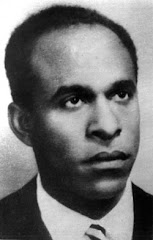
Essays on Contemporary America by Greg Tate. New York: AUWA. 368 pages. $18.
Second edition, June 2026


Essays On Contemporary America
Simon and Schuster, 1992
(First original edition)
Greg Tate was primarily a music critic, though he delved into literature and film, too, and sounded off on current events when he felt community leaders and his fellow Black-nationalist activists were whiffing on key points. He wrote the manifesto for the anti-racist musicians’ alliance the Black Rock Coalition and would later become a performing guitarist and bandleader himself. But it was his writing that gave him such stature that when he died—prematurely, like many of the artists he wrote about, of a heart attack at age sixty-four in December 2021—the legendary Apollo in Harlem put his name up on the marquee. To me in 1992 he was literally the hippest of the hip, the most brain-melting of all the mind-blowing voices in the culture pages of the era’s Village Voice, like C. Carr, J. Hoberman, Gary Indiana, Donna Gaines, Erik Davis, Carol Cooper, Vince Aletti, Nelson George, and James Wolcott, to name a few. Music editor Robert Christgau spotted Tate’s aura as soon as a Nona Hendryx live review came over the transom in 1981 from DC, where Tate lived after graduating from Howard University. Christgau didn’t print that one, but said he was eager for more like it, and Tate moved to NYC in an eyeblink.
Dubbing himself “Ironman” after both the Marvel comics character and the Eric Dolphy album, Tate machine-gunned gold nuggets across the page in what-the-fuck sentences with the cadences of rap—of which he was the first crucial theoretician—plus the cognitive dissonances of free jazz, a fat bassline of moral clarity, and a syncopated shuffle of cultural-political thought set in spin as if Stuart Hall and Roland Barthes were tag-teaming it behind the turntables. Sample for instance the notorious linguistic Molotov that Tate lobbed Michael Jackson’s way in 1987 for his deracinating cosmetic surgeries as well as his musical regressions on Bad: “As a black American success story the Michael Jackson of Thriller is an extension of the Motown integrationist legacy. But the Michael Jackson as skin job represents the carpetbagging side of black advancement in the affirmative action era. . . . In this sense Jackson’s decolorized flesh reads as the buppy version of Dorian Gray, a blaxploitation nightmare that offers this moral: Stop, the face you save may be your own.”
Until that day in front of Doug’s bookcase, I assumed that if you wanted to hold on to any of what Tate was laying down, you’d better scissor the articles out and stick them in a folder (as we did thenadays) because otherwise they’d all soon be fish wrap. That kind of ephemeral elusiveness felt like part of the deal, that every piece was a happening in time and space, a shuttle briefly alighting before heading back to the mothership, and you either caught it or got caught short. If they were going to collect Tate’s work, it ought to have been via some William Gibson–esque virtual-reality headset or in a hologram that you could only access at an after-hours joint behind a bodega with a password like, “Funkadelic was too wacky for the souled-out splibs and too black for the spazz whiteys who believed hard rock only came in Caucasoid.” A bookseemed so pedestrian—but it also seemed like a miracle that some suit at Simon & Schuster greenlit it.
I imagine they’d have preferred the title and subtitle to be more like the cheesy copy they blew up on the back cover: “Are You Ready for the Hiphop Nation?” The actual title, taken from Tate’s posthumous essay on Jean-Michel Basquiat, had to be decoded to convey that, like the painter, Tate was a rare Black infiltrator in white-controlled cultural spheres, and from the hip-hop generation to boot. It came with a subtitle befitting the book’s true heft: Essays on Contemporary America. It also racked up more uses of the word “motherfuckers” than any text I’d ever read before, though often in mutations like “muhfukuhs” or “furthermuckers.” Clearly one needed to grab this thing and guard it like a sacred tablet dug out from the desert sands. I stole Doug’s for a while till I got my own, which across the decades has become one of a handful of books I regularly pull off the shelf just to soak in a few paragraphs and juice the brain up into writing mode.
Yet for a long time I underestimated its impact. In my own mostly pinkskinned rockcrit orbits, the writers most pathologically mimicked by rookies tended to be Lester Bangs (also an influence on Tate) and, by the later ’90s, David Foster Wallace. I picked up my own mild infections there, too, but Tate was the one who truly got the envy burning. Thankfully I couldn’t do much about it, as I didn’t have personal access to the cultural sources of his scansion and would have sounded like an offensively deluded wanksta wannabe if I’d tried. Still, I was sometimes surprised one didn’t spot the marks of Tate’s trail more often. It was only as the broader music press got less segregated (not to say truly desegregated) that I realized how rife Tate discipleship was among BIPOC cultural writers and thinkers in the media and the academy alike. Some even jokingly called themselves “Tater Tots,” making Tate maybe the only music writer ever cool enough to have his own “Beyhive”-style fan-army sobriquet. But unlike with Bangs, you couldn’t copycat the Ironman on style and attitude alone, because so much of the style was in the array of knowledge and references he juggled even as the sentences made their syllabic head-spins. If you wanted to sound like him, you’d have to do some heavyweight homework, and by the time you’d put in those hours you probably were closer to gestating a genuine voice of your own. And anyway it was the unjust case that as in many realms of American endeavor, if you were going to critic while Black, you’d have to do it to a higher standard than (hi!) the average white boy. Greg Tate was that standard.

Nevertheless, Flyboy was allowed to go out of print, which generates icky feelings as does the fact that the Pulitzer Prize committee granted him recognition with a special citation only in 2024, several years after his death. It took twenty-four years for the first collection finally to get a sequel, which came from Duke University Press in 2016, titled Flyboy 2,almost as if this were the Star Wars franchise of cultural criticism, to which I’d say hell yeah—to quote Tate’s frequent subject Public Enemy, “The Empire Strikes Black.”That volume hoovered up more of the writing Tate continued to do for the Voice into the 2000s, his long-running “Black Owned” column for Vibe in the ’90s, and occasionals for other publications and institutions. But as Tate himself acknowledged, his style mellowed some with maturity, though the substance was never watered down. So for the hardcore torrential face-smacking tang of Tate, the first Flyboy remains the debut album, the mother lode.
Now, in the fifth year past his death, here it is resurrected by Auwa Books, an imprint of FSG directed by drummer/writer/film producer/cultural uplifter Questlove, who in his foreword says, “Greg was the first person who validated the art that I loved and made it intellectually viable. I never heard anyone speak of hip-hop in those terms before him.” There’s also an introduction by the poet and critic Hanif Abdurraqib, likely the current most widely read Tate inheritor in print, who rhapsodizes on “the many ways that Greg Tate loved Black people”—enough to praise but also enough to challenge, and especially enough to write in a diction true to the culture. We also still get the original foreword by Henry Louis Gates Jr., who to his credit grasped Tate’s importance even though he’d taken some lumps from Tate in print, as seen here in 1985’s “Yo, Hermeneutics!” Gates makes that the very occasion of his praise: “What Tate understands is that culture, Afro-American culture in particular, is never a matter of either-or. He can both celebrate the energizing pull of cultural nationalism and register its limitations, moral and intellectual.” Gates always knew when to curry favor instead of starting a bun-fight, which both justifies the side-eye Tate gave to some of Gates’s strategic maneuvering and is why Gates gets to host PBS series and you don’t.
Tate didn’t either, though they would have made for much more electrifying television. I’d rather have his version of the history of jazz than Ken Burns’s more doctrinaire one (though one surprising thing about revisiting Flyboy is how relatively gentle he was on Burns collaborator Wynton Marsalis’s conservative take on the music in the ’80s). I’d also take, please and thank you, Tate’s documentary series on the Harlem Renaissance, on the Black Arts Movement, and on the genesis of hip-hop, too (covering all five elements, natch). No doubt such works would have been too disruptive in both form and content for producers and funders. Tate’s spiritual cinematic siblings were many, such as Julie Dash and early Spike Lee (in the moment he thought She’s Gotta Have It represented a “coup of staggering proportions . . . a populist black post-structuralist’s dream”), but his nearest and dearest in the film fraternity was the cinematographer Arthur Jafa, whose video essays Love Is the Message, the Message Is Death (2016) and The White Album (2018) are the nearest things to a Tate essay come to full audiovisual life. They are not coming soon to a pledge drive near you.
As much as Tate’s sentences still crackle and pop off the page, the new Flyboy edition does carry the baggage of being a collection of pieces mostly written for a weekly bolt of newsprint roughly thirty-five to forty-five years ago. They inevitably have lost a lot of immediacy—especially in the final section of commentary on several racially charged killings and trials in ’80s New York, but even with some of the cultural subjects. This is hopefully not the case with Public Enemy, Don DeLillo, De La Soul, Basquiat, Funkadelic, Samuel R. Delany, Bad Brains, Santana, or even (debatable) Ice-T. It is surely not the case with Miles Davis, one of Tate’s lodestars, though some current jazzheads may be bemused by how hard he goes in on defending Davis’s funk-rock fusion records like On the Corner and Bitches’ Brew, which are pretty much universally beloved and influential today—not realizing that’s in no small part because of the irresistible cases Tate mounted for them in his two-part 1983 essay “The Electric Miles” in Downbeat, against a near monolith of jazz-purist skepticism. A lot more of us could still stand to listen closer to Tate favorites like Pangea and Agharta (both 1975), if only to grasp the nuances of the writer’s paeans to Davis sideman Pete Cosey, whom he calls the Cecil Taylor of the electric guitar. Guitar mattered to Tate—he played Strat himself, and if there was a nucleus around which his taste revolved it was probably Jimi Hendrix, the subject of his one and only full-length book, Midnight Lightning: Jimi Hendrix and the Black Experience (2003).
Contemporary readers might find a few of Tate’s other picks here curious, not recalling e.g. the brief passionate affair between music criticdom at large and the Black British “dreampop” duo A. R. Kane, who get a few pages along with the even obscurer likes of R&B artists Aveda and Marc Anthony Thompson. Right-thinking poptimistic types might also be taken aback by the few withering words Tate has for disco: “On black radio [Parliament-Funkadelic] functioned as active opposition to a form of record industry sabotage dubbed ‘disco’—or as I like to pun it, dis-COINTELPRO, since it destroyed the self-supporting black band movement which P-Funk (jes) grew out of.”
I might count that as one case of this book’s low-key straight-male-centrism, in its choice of subjects and arguably somewhat in style and theoretical framework. The only women creators dealt with in depth, aside from Aveda, are the filmmakers in the 1991 piece “Cinematic Sisterhood,” and while it’s done with loving dedication, I can’t help but note that it’s in a list/survey format, quite unlike the lionizing focus of most of Tate’s essays. Careful, now—this is very far from me saying Tate was sexist. On the contrary, he was one of the first critics to call male rap artists loudly out on their animus towards women, famously making it one of his reasons (along with their flashes of anti-Semitism) to withhold full approval from Public Enemy at their peak. He delivers the barb the way he knew it would sting most: “By my homegirl’s reckoning all the misogyny is the result of PE suffering from LOP: lack of pussy. She might have a point.” Tate also doesn’t hesitate to end his Miles Davis obituary by condemning the musician’s unabashed abuse of women: “Miles may have swung like a champion but on that score he went out like a roach.” And he stirringly concludes the whole collection with the essay “Love and the Enemy,” where he ranks machismo first among causes for the failings of the Black-nationalist movement in which he’d invested his hopes, and makes a plea to follow the examples of Toni Morrison, bell hooks, and other women writers in how to think about “the pain and trauma beneath the rage.” I’m simply saying that in this phase Tate’s critical praxis had not quite caught up with his feminist and queer-positive principles. In the work in Flyboy 2, that’s all fully integrated.
Less consequentially, today’s readers might also be jolted by some of Tate’s early mixed feelings on Prince. In 1984 he positioned the Purple One among a “Treacherous Three” with Eddie Murphy and Wynton Marsalis as creatures of crossover and careerism who “managed to merge their Stagolee sides with their Proper Negro profiles. . . . All of which is cool until you realize what’s won America’s heart isn’t the designer original but the reasonable facsimile—not crazed black genius but black subterfuge.” Not to worry, Tate came around, writing likely the single greatest appreciation of Prince after his death in 2016, as he also did for David Bowie that year—both in the brief span when MTV News was the most happening music website under the stewardship of Jessica Hopper, and both now vanished from the online archive due to corporate ownership machinations. Those two pieces alone are reason enough to call for a Flyboy 3: Return of the JET-Eye to preserve the rest of the oeuvre, including various liner notes, lectures, interviews, and other uncollected miscellany. Every great pop-culture blockbuster deserves a trilogy.
What this reissue of the first Flyboy lacks is some structural furniture to buttress against that creeping threat of datedness. Insightful tributes from known names like Questlove and Abdurraqib are well and good, but limited compared to what a lively biographical and historical preface by a Black cultural scholar would do for the uninitiated. It would cover matters like Tate’s origins in a civil rights and pan-African activist family, first in Dayton, Ohio, and then in DC, where his mother, Florence, became the press secretary on Marion Barry’s mayoral campaign and administration and then on Jesse Jackson’s 1984 presidential bid. It would give some sense of Tate’s HBCU education and social life, as well as the Black cultural nationalist activism he was responding to (how many young readers now know that much about Louis Farrakhan, much less the Five Percenters?) and the Black-bohemian milieu Tate moved in—“Cult Nats Meet Freaky-Deke,” as he calls it in the title of one of the most manifesto-like Flyboy pieces, from 1986.
Beyond that, an intro should probably have offered some notes about where Tate stands in the timeline of Black arts criticism—both ancestors and descendants—and some basic explanations of what The Village Voice even was, likewise the Black Rock Coalition, and for instance Tate’s own efforts to launch literary-cultural journals of his own design such as B. Culture and Coon Bidness.The reader can cobble most of this together from Tate’s own robust intro to Flyboy 2, from Tricia Romano’s fine 2024 oral history of the Voice, The Freaks Come Out to Write (Tate gave her the title), and online. But for this new edition to serve as both springboard for the uninitiated and lasting archival document, that stuff belongs here, with some kind of external temporizing eye. There also should be (as in Flyboy 2) a list of exactly where and when the original pieces ran, again for the permanent record, which at this juncture is the stakes of the game.
One thing this edition gets completely right is its timing, since for the past year we’ve collectively been revisiting the culture wars of the ’80s with only the mildest revisions, and with an ’80s tabloid dinosaur at the top. While ICE acts out the Purge on the streets, baby tech bros have been set loose with AI-powered chainsaws to hack the “DEI”—reduced to a euphemism for any non-white influence at all—out of federal and cultural institutions. As Tate wrote of the white art establishment’s backlash against Basquiat and others, “This might be understandable if they didn’t already own every fucking thing under the sun and make no bones of dehumanizing the rest of us to maintain hegemony.” With its re-humanizing sprezzatura that always unveils the power grid beneath the everyday as well as the personal stakes in the systemic, Flyboy is a handbook for preserving your own wild sanity under the terrordome. You should pilfer it from your best friend’s bookshelf posthaste.
Carl Wilson is the music critic at Slate and publishes his own newsletter, “Crritic!,” via https://carlwilson.substack.com.
https://dukeupress.wordpress.com/2021/12/08/farewell-to-greg-tate/
Farewell to Greg Tate
 Photo by Nisha Sondhe
We were deeply saddened to learn yesterday of the death of music and cultural critic Greg Tate, author of Flyboy 2: The Greg Tate Reader (2016). He was 64.
After attending Howard University, Tate launched his career at the Village Voice in 1987 and went on to write for many publications, including Vibe, Spin, The Wire, ARTNews, and Downbeat. He is the author of Flyboy in the Buttermilk: Essays on Contemporary America and Midnight Lightning: Jimi Hendrix and the Black Experience and the editor of Everything but the Burden: What White People Are Taking from Black Culture. In 2016 we collected many of his writings in Flyboy 2, which features interviews, reviews, and art, book, and music criticism.

Tate was also a musician who led the conducted improvisation ensemble Burnt Sugar the Arkestra Chamber. He served as a visiting professor at Yale, Columbia, Brown and Williams. In 2020 he co-curated the exhibition Writing the Future: Basquiat and the Hip-Hop Generation at Boston’s Museum of Fine Arts.
His editor, Ken Wissoker, says, “Greg Tate’s Voice essays invented a whole new critical language — both a new form of critical writing and a theoretical approach. It would be hard to underestimate how much a whole generation learned from him. It was a privilege to know him and a dream and an honor to work with him on Flyboy 2. An incalculable loss, far too soon.”
Duke University Press has a final book with Greg Tate under contract, to be published sometime in the next few years. Titled White Cube Fever: Hella Conjure and Writing on the Black Arts, it is a collection of his writing on Black arts, including essays on Carrie Mae Weems, Basquiat, Arthur Jafa, Kerry James Marshall, Sanford Biggers, Lonnie Holley, Ellen Gallagher, and Theaster Gates. It will be a bittersweet pleasure for our staff to work on this posthumous project.
Read more about Tate and his work in obituaries in NPR, Rolling Stone, and ARTNews.
Our condolences go out to Tate’s family, friends, and legions of fans.
NPR News
Stonecoldboldness: A many-sided memorial to the writing of Greg Tate
National Public Radio
Duke University Press
Greg Tate was the coolest person I ever met. As I write this I feel like a teenager, leaning wonderstruck into the corner of the school stairwell as my most idolized upperclassman wanders by. In my early days at The Village Voice, when I first encountered Greg, I felt like that sometimes — here was a writer who'd not only mastered the mode of writing to which I aspired, but had reinvented it, right down to the vocabulary, so that music criticism became music itself. It was the 1990s and hip-hop was beginning to define musical America the way it had already owned New York. And here was Greg, in his beret and dreadlocks and scarves, floating butterfly-like through the office holding copy that would push its evolution even further. I saw Greg as cool in the All-American James Dean sense, but immersing in his work I soon realized he was cool in the African diaspora sense: equanimous, seeking in his words and maintaining through his presence a sense of balance that was always expanding, flexible, musical. I think of words he once used to describe Miles Davis: concentration, condensation, stonecoldboldness. That was Greg. The power of his polyryhythmic mind shone through in the tranquil bemusement of his smile.
What I came to know later is that thinking of Greg as too cool was a huge mistake, because over the years I saw how this groundbreaking culture-shaper, who died on Tuesday at 64, was also a life-changing mentor, loyal friend, intuitive bandleader — a being who created a vast community by remaining open and giving all his life. The outpouring of grief at his sudden passing was marked by disbelief: for culture writers and musicians and anyone involved in the life of hip-hop, the absence of Greg Tate is unacceptable. Here we have gathered thoughts about Greg's writing and being from friends, colleagues, elders and proteges. They are just a wave on the water of his influence. Cool? He was cool. Like the universe. —Ann Powers
Bad Brains: Hardcore of Darkness (The Village Voice, 1982, republished in Flyboy in the Buttermilk in 1992)
To be brief, I always love this piece that Greg Tate wrote on Bad Brains, because it came to me at a time when I was hoping for further confirmation of my experiences, of what I was living and seeing: the reality that my hardcore scene and so many hardcore scenes I knew and loved were rooted in a rage (and love) inextricably linked to blackness. —Hanif Abdurraqib
***
I grew up in Landover, Md., a small town along the northeast border of Washington, D.C. Though I sport more than a few gray hairs now, I was just a kid when the city's hardcore punk scene was gaining notoriety, and when groups like Bad Brains were stomping through the old 9:30 Club. Even as a child I was fascinated with the band: Why are these brothers doing such things to these instruments? This isn't ... rap? They were free.
Years later, during an archival dig of all things Bad Brains, I'd stumble across this article. By this time, I'd already started covering music in some capacity, but I didn't feel seen as a Black man who loved hip-hop but also loved jazz, soul, rock and experimental music. I didn't see a way into an industry that seemed to pigeonhole my kind. That was until I read Greg Tate. Like Bad Brains, he was a free Black man in a land that didn't encourage such liberty. To see Mr. Tate, who covered everything from jazz and poetry to rock and hip-hop, he set the blueprint for me to do what I do. His writing was abundant, rich in nuance and beauty; his perspective clear and brimming with love. He loved Black culture, in all its depth, subtlety and virtue. He fought for all of it through the written word. He made me feel seen.
Not only did this piece uphold a vital band in D.C.'s history, it was written from the perspective of someone in the community. Mr. Tate spoke the language and understood us. Without him, you don't get many, if not all, of your favorite Black music journalists and cultural critics. He showed us how to be free, how to be cool, how to write with sincerity and compassion. —Marcus J. Moore
***
I am 14 standing in Swensen's ice cream parlor in Palo Alto, Calif. circa 1984, and what I would give for that thick, swagger humor, that don't give a f***, through-a-glass-darkly vernacular shade, that on-the-corner bravado, straight-no-chaser wisdom, call-'em-like-I-see-'em color commentary, that flavor-in-your-ear-just-between-you-and-me wicked, all night long philosophizing, that duck-walk-meets-moon-walk, pirouetting, electric-sliding language all souped-up with a century of modern sound and four hundred years of the 'isms coursing through its veins, the language of the "oh-to-be-us" dispossessed marauders gleefully flipping and reversing the love-and-theft silly games we play, (re)claiming our punk blue print for breaking things, reinhabiting "a hardcore dialect" all our own, "a messianic message of youthful unity, rebellion, and optimistic nihilism..." If I'd had your fugitive prose back then, My Big Bro' GT, intergalactic prose that found its VOICE just a few years later, tucked away somewhere in the seams of my Cali suburban high school-yet-striving-wishing-wanting-to-become-a-cult-nat-freaky-deke sartorial armor, I would've had the right rejoinder for the Quadrophenia white boy who didn't take too kindly to my appraisal of Never Mind the Bollocks. I would've been able to tell him like you told us that "very few people mourned the fact that Sid Vicious fulfilled his early promise...," flip him the bird and crowd surf into your oceanic kingdom of "Black Cognitive thinking," ride the ferocity of your worlding storytelling, saturated with namechecks and citations — from JB and Jimi and Bobby Z to Cecil and Ornette, from Dick Hebdige to your dear brother at the Bad Brains show — bobbing together in the mosh pit and moving like a hurricane across the page. I would've been able to tell him that as much we all welcomed witnessing Black folks pierce the heart of darkness of this underground scene, it was you who so boldy and sagely reminded us that "where punk's obnoxious energy is an attack on the parent-community..." the ingredient that we missed in that Bad Brains moment was a way to pipeline and infuse the full spirit of "Rasta-influenced reggae" which "draws" its "strength from the ideal of a black community working in harmony...." into punk agitation. Through and above and beyond the intoxicating din of this music, you invited us again and again and again to return to ourselves to recognize how beautiful we are and how precious and mighty and very necessary this thing called Blackness is. I almost feel sorry for the guy with the scooper in his hand. —Daphne A. Brooks
***
Greg showed us how to be a cultural activist, deploying the boldness and breadth of his skills. Musically, by refreshing harmolodics and conduction; by helping evolve the written African-American language; and also, crafting journalism that was wise, unflinching, hilarious and compassionate — as was he. I assigned this Bad Brains piece to my NYU Punk students just last week. Tate delivers it with his singular, juicy knockout punch. Indeed, Tate's brain really was baaaad. —Vivien Goldman
Yo! Hermeneutics!:
(The Village Voice, 1985, republished in Flyboy in the Buttermilk in 1992)
I kept this one close as an undergrad lit major with music crit aspirations: a dizzying breakdown of late-'80s Black literary theory debates around poststructuralism that lands on hip-hop as the time-traveling ur-text that was here to teach us all. A whipping hurricane of references (Hurston and Chomsky, Barthes and Ramm El-Zee, Ellison and the Fat Boys) and then an eye of the storm: "Perhaps the supreme irony of black American existence is how broadly black people debate the question of cultural identity among themselves while getting branded as a cultural monolith by those who would deny us the complexity and complexion of a community, let alone a nation." —Josh Kun
Cult-Nats Meet Freaky-Deke (The Village Voice, 1986, republished in Flyboy in the Buttermilk in 1992)
I didn't know it at the time, but "Cult-Nats Meet Freaky-Deke" would help introduce the mainstream media world to concepts I already felt in my bones, and which Greg Tate illustrated with knowing, muscular prose. His style mixed phrases from academia and the street, insisting there was an ethic which could unite ideas across those very disparate worlds. More than that, he held that there was a marriage of bold intelligence, wide-ranging influences and creative intuition at the heart of Black culture, Black music and Black art which could and should be elevated by Black intellectual leaders, including critics. And he wasn't shy about challenging everyone to recognize and respect that. When this piece was originally published, I was still in college; a young musician in a band just signed to Motown and not sure if my future lay in work as a professional musician or – in my wildest dreams – a critic for a major media outlet. But Greg's legendary essay spoke to all those parts of me and more. When I learned years later that he was also a musician who co-founded the Black Rock Coalition, I felt like I had stumbled on somebody who was already living the reality I was reaching toward in my own way. And he was challenging Black intellectuals – particularly critics like the one I hoped to someday be – to help lead the charge. We would force the world to accept Black artistic work on its own terms, outside the tidy boxes some people, including some Black leaders, wanted to keep it in. He wrote: "The future of black culture demands that this generation bring forth a worldly-wise and stoopidfresh intelligentsia of radical bups who can get as ignant as James Brown with their Wangs and stay in the black." I'm not sure I have ever achieved that lofty goal. But even without realizing it, I have been striving to meet Greg's ambitious benchmark — a standard set by his insightful prescience and impressive example. —Eric Deggans
I first read [Greg Tate's piece on Wayne Shorter] shortly after I had spent an evening at Bradley's listening and talking to Jimmy Rowles, who loved Wayne's compositions and played a couple just about every night. Jimmy was fascinated by the way they were put together and how they generated improvisation, which is really the point of most jazz originals, to serve as a gateway for a musician to expose stuff that he or she might not otherwise get to. Greg's piece, however, was far more attuned to the emotional impact of Wayne's writing and playing and the visionary ideas underpinning it all. At that time, I had responded emotionally to a few of his pieces, like "Infant Eyes," the teeming "The All Seeing Eye" and the heartbreaking version of "Dindi," but found most of his work brainy and cool, even the unforgettable melodies like "Footprints" and "Orbits;" I admired him more than I loved him. Tate's writing changed my assessment, brought me closer to the heart of his music, so that I listened deeper and with far greater returns. I also remember the look on his face when I mentioned that the first time I heard Miles's arrangement of Wayne's "Nefertiti" — where the theme is played over and over and over, with only the rhythm section pushing it a bit — it put me to sleep. His jaw slightly dropped and he looked at me with what I recall as horror. I said something like, "Well, live and learn." I played the Nefertiti LP that night and felt I had picked up something I didn't have before, and from that point on reviewed him every chance I got with ever increasing wonder. In short, the gift of Wayne was in part a gift from Greg. —Gary Giddins
The Devil Made 'Em Do It (The Village Voice, 1988, republished in Flyboy in the Buttermilk in 1992)
Greg's essay on Public Enemy is quintessential Tate: dense with ideation, insider references (such as the Village Voice feud between Harry Allen and Stanley Crouch obliquely described in the first paragraph), and literary gems: "hip-hop being more than a cargo cult of the microchip." It captures how feminism was integral to his writing and worldview, a talk that he also walked: I'll never forget how supportive he was of me as the rare female music editor at the Voice. —Evelyn McDonnell
Diary of a Bug (The Village Voice, 1988, republished in Flyboy in the Buttermilk in 1992)
The piece I want to mention is a list. Seventeen points, or fragments, about hip-hop in 1988 (the greatest year in hip-hop, and let's not argue about it until you've finished your homework, which consists of memorizing every word Big Daddy Kane rapped or wrote that year). The point, or one of them, is that hip-hop is made up of fragments, so this piece about hip-hop will also be made up of fragments. Except two things: Unless you were reading it in The Village Voice back then, you might not also know that it was jacking the format of Greil Marcus's "Real Life Rock Top 10" (which the Voice then published), and adding another seven to that Top 10, because game recognizes game (the first item in the piece is a shout out to Greil) and then beats it. And also, much of it is about real life, not hip-hop. I remember how thrilling it was to read in the paper, the way it broke form, or broke out a new form, and made sense of things by flipping through things, changing channels in Greg's brain, showing the process of receiving and broadcasting that went on inside there, the levels of citation and interpretation accreting item by item, sentence by sentence, into something so much more powerful for its simple, bite-sized approach.
"A giant of African cultural scholarship no longer walks among us but along what Sun Ra called The Celestial Road." That's Greg on Facebook on November 29th informing us that Yale professor Robert Farris Thompson had completed his tour of the four moments of the sun at 88. That was just eight days before he himself took to the Celestial Road. God bless you, Greg. Thank you for spending time with us here. —Joe Levy
***
Even re-reading it today in the pages of my 29-year-old, tattered copy of FlyBoy in the Buttermilk, I still see it laid out as it originally was on the page, no doubt because it was a piece that I saved and went back to often after its publication in the voice in 1988. To my mind it was mythical, as much for Tate's use of language – a sort of teenage mutant b-boy cadence that has no literal translation in this moment, or in that moment. But yeah it was mythical, seventeen fragments, as if Tate was sharing a download on what might have crossed his mind on some random Tuesday or Wednesday – the kind of piece that a lesser talent and intellect might have thought was a cute way to make a deadline. But in Tate's hand: gems, nothing but gems.
Admittedly my only knowledge of Fitzgerald – who rates a citation in that first fragment – was Gatsby, and not The Crackup, Fitzgerald's collection of essays that was published in 1945, and in an era when the internet was Al Gore's wet dream, there was no easy fix, sitting on the uptown Lexington Ave Local, the number 6, as I was when I first sat with "Diary of a Bug." One of Tate's many superpowers was to crowd-source information that you didn't know that you needed, his mind an algorithm for a burgeoning Black creative class.
But it was that third fragment, familiar territory, perhaps – Rakim Allah – for which there should have been several books written about by now and for which Black literary theorists should have been salivating for, were we all not too engulfed with the sociological meaning of the beats and rhyme. Tate was on another plane, quoting Rakim, "In this journey you're the journal I'm the journalist Am I Eternal? Or an eternalist?" and flipped it into a portal – for me at least – into post-structuralism, beginning with Roland Barthes and his essay "The Death of the Author," with a quick shout-out to Levi-Strauss.
A few years later, when in early grad school, and deep into my Flyboy phase, I can remember a faculty mentor chiding me for not following the more up-to-date theorists of that moment; everybody was reading Foucault and the-still-unreadable Derrida. And even Tate resolved that quandary for me, before I know there would be one, deploying Rakim again to relieve the tension between modernism and postmodernism: "I'm about the flow, long as I can possibly go / Keep you moving because the crowd says so" to which Tate adds, "Here Rakim locates his immortality in African culture's call-and-response continuum." The point: Rakim – and by extension hip-hop – was every bit the theorist that those old and mainly dead, French theorists were, and that the Black worldview, what Clyde Woods, another gone way too soon, would describe as "Blues tradition of investigation," was bigger than any intellectual trend.
Nobody Loves A Genius Child (The Village Voice, 1989, republished in Flyboy in the Buttermilk in 1992)
One of my favorite Tate essays is "Nobody Loves A Genius Child: Jean Michel Basquiat, Flyboy In the Buttermilk" in which he quotes Frederick Douglass, Vladimir Nabokov, Amiri Baraka, Miles Davis and his own grandfather. In the piece Tate explains how tough it was for Basquiat to maintain his Blackness — "to be a race-identified race-refugee is to tap dance on a tightrope" — and also proves that the great painter surely does. Tate notes that Basquiat's obsession with putting words into his paintings fits interestingly into the history of people who were "once forbidden literacy by law on the grounds that it would make for rebellious slaves" and he brilliantly lands on the place of affirmative action within the Basquiat story. Did affirmative action help Basquiat rise? No, but Basquiat's success is proof that we deserved to be included all along which is all that affirmative action is trying to do. "If the past 20 years of affirmative action have proven anything it's that whatever some white boy can do, any number of Black persons can do as good, or, given the hoops a Black person has to jump to get in the game, any number of times better. Sorry, Mr. Charlie, but the visual arts are no different." Ache. And this: As much as I love Basquiat's paintings, and I am a superfan, once again Tate's essay is as great of a piece of art as the art he's covering. He will be missed.
Flyboy in the Buttermilk: Essays on Contemporary America (Simon & Schuster, 1992)

Like many, my introduction to Greg was through his 1992 collection of essays, Flyboy in the Buttermilk. Up until that point, I had read album reviews but I credit Greg (as well as Nelson George) for showing me what music criticism could look like. In the case of Greg, there's many aspects to his writing that floored me — both then and still now — but two things stand out the most. First was the expansiveness of his cultural knowledge and the acumen to make linkages across art, literature, politics and of course, music, bringing this panoply of ideas together in conversation with each other. Second was his utter elan as a writer; the inventiveness of his vocabulary, the brazenness of his diction. Even reading his Facebook posts felt like I was in the presence of genius (not a term I'd ever throw around lightly). Some writers inspire your own writing. Other writers, like Greg, simply inspire, period. —Oliver Wang
The "Black-Owned" column in Vibe Magazine
As a curious Black kid growing up in the '90s, Greg Tate's "Black-Owned" column in Vibe magazine was a portal to unfamiliar realms of Black thought and aesthetics. Whether he was celebrating the film work of director Julie Dash or unpacking the cosmology of Sun Ra, Tate used his words to lovingly and critically explore the most radical corners of Black creativity. —John Morrison
Brooklyn Kings: New York City's Black Bikers (Powerhouse Books, 2000, with photographer Martin Dixon)
My favorite essay by Greg remains the revelatory text he created for the photography book Brooklyn Kings, an unexpected look at the sociological significance of black motorcycle clubs. One of Greg's strengths as a writer was knowing that there were many more underreported Black American subcultures than Black American journalists willing and able to do them justice. For me, this book proves that many of Greg's most trenchant insights were written outside the realm of music criticism. —Carol Cooper
To E or Not to E (The Village Voice, 2001)
This 2001 Village Voice review of Miss E...So Addictive is classic Greg Tate: obsidian-sharp insights about black music (and black humanity) delivered by way of exhilarating hepcat phraseology. Tate bent the English language the same way be-boppers go ham on a traditional melody. He raised the bar for music writing in the way that Rakim, in his prime, elevated rhythmic flow and existential truth in hip-hop. Tate kicks-off his review with the wry disclaimer "love my people" but nobody needed to be convinced. Reading Greg Tate, you were always aware of how abundantly and multi-dimensionally he loved Black folk: He loved our peerless genius and our beauty, and he loved us enough to call us out on our contradictions and shortcomings, too. —Jason King
Midnight Lightning: Jimi Hendrix and the Black Experience (Lawrence Hill Books, 2003)
In 2003, Greg Tate published a book about Jimi Hendrix designed to draw the guitarist out of the canon of "white boy music" where he was languishing, and restore him to his rightful place as not only a Black icon but "a Black man who came from several Black worlds to make extraterrestrial Black music for all God's children whether they got rhythm or not." Midnight Lightning: Jimi Hendrix and the Black Experience was the kind of book only Tate could have gotten away with, or conceived: a highly informative polemical biographical treatise on Hendrix's mind-bending musical-spiritual innovations, followed by a section of interviews with Black women about the guitarist's sex appeal, interviews with others that didn't fit in the body of the text, a short experimental novella that Tate seemed too abashed to foreground but too fond of to cut and an astrological reading of the guitarist by Tate's friend Stefanie Kelly. Among the book's many stunning, hilarious moments was this:
"Feedback — the shrill, ear-damaging noise that occurs when an amplifiers signal overmodulates — became for Hendrix a means of expanding the instrument's sustaining capacity, as a violinist does with her bow or a horn player with her breathing. Nearly every piece of sound-enhancing gear available in a modern recording studio has been devised to emulate some musical effect of Hendrix's. The lyrical, composerly way he laced his songs with such staples of contemporary pop as flangeing, phasing, chorusing, multitracking, pitchbending, tapesplicing, looping, delay, reverb made them register as far more than novelties and "ear candy" (that handy studio rat name for those sonic tricks meant to impress the world with what clever boys we are). Hendrix made all such devices and conceits emotional landmarks in his songs, largely because he privileged emotional projection as much as he did innovation."
Here is Tate's signature energy and scope; the self-aware gender politics; the big claims (however counterintuitive — that all the studio gear is indebted to Hendrix's electronic effects, not the reverse). But there is also a feature of his writing that is less often remarked: his gracious desire, not simply to convince but to instruct. The analogy he draws between Hendrix's work with feedback and the "sustaining capacity" of other instruments — a gesture of generosity on par with his taking the time to explain what feedback is — is designed to help those untutored in rock virtuosity understand the beauty of Hendrix's art. Tate was, like Hendrix, a master of his effects — which he deployed not in order to call attention to himself (or not only to do that), but to explain why he loved what he loved with the utmost vividness, clarity and passion. He was going to extend his meditations on Hendrix into a standalone book on "Voodoo Chile (Slight Return)" for a series I co-edit. He was supposed to do so many things, and I wish he were still here to do them. —Emily Lordi
A Few Preparatory Remarks About What Happened When Freedom Swang Smashed into the Electrifying Mojo (LOOP Issue 1, 2016)
Both volumes of Flyboy are essential canon. But this galvanic piece, commissioned by Jason Moran for his art zine LOOP, is the sort of big swing that nobody but Greg Tate would even attempt. An argument for the inherent political consciousness of 1970s electric jazz, an eternal subject for him, it ropes in everything from Italian futurism to Black nationalism to "Neo-HooDooism," copping the latter from Ishmael Reed. From one sentence to the next, you're peering either through a telescope or a microscope, considering "the intonation of our hungering Blacknuss reconsidered as a forcefully tactical musical ideation." —Nate Chinen
Kendrick Lamar's 'DAMN' Is the Soundtrack to the Resistance (The Village Voice, 2017)
For any culture writer in the 1990s and 2000s, the name Greg Tate was synonymous with critic. He was so intellectually colloquial that, of course, you wanted to emulate — but only he could sound like him. So you relinquished that maybe, likewise, all you could do is try to sound like yourself. There are so many classic pieces of his to choose from, but my selection is a fairly recent piece, his 2017 review of Kendrick Lamar's DAMN. for the Village Voice, where he offers his usual marksman-like balance of wit and critique. "Super heavy is the well-paid, well-pleasured, well-attended, and well-pissed-off head under the crown on DAMN, one equally beset by the fickle flea-buzzing of fans and Fox News apparatchiks alike," he writes. And also: "How'd B.B. King put it? Nobody loves me but my mama and she might be jiving too." —Clover Hope
Jazz Master, Humble Badass: Remembering Geri Allen (Afropunk, 2017)
It might seem strange that the Greg Tate piece that tarries with me most right now is his tribute to Geri Allen upon her passing in 2017. Here, he wrote lovingly about the Howard University days that nurtured them, the music that bonded them, and the dreams they made realities. I was fortunate to witness Greg and Geri together and sense the deep love and mutual respect they shared. Earlier this semester I shared this piece with students in my Jazz History class because just in paying tribute to his friend, Greg Tate presents a history of jazz and rock that is often decentered, he reveres a jazz master in a way that is most often reserved for men, and he illuminates the worlds of young Black jazz fans and musicians who remade the music in their own image. I reread this piece and I think of his genuine curiosity and enthusiasm for what his friends would create next. He was never just about him. His writing and his life testify that he not only left us with a legacy of brilliance but a legacy of love because he was not just a revolutionary writer but a sincere fan of his friends. He didn't feign distance and objectivity, it was the intimacy with which he wrote that shook up our worlds. And for that, I'm forever grateful. —Fredara Mareva Hadley
The outpouring of shocked grief and unalloyed respect inspired by Greg Tate's sudden death December 7 reached an apotheosis on the brightly illuminated marquee of 125th Street's Apollo Theater, the pinnacle of African American showbiz for nearly a century. As I write, that marquee reads on all three sides:
[smaller caps] HONORING THE LIFE OF
[larger caps] GREG TATE
[smaller again] WRITER, MUSICIAN AND PRODUCER.
All that could have rendered this tribute more astonishing is that it could have read not just WRITER, which is amazing enough, but CRITIC. Because while his subject matter reached beyond music into theory, visual art and what-have-you, and while he created music in profusion with his ever-evolving Burnt Sugar avant-jazz ensemble, Greg Tate inspired this outpouring of love predominantly as a specialized and frequently disparaged kind of writer: a critic. True, like most arts journalists he did also publish features and interviews. But even in his second collection, a 2016 follow-up to his Village Voice-dominated 1992 Flyboy in the Buttermilk titled simply Flyboy 2, they're scattered among the screeds, position papers and not so mere reviews he wrote for Vibe, Wire and other outlets as well as the Voice.
Moreover, Tate was beloved as a special kind of critic — in the parlance I stubbornly stick with, a rock critic. As the co-founder, with Living Colour's Vernon Reid, of the Black Rock Coalition was OK with Greg, who always opposed the perverse Caucasianization of the term "rock," not least because Black people invented it — in particular one born Charles Edward Anderson Berry. And while many of the posthumous tributes to come his way identify him with hip-hop — about which no one has written better, in part simply because this is a great writer we're talking about here — that was an accident of timing. He came up just as hip-hop did, arguably for many of the same sociohistorical reasons, so of course he covered it extensively. But he was passionate and knowledgeable about a wide range of musics, mostly Black one way or another but "rock" included. His favorable, as yet uncollected Rolling Stone review of the Red Hot Chili Peppers' Californication famously moved bassist Flea to tears.
In some respects, the loss Greg's most parallels is that of Lester Bangs in April, 1982, when I was editing both of them for the Voice's Riffs section, although Greg didn't move up from D.C. until around then and I doubt they ever met. More than any other rock critic ever except R. Meltzer, both were masters of highly personalized wildstyles, to borrow a graffiti term, and this loosened up younger writers — who imitated him at their peril, don't get me wrong, so it's fortunate that most of them were too smart to try. I had always encouraged unconventional stylistic and structural ploys in Riffs, but it was Bangs and Tate above all who rendered that principle inspiring and alluring. The most impressive tribute to Tate's influence I've encountered this week was by Rob Sheffield, now the lead voice of Rolling Stone, a writer so fluid he somehow had his 1400-word tribute up at 4:06 p.m. December 7, mere hours after Tate's death became public. If Sheffield has any flaw as a critic, it's that he doesn't write much about Black music. Yet on Tuesday he told the world that for decades he's had a 1992 Chaka Khan review by Greg Tate taped above his desk. —Robert Christgau
Copyright 2023 NPR. To see more, visit
IN MEMORY OF AND TRIBUTE TO GREG TATE (1957-2021)
All,
For the past 12 hours now I’ve been trying vainly and somewhat desperately to find the actual fumbling words, the genuine emotional LANGUAGE to accurately convey as best I possibly can what I really “think and feel” about the tremendous and heartbreaking LOSS that Greg Tate’s still shocking early death at 64 yesterday embodies and represents. To say I still can’t (possibly) believe it understates it by a very large and deeply disturbing margin. For the truth is that I am absolutely GUTTED and nearly HOLLOWED OUT by this sudden passing of yet another authentic black genius in this howling vale of tears and emptiness we stupidly and in our truly violent absurdity refer to as the “United States”. Meanwhile yet another great writer, public intellectual, scholar, TEACHER, cultural critic, historian, social theorist, musician, bon vivant, tenacious community organizer, political activist, radical thinker, loving patron, and social philanthropist (yeah Greg was ALL these things and much more besides) has moved on far too early for any of us to properly or improperly perceive, understand, or even accept. He was a man and artist whose amazing and profoundly groundbreaking work in the multivaried fields of literature, music, philosophy, visual art, cinema, and what I take to be a kind of relentless exegesis of creatively challenging texts and recondite subject matter that most wouldn’t dare to tackle and explore. This is one way of saying that I personally taught his magnum opus text and widely influential masterpiece collection of essays FLYBOY IN THE BUTTERMILK: ESSAYS ON CONTEMPORARY AMERICA (Simon & Schuster. 1992) for over 25 years in colleges, universities, and art centers throughout this country and never failed to be deeply and forever inspired and changed and challenged by what Tate has to say and how he so eloquently says it. There are thousands of equally grateful and inspired students of his work not only in this country but throughout the globe who know exactly what I mean...
Well this is all I can say for now at this point. As I said earlier I’m still reeling from the news of Tate’s passing and thus will need more time and reflection to come to terms with these sobering facts. In the meantime all I can do is THANK GREG with everything within me for the awesome legacy of highly disciplined, incisive, and joyous WORK AND LOVE that he has left us that animated this generous man’s life and world changing contributions of his art and humanity in all of its many dimensions.
Love & Struggle Always,
Kofi
[PLEASE NOTE: The following brilliant piece on Tate by fellow critic Jon Caramanica which was posted by the New York Times just one hour ago (!) is a beautifully written and well informed homage to Greg that does justice to just how innovative and transformative his boundless work was and why it is an exemplary model of what great writing and genuine scholarship mixed with deep insight and attention to detail is really all about]
An Appraisal
The Peerless Imagination of Greg Tate
For four decades, he set the critical standard for elegantly intricate assessments of music, art, literature and more, writing dynamically about the resilience and paradoxes of Black creativity and life.

PHOTO: The critic Greg Tate’s 1992 anthology “Flyboy in the Buttermilk: Essays on Contemporary America” is a showcase for his intellectual vigor. Credit: Janette Beckman/Getty Images
by Jon Caramanica
December 8, 2021
New York Times
There are sentences, and then there are the writings of Greg Tate, who died this week at the age of 64. A critic and historian of music, art and so much more for over four decades, he was a singular voice, a fount of bravura essays on the fantastical creativity, determined resilience and wry paradoxes of Black creativity and life.
His writing froze and shattered time, supercharged neurons, unraveled familiar knots and tied up beautiful new ones. It contained uncanny, elevated descriptions of sound and performance, offered grounded philosophical inquisitions and sprinkled in wink-nudge personal asides. It could have the cadence of smack talk, or a conspiratorial whisper. And it was patient, unfurling at exactly the pace of gestation, while somehow containing turns of phrase that appeared to be moving at warp speed.
It doesn’t matter which page you open to in his crucial 1992 anthology “Flyboy in the Buttermilk: Essays on Contemporary America” — just open it. Eruptions of style — of pure intellectual vigor and unhurried swagger — are everywhere.
Page 123, leading into a review of Public Enemy: “Granted, Charlie Parker died laughing. Choked chicken wing perched over ’50s MTV. So? No way in hell did Bird, believing there was no competition in music, will his legacy to some second-generation be-boppers to rattle over the heads of the hip-hop nation like a rusty sabre.”
Page 221, on Don DeLillo: “DeLillo’s books are inward surveys of the white supremacist soul — on the run from mounting evidence that its days are (as the latest in Black militant button-wear loves to inform us) numbered.”
“When you’re younger, it’s all about expressionism, it’s all about trying to make as much noise as possible,” Tate said in an interview with the Los Angeles Review of Books in 2018. “I was trying to literally approximate music on the page.”
To read Tate was to be awed by a gift that verged on the extraterrestrial. But he was as meaningful and influential for the words he wrote as for the possibilities he made room for. Aspiring critics, this one included, understood: You almost certainly could not do what Tate did, but what a revelation nonetheless to learn about all the available space between the ground where mortals pecked away at keys and wherever he resided. There were whole galaxies of possibility to explore, so many fertile places you might land.
Fearless isn’t exactly the word for how Tate approached his subjects — that would imply that to honor one’s own intellectual truth was in some way contingent on, or mindful of, the acquiescence of others. Maybe boundless is better. He rightly understood that the scope of criticism extended far beyond the borders of the subject work. The subject was the pretext, the intro, the foyer to a whole house.
Tate began writing in the late 1970s, and began contributing in The Village Voice in 1981. He moved to New York from Washington, D.C., soon after, and sought out the city’s creative spasms: jazz, art, literature, newly emergent hip-hop.
In that era, the alt-weekly was the medium most comfortable publishing writing with high stakes, open ears, indelible flair, infinite possibility. And in that ecosystem, Tate was the lodestar. Take “Cult-Nats Meet Freaky-Deke,” a visionary essay which appeared in The Voice in 1986 that called for a “popular poststructuralism — accessible writing bent on deconstructing the whole of Black culture.” It was a call to critical arms to rise to the “postnationalist” output of the time — in short, Tate wanted peers as ambitious and wild-minded as the culture he was covering.
When he loved something, he was bracing. On Miles Davis: “‘Bitches Brew’ is an orchestral marvel because it fuses James Brown’s antiphonal riffing against a metaphoric bass drone with Sly’s minimalist polyrhythmic melodies and Jimi’s concept of painting pictures with ordered successions of electronic sounds.”
When he was frustrated by something, he was bracing. In a roasting of Michael Jackson’s “Bad,” and in a way, of Jackson himself: “Jackson’s decolorized flesh reads as the buppy version of Dorian Gray, a blaxploitation nightmare that offers this moral: Stop, the face you save may be your own.” (When Jackson died, in 2009, Tate’s memorial tribute loudly affirmed Jackson’s place in the soul pantheon while still agonizing over the personal choices Jackson made, especially in his later years.)
And he planted flags early. Critics before Tate had written about rap music, of course, but his early pieces on Eric B. & Rakim, Public Enemy, De La Soul and others stand as the definitive critical engagements of their day. They also made the case not just for a hip-hop canon but for hip-hop as canon.
Not long after “Flyboy” came out in 1992, Tate brought his pen to Vibe magazine, which in its infancy was underpinned by a downtown New York cosmohemian sensibility that he helped shape with his mere presence.
His column, “Black-Owned,” was a staple and a megaphone trumpeting the most progressive creators across disciplines. In the October 1993 issue, one of the magazine’s first, he wrote a dynamic full-page poem called “What Is Hip-Hop?”: “Hip-hop is inverse capitalism/Hip-hop is reverse colonialism.”
In 1995, he sat with Richard Pryor: “You literally have to go to Shakespeare, James Joyce, or James Baldwin to find readings of human folly as incisive as Pryor’s. Yet Pryor has it one up on those masters of the word: He didn’t need exclamation points — his body movement was his punctuation.”
On D’Angelo’s “Voodoo,” in 1999: “There are times when the music on this disc sounds so raw, so naked and exposed, you’ll be tempted to throw a blanket over its brittle, shivering bones.” On TV on the Radio, in 2006: “Lead singer Tunde Adebimpe has a wandering tenor wail that seems undecided between Catholicism’s four-part chorales, doo-wop’s street-corner symphonies and New Wave’s girly-man blues.”
Full disclosure — I assigned the TV on the Radio review, one of my first decisions when I joined the magazine as music editor. The opportunity to bring Tate back into those pages was a gift. (He also was a relentless mentor and connector — he introduced me to one of the first people I hired there.) By that point, Tate’s sui generis brilliance was widely acknowledged in our circles, and still barely touched by others. Showcasing his critical pirouetting was meant to serve as a beacon, and also a simple acknowledgment of the way he affected every writer I cared about and learned from — we’re all Tate’s children. I still buy “Flyboy” every time I see it in a bookstore. I never want to be too far away from it, lest I forget how vast the cosmos is.
ABOUT THE AUTHOR:
Jon Caramanica is a pop music critic for The Times and the host of the Popcast. He also writes the men's Critical Shopper column for Styles. He previously worked for Vibe magazine, and has written for the Village Voice, Spin, XXL and more. @joncaramanica
Greg Tate, Groundbreaking Cultural Critic and Black Rock Coalition Co-Founder, Has Died
Tate was a challenging and authoritative voice on everything from hip-hop to hardcore, and also made his own significant musical impact with projects like Burnt Sugar
 PHOTO: Massively influential cultural critic Greg Tate has died. Sean Mathis/Getty Images
Greg Tate, one of the most incisive, insightful, and influential cultural critics of the past 35 years, has died. His publisher Duke University Press confirmed the author’s death to Rolling Stone, though a cause of death was not confirmed.
“Hard to explain the impact that Flyboy in the Buttermilk had on a whole generation of young writers and critics who read every page of it like scripture,” The New Yorker’s Jelani Cobb wrote on Twitter, aptly summing up the effect that Tate’s iconic 1992 essay collection had on the world. “It’s still a clinic on literary brilliance.”
Tate was born in Dayton, Ohio and, after studying journalism and film at Howard University, moved to New York in the early Eighties. Along with future Living Colour guitarist Vernon Reid, singer D.K. Dyson, and producer Konda Mason, he co-founded the Black Rock Coalition in 1985. The collective asserted the Black authorship of rock & roll, and sought equitable treatment for Black artists across genres. “The BRC opposes those racist and reactionary forces within the American music industry which undermine and purloin our musical legacy and deny Black artists the expressive freedom and economic rewards that our Caucasian counterparts enjoy as a matter of course,” reads the organization’s manifesto, written by Tate.
“The Black Rock Coalition is shocked, saddened and absolutely devastated with the news that our brother, friend and co-founder Greg Tate made his transition earlier today,” the group said in a statement following Tate’s death. “Greg led the wave of Black writers who, without apology, honored the past yet went full speed ahead into the future, giving dap to Black artists across the cultural spectrum who were not getting love within mainstream circles.”
Tate joined the staff of The Village Voice in 1987 and quickly established himself as a challenging, encyclopedic, and brilliantly witty voice on everything from hip-hop to hardcore and free jazz. (His first cover story was on Nigerian singer King Sunny Adé.) “Being a 25-year-old music freelancer for the Voice meant your number-one goal in life — free passes to any show at any venue in the city — was answered,” Tate wrote in a 2017 remembrance of his early days there. “But it also gave you street cred you didn’t even know you had among a wide swath of characters — club bouncers, burly Latino locksmiths from the Bronx who took your check and proclaimed themselves fans of your byline, label execs, musical icons, and rising rap stars.”
Five years later, he published the now-classic Flyboy in the Buttermilk, where he turned his critical eye on Ice-T, Ornette Coleman, Miles Davis, Public Enemy, George Clinton, and more. “Those who dismiss Chuck D as a bullshit artist because he’s loud, pro-black, and proud will likely miss out on gifts for blues pathos and black comedy,” he wrote in a 1988 piece on Public Enemy’s It Takes a Nation of Millions to Hold Us Back. “When he’s on, his rhymes can stun-gun your heart and militarize your funnybone.”
“[W]hen the Brains play hardcore it is with a sense of mission and possession more intense than that of any of the sadomasochistic Anglo poseurs who were their models,” he wrote in a 1982 appreciation of Bad Brains. “And yet, though locked into the form by faith and rebellion, the Brains inject it with as much virtuosic ingenuity as manic devotion.”
Tate’s writings paid tribute, but also took his subjects to task when necessary — even when that meant questioning his literary heroes, like Amiri Baraka. “The beauty as well as the bullshit of Baraka has always been how eloquently he’s managed to confuse his head with the Godhead, his mental problems with the world’s ills, his identity complex with those of all black people,” reads one passage in Flyboy. And when chronicling the music he loved, he never shied away from feminist critique. “Last album PE dissed half the race as ‘Sophisticated Bitches,’ ” he wrote, calling out Public Enemy’s portrayal of Black women. “This time around, ‘She Watch Channel Zero?!’ a headbanger about how brainless the bitch is for watching the soaps, keeping the race down.”
“Part of what’s so valuable about Tate’s role as a cultural critic is the way he negotiates the contradictions that underlie Black American culture,” noted scholar Henry Louis Gates Jr. wrote in the introduction for Flyboy. “What Tate understands is that culture, Afro-American culture in particular, is never a matter of either-or. He can both celebrate the energizing pull of cultural nationalism and register its limitations, moral and intellectual.”
Tate kept writing for the Voice through 2005; contributed to The New York Times, Rolling Stone, and many other outlets; and would go on to publish several other noteworthy books, including Midnight Lightning, which Tate called “a Jimi Hendrix Primer for Blackfolk,” and a Flyboy sequel that featured pieces on Sade, Björk, Azealia Banks, and Joni Mitchell, as well as further examinations of Baraka, Hendrix, and Davis. (Tate praised Banks for “how effortlessly [she] rains snappy rhyme combinations on heads like Sugar Ray Leonard once bongo-drummed on furthermuckers’ noggins.”)
Throughout his career, he stayed current and remained a passionate advocate and potent critic of the work that moved him. His instantly recognizable style fused Black vernacular with a deep historical savvy and the interdisciplinary spirit of academia. (In 2015, reviewing Kendrick Lamar’s To Pimp a Butterfly for Rolling Stone, he wrote, “Roll over Beethoven, tell Thomas Jefferson and his overseer Bull Connor the news: Kendrick Lamar and his jazzy guerrilla hands just mob-deeped the new Jim Crow, then stomped a mud hole out that ass.”) He was also active in music for decades, establishing his own inter-genre ensemble Burnt Sugar, where he played guitar, conducted spontaneously in the manner of New York avant-jazz trailblazer Butch Morris, and brought together his diverse musical interests, from free jazz to funk and psychedelic rock.


Rolling Stone‘s Rob Sheffield wrote in a tribute that he keeps a clipping of a 1992 Tate review of Chaka Khan taped to the wall over his desk. “[T]his is how it’s done. ‘the only wail that matters, the roar & the resonance against which all contenders are judged.’ [T]hat was Tate, for all of us.”
Home
ARTnews
News
by Andy Battaglia
December 9, 2021
Rolling Stone

Greg Tate, an incisive and influential critic and essayist who focused on matters related to music, art, and other realms of culture, has died at the age of 64. Reports of his passing began circulating online early Tuesday, and his publisher Duke University Press confirmed the news. A cause of death was not immediately available.
Tate made his name early on as a studious and stylish writer about music and art for publications including the Village Voice, Vibe, and Spin—as well as ARTnews, for which he wrote a number of essays and reviews dating back to 2017. He was one of the most observant and important early chroniclers of hip-hop in the 1980s, in terms of music as well as all the elements of street art and fashion that continue to surround it.
In musical circles, he was influential for the ways he connected hip-hop and other sounds to an expansive lineage of avant-garde Black music and art by visionaries including Miles Davis, Sun Ra, Jimi Hendrix, James Brown, and countless others. In Midnight Lightning: Jimi Hendrix and the Black Experience, a book about Hendrix from 2003, he wrote, “Black culture must produce demigods and mythological creatures: half-human, half-archangel winged things bent on saving the race, uplifting the culture, bearers of Black Redemption.”
Other books by Tate include Flyboy in the Buttermilk: Essays on Contemporary America (1992), Everything But the Burden: What White People Are Taking From Black Culture (an anthology he edited in 2003), and Flyboy 2: The Greg Tate Reader (2016). He was also a founding member of the Black Rock Coalition and the “conducted-improv big band” Burnt Sugar the Arkestra Chamber. His work also extended into the field of curating when, last year, with Liz Munsell, he organized the exhibition “Writing the Future: Basquiat and the Hip-Hop Generation” for the Museum of Fine Arts Boston.
In an outpouring of grief among followers and peers on Twitter, the jazz writer Adam Shatz wrote that Tate was “to avant-Black music what Clement Greenberg was to Abstract Expressionism, a pioneering critic, canon-builder, curator, astronaut-explorer of planets unknown to most of his peers.” Doreen St. Félix, a writer for publications including the New Yorker, wrote, “The first step to it is mimicry and who we are all mimicking is Greg Tate…the greatest…and the kindest, so generous with his time and that brain.”
For ARTnews, Tate wrote about the opening of the Smithsonian’s National Museum of African American History and Culture in 2017. Tracing its roots back to the slave trade, he wrote, “The broad outlines of the story should be familiar to most readers of these pages, but, as with most things regarding the nation and race, the devil is in the horrific details, as is the never-ending tale of endurance and indelible, creative transcendence of those horrors that occurred along the way. Great museums offer a range of opportunities and strategies not only for getting those devilish details right but also for killing us softly, as the song goes, while doing so. NMAAHC scores high on both counts.”

An author photo that Greg Tate sent to ARTnews. Courtesy Greg TatAn author photo that Greg Tate sent to ARTnews. Courtesy Greg Tate
In 2019, Tate wrote an ARTnews review of the Whitney Biennial in relation to “The Institutional White Art World (henceforth to be referred to as TIWAW).” His memorable lede for the piece: “Like Miles Davis, every Whitney Biennial blows, haute and cool, and inevitably, for some bodies of opinion, that other way too.” In 2020, he wrote an ARTnews “Letter from New York” about the early stages of the pandemic. And, in 2021, as part of a series devoted to “Writing the Future: Basquiat and the Hip-Hop Generation,” ARTnews published four interviews conducted by Tate and Liz Munsell with figures surveyed in the show, including an archival discussion that Tate conducted with the rapper and artist Rammellzee.
For an interview with New York magazine around the publication of Flyboy 2, Tate recalled of his early days in the city: “I got to New York in ’81, just as hip-hop was blowing up. Radio wasn’t playing hip-hop. There were no videos. The way I found out about KRS-One, Rakim, Big Daddy Kane, and Public Enemy was word-of-mouth. It was very much an underground conversation, but being in New York in the ’80s we were basically at the epicenter of world culture.”
In his ARTnews “Letter from New York” last year, he wrote about the thrill of seeing his friends and his city come back alive again (at least a little bit) after three months of coronavirus lockdown—”for a picnic on the Hudson River around 135th Street, while a very muted Black Lives Matter protest for George Floyd shut down the West Side highway nearby. The sun was in glorious spring bloom, the air was warm and tender, the curve had officially flattened, and once again New Yorkers were out on the grass at water’s edge, picnicking, parlaying, and kicking classic funk and soul out of their boomboxes and portable speakers.”
Read More About: Greg Tate
IN MEMORY OF AND TRIBUTE TO GREG TATE (1957-2021)
https://jazztimes.com/features/tributes-and-obituaries/greg-tate-1957-2021/
Home > Features
Greg Tate 1957 – 2021
The writer, musician, and highly influential culture critic is dead at 64
by Michael J. West
December 9, 2021
JazzTimes
Greg Tate, a cultural critic, musician, activist, and scholar who was among the most trenchant of observers and writers on Black American culture, died December 7 in New York City. He was 64.
His death was confirmed by Duke University Press, publisher of his most recent anthology book Flyboy 2: The Greg Tate Reader. Cause of death was not disclosed.
Tate was a staff writer for The Village Voice from 1987 to 2005, where he wrote about Black culture, politics, and aesthetics in America—but particularly about jazz, hip-hop, funk, and other musical forms. He was one of the first critics to address the then-burgeoning hip-hop movement as a serious artistic development; in 2009, The Source magazine dubbed Tate “the Godfather of hip-hop journalism.”
He took expansive views of all his subjects, and in the process became one of the most distinctive writers in American criticism. His highly influential 1986 essay “Cult-Nats Meet Freaky-Deke” exemplified both his cultural perspectives and—as evidenced in its title—his unique prose style.
“His best paragraphs throbbed like a party and chattered like a salon,” author Hua Hsu wrote in a 2016 reflection in The New Yorker. “[T]hey were stylishly jam-packed with names and reference points that shouldn’t have got along but did, a trans-everything collision of pop stars, filmmakers, subterranean graffiti artists, Ivory Tower theorists, and Tate’s personal buddies, who often came across as the wisest of the bunch.”
He was also a contributor to DownBeat, Rolling Stone, Spin, Essence, Vibe, and ARTnews. Much of his writing for these publications are collected in his books Flyboy in the Buttermilk: Essays on Contemporary America (1992) and Flyboy 2 (2016). He edited and contributed to another collection of essays, Everything But the Burden: What White People Are Taking From Black Culture, in 2003.
Tate was passionate about preserving the stamp of Blackness on American musical tradition. In 1985, he co-founded (with longtime friend Vernon Reid) the Black Rock Coalition, an artists’ nonprofit that sought to reify the Black roots of rock & roll music; over time, its mission grew to encompass a wider spectrum of African-American art and artists, promoting their work and artistic freedom as well as working to combat stereotypes about what Black musicians were stylistically and artistically capable of achieving.
To that end, he was also the founder, guitarist, and musical director of Burnt Sugar (sometimes called the Burnt Sugar Arkestra), an ensemble whose varying size was exceeded by its varying approach to genre. Music writer Michaelangelo Matos referred to it as a “funk-rock-electronic-samba-soul-jazz-fusion-whatever ensemble”; Tate himself described it in 2004 as only he could:
I invented a band I wanted to hear but could not find. Three guitars two drummers two basses a flute one trumpet one alto two cellos one violin three singers acoustic piano synths turntables triangles laptops optional and a partridge family in a pear tree. Five years later this band still follows the teachings of Shelly Manne: Never play anything the same way once.
Fittingly for someone of his accomplishments, Tate was also a scholar and educator, holding appointments both as Louis Armstrong Professor of Jazz Studies at Columbia University and visiting professor of Africana studies at Brown University. He wrote two book-length studies of African-American musicians: 2003’s Midnight Lightning: Jimi Hendrix and the Black Experience and the as-yet-unpublished James Brown’s Body and the Revolution of the Mind.
Many of Tate’s colleagues and disciples paid tribute to him. “What a hero he’s been,” critic Nate Chinen wrote on Twitter. “A fiercely original critical voice, a deep musician, an encouraging big brother to so many of us.”
“Heartbreaking,” Gary Giddins, a longtime colleague of Tate’s at the Voice, told JazzTimes. “Greg burst on the scene at the Voice with so much energy and originality, as a writer and as a musical leader and organizer, that his star power was impossible to miss. … In those days, everything he wrote was important, and it still is.”
Tate’s own take on his importance—if indeed he would have called it that—involved holding himself at bay. In “Cult-Nats Meet Freaky-Deke,” he noted a perceived void of effective intellectual leadership within the Black community, but added, “If you think I’m going to try to fill it, you got another think coming. I’m bold but I ain’t that bad.”
Gregory Stephen Tate was born October 14, 1957 in Dayton, Ohio to Charles E. and Florence (née Grinner) Tate, both civil-rights and political activists who founded the Dayton Alliance for Racial Equality (DARE). In 1971, the family moved to Washington, D.C., where Tate’s father founded the Booker T. Washington Institute and his mother worked as director of communications for the National Urban Coalition—and later for both D.C. mayor Marion Barry and Jesse Jackson.
As a teenager in D.C., Tate began his musical studies, learning the guitar; however, it was reading Rolling Stone magazine and the work of Amiri Baraka that most stimulated his interest in music. He would work to follow in those footsteps, studying journalism (as well as film) at Howard University, graduating in 1980.
Tate moved to New York in 1982, and as soon as he arrived he connected (at the behest of his friend, journalist and playwright Thulani Davis) with Village Voice music editor Robert Christgau. He was soon an active freelancer on jazz and other African-American music.
In that capacity, Tate became close to Vernon Reid, a fellow guitarist who had worked with drummer Ronald Shannon Jackson and founded the hard-rock band Living Colour in 1984. The following year, Tate, Reid, and rock manager Konda Mason came together to create the Black Rock Coalition (BRC) under the credo “Rock ’n’ roll is Black music, and we are its heirs.” Among their initiatives were performing and recording opportunities, educational programming, and the collective Black Rock Orchestra.
In 1987, the year after publishing his “Cult-Nats Meet Freaky-Deke,” the Voice hired Tate as a full-time staff writer, where he became a seminal recorder of the hip-hop music scene that had originated in New York and was exploding across the United States. He also remained a steadfast observer of jazz, writing some of the earliest pieces on Wynton and Branford Marsalis as well as celebrating the electric music of Miles Davis.
The Voice was Tate’s primary outlet—he later proudly called it “the recorder, messenger and proclamatory dictator of what culturally mattered in the province”—but his byline ultimately appeared in countless other music and music-adjacent publications, including JazzTimes.
He founded Burnt Sugar in 1999. He led it with the “conduction” style of guided improvisation developed by Butch Morris, and spearheaded the band through 16 albums and numerous personnel changes. Their final recording, Angels Over Oakanda, was released in September 2021.
In October 2020, Tate added curation to his résumé with the exhibition “Writing the Future: Basquiat and the Hip-Hop Generation” at Boston’s Museum of Fine Arts. The exhibition ran until July 2021.
Tate is survived by his daughter, Dr. Chinara Tate; a brother, Brian Tate; a sister, Geri Augusto (all of New York City); and several nieces and nephews.
Read Greg Tate’s JazzTimes articles on Nina Simone: https://jazztimes.com/features/profiles/nina-simone-gifted-black-and-brave/
and Brian Blade: https://jazztimes.com/features/profiles/brian-blade-the-sharpest-blade/
ABOUT THE AUTHOR:
Michael J. West is a jazz journalist in Washington, D.C. In addition to his work on the national and international jazz scenes, he has been covering D.C.’s local jazz community since 2009. He is also a freelance writer, editor, and proofreader, and as such spends most days either hunkered down at a screen or inside his very big headphones. He lives in Washington with his wife and two children.